Pray Anywhere and Anytime

One day Peter and John were going up to the temple at the time of prayer– at three in the afternoon.   (Acts 3:1)

Most people don’t think of 3:00 in the afternoon as the time of prayer.  But it was one of three times of prayer common to observant Jews (the other two being 9 am and noon).  Do we often set aside specific times of day to pray?

For some of us, we pray before getting out of bed in the morning.  Others of us pray before going to sleep at night.

But, prayer can be enough of a challenge that many people turn the dinner time into the hour of prayer while the food gets cold.  Or maybe they fall into the Cut-to-the-Chase-Crowd and simply say “Thank you, God, for this food.  Amen.”  And then that’s the extent of prayer and worship for the day.

It’s hard to imagine going to church 3 times a day for prayer.  In fact, the mere idea of going to church 3 times a day all by itself is a bit much for too many people.  But the truth is that worship is something that we don’t have to go to a place to do anymore (beyond a corporate time on the Lord’s Day however you celebrate it).  Prayer, because of the Holy Spirit, is something we can do in the shower, in the car, in the grocery store parking lot, on our walks, or while exercising.  It doesn’t diminish God by our inviting Him into our everyday tasks.  He likes being included. Prayer can be a 24/7 thing.  That’s what it means when we talk about praying without ceasing.

Questions for thought:

  1. When is your favorite time to pray and why?
  2. When you pray, what types of things do you pray about?  Where does praising God fall on your list?

pray anywhere

Continue Reading

Secret to Church Growth

Acts 2:46 Every day they continued to meet together in the temple courts. They broke bread in their homes and ate together with glad and sincere hearts, 47 praising God and enjoying the favor of all the people. And the Lord added to their number daily those who were being saved.

If we’re looking for the secret of church growth, it’s simply this: Partake together in daily biblical praise of God and cultivate consistent gratitude.  That’s contagious because it is so different than the rest of the world.

church growthThe world talks on cell phones and retreats into self-centered individualism

The world selfishly keeps everything, each to his own.  Sharing, when done, often has selfish motives.

The world lives with angst and anger.  There is a joyless existence and a constant striving to impress others with a fear of being found out.

The world praises man and rejects God.

No wonder that Christians who are living well stand out.  And no wonder God rewards this faithfulness with growth.

Questions to ponder:

  1. Devotion to Scripture, fellowship, identity in Christ and prayer—all of this results in praising God and being grateful.  Where in this process do many churches fail?
  2. Do you think it’s easy to live the way the early Church lived as shown in Acts 2:46-47?  What might be some of today’s obstacles?
  3. What might be some reasons God withholds His blessing of growth from today’s churches in the US?
Continue Reading

Redistribution, Charity, and Changed Hearts

Acts 2:45 Selling their possessions and goods, they gave to anyone as he had need.

Sure sounds like redistribution, doesn’t it?  I’d like to assure you that it is…but not in the way you might think.

This is not a situation like when Donald Sterling was forced to sell the LA Clippers as punishment for racially insensitive remarks.  He was banned from the NBA and his wife went about selling the team to Steve Ballmer, the former CEO of Microsoft, for a record $2 billion.  Even at the end of it, however, there was something to gain (money) in exchange for ownership of the team (control).

The issue at stake in our Scripture today is not whether “those who had” ended up giving up something so that the have-nots could have a better life.   They did give something up.  But, it wasn’t a forced sale.  It was completely voluntary…out of a changed heart.

seek first*

Redistribution is only as good as the ones doing the redistribution and the motives they had for doing it.  If redistribution is charity—something that is beautiful and honorable and brings pleasure to God—then the voluntary nature is what makes it glorifying to Him. 

Why?  Because it’s clear we value God more than Money.

If the redistribution is coerced, however, then God is not honored at all. 

Why?  Because it says we value Money more than God who gave where He wanted so that we’d learn how to love and give like He does.

So why do some Christians jump on the redistribution bandwagon as if it’s biblical? 

I’d argue that they fail to see how anyone’s having control over someone else’s choices is slavery.  Charity leaves the choice and the beauty in the hands of the giver.  And God loves a cheerful giver!  Simply taking things from those who have for the purpose of giving to those who do not have is placing the control and the choice in the hands of the ones doing the taking.  When they give to those they want to have receive it, then they took away from God’s choice and acted as their own gods.

That type of control (coercion) over other people is to use power and fear to be another’s master.  It takes the beauty of cheerful giving as Image bearing of God and morphs it into the evil of slavery.  And finally, it often turns the act of receiving charity from grace and thankfulness to God…to something less.  Often, it becomes greed and envy cloaked as fairness.

When Redistribution arises voluntarily out of Charity and Changed Hearts, God gets all the glory!  Let’s bring glory to Him in our acts of charity, bearing God’s Image as graceful givers and thankful recipients.

Questions for pondering:

  1. If you are one who has been blessed by God with an abundance of possessions, what does this Scripture say to you?  Matthew 6: 19″Do not store up for yourselves treasures on earth, where moth and rust destroy, and where thieves break in and steal. 20 But store up for yourselves treasures in heaven, where moth and rust do not destroy, and where thieves do not break in and steal. 21 For where your treasure is, there your heart will be also.”
  2. Matthew 6:28 “And why do you worry about clothes? See how the lilies of the field grow. They do not labor or spin. 29 Yet I tell you that not even Solomon in all his splendor was dressed like one of these. 30 If that is how God clothes the grass of the field, which is here today and tomorrow is thrown into the fire, will he not much more clothe you, O you of little faith? 31 So do not worry, saying, ‘What shall we eat?’ or ‘What shall we drink?’ or ‘What shall we wear?’ 32 For the pagans run after all these things, and your heavenly Father knows that you need them. 33 But seek first his kingdom and his righteousness, and all these things will be given to you as well. 34 Therefore do not worry about tomorrow, for tomorrow will worry about itself. Each day has enough trouble of its own.”  What does God want for us to have as a priority?
  3. What light does this Scripture shed on how we use resources and how money enslaves?  Luke 16:9 “I tell you, use worldly wealth to gain friends for yourselves, so that when it is gone, you will be welcomed into eternal dwellings. 10 Whoever can be trusted with very little can also be trusted with much, and whoever is dishonest with very little will also be dishonest with much. 11 So if you have not been trustworthy in handling worldly wealth, who will trust you with true riches? 12 And if you have not been trustworthy with someone else’s property, who will give you property of your own? 13 “No servant can serve two masters. Either he will hate the one and love the other, or he will be devoted to the one and despise the other. You cannot serve both God and Money.” 14 The Pharisees, who loved money, heard all this and were sneering at Jesus. 15 He said to them, “You are the ones who justify yourselves in the eyes of men, but God knows your hearts. What is highly valued among men is detestable in God’s sight.
Continue Reading

All Together Now

In 1966, the Beatles released a song entitled Yellow Submarine which was a rather successful song, and was later made into a movie/soundtrack by the same name.  In part the song’s lyrics read:all together now1

  • As we live a life of ease (life of ease)
  •  Every one of us has all we need
  •  (Every one of us has all we need)
  •  Sky of blue and sea of green
  •  (Sky of blue, sea of green)
  •  In our yellow submarine
  •  (In our yellow submarine, aha)
  • We all live in a yellow submarine,
  •  A yellow submarine, yellow submarine.
  •  We all live in a yellow submarine,
  •  A yellow submarine, yellow submarine.

* * *

It has been variously viewed as a sing-along for children with nonsense lyrics, but like another song from the Yellow Submarine film soundtrack, All Together Now, the lyrics have prompted social and political interpretations–ones that allow each person to read into it one’s own ideas of the deeper hidden meaning.  After all, the Beatles wouldn’t possibly be that nonsensical or prosaic.  Therefore, there must be hidden meaning and it’s whatever you think it means because one thing’s for sure: it can’t be as simplistic as it sounds.

Some people treat this verse of Scripture that way:  Acts 2:44 All the believers were together and had everything in common.

Unlike popular lyrics of fantasy-bordering-psychedelic music, Scripture cannot mean whatever we want it to mean.  It means what God says it means.  And God is not advocating in Acts 2:44 that Christians adopt communism or socialism.  What God would have us to know is that our priorities–in the Risen Life, the Redeemed Life, the New Life that is ours from being “born again”—our priorities will be changed.  We will not value accumulation of material things above fellowship.  We will not value individualism above community.  We will no longer consider our own interests (which happens by nature) but instead look out for the welfare of others who are likewise made in the Image of God and reborn in the Image of Christ.

Questions for pondering:

  1. Read Philippians 2:1 If you have any encouragement from being united with Christ, if any comfort from his love, if any fellowship with the Spirit, if any tenderness and compassion, 2 then make my joy complete by being like-minded, having the same love, being one in spirit and purpose. 3 Do nothing out of selfish ambition or vain conceit, but in humility consider others better than yourselves. 4 Each of you should look not only to your own interests, but also to the interests of others. 5 Your attitude should be the same as that of Christ Jesus: 6 Who, being in very nature God, did not consider equality with God something to be grasped, 7 but made himself nothing, taking the very nature of a servant, being made in human likeness. 8 And being found in appearance as a man, he humbled himself and became obedient to death– even death on a cross! 9 Therefore God exalted him to the highest place and gave him the name that is above every name, 10 that at the name of Jesus every knee should bow, in heaven and on earth and under the earth, 11 and every tongue confess that Jesus Christ is Lord, to the glory of God the Father. “  What areas can you see that point to looking out for the interests of others?
  2. What priorities do you have that God might want to change?
  3. What does Acts 2:44 mean with respect to sharing with others when our priorities have changed?   What should we do regarding the poor, the lonely, and the lost?  In what way is humility the key to being All Together Now?
Continue Reading

Awesome

As we continue our study of Acts this week, let’s consider what it means to be in awe of something or someone.

Acts 2:43 Everyone was filled with awe, and many wonders and miraculous signs were done by the apostles.

The word awesome is used in way too familiar a way these days.  It’s synonymous with cool, alright, great, or even groovy if you lived through the 1960s.  That’s not how the Bible views awesome.

Awe, in a biblical sense, is not being wowed or star struck or even giddy in the presence of celebrity.  It’s a reverent holy fear.  It’s being made speechless by comprehending in a greater way something of the magnitude of God’s holiness and power.  It’s a holy fear and a respect for the Almighty.  You don’t mess with Texas, you don’t mess with around with Jim or Slim according to Jim Croce, and I’d argue that you don’t mess around with diminishing your Creator and pretend you’re god enough to take Him on.

Seeing the power of God to radically change people’s lives is the kind of thing that renders us speechless.  I can’t say I have had many glimmers of God’s greatness and infinite power visible in my life in show-stopping ways.  Sure there are indications of God’s greatness in a million little ways—the breath of life, the beating of a human heart, the regularity of the sunrise, the ability to feel love and joy, the human voice being able to both speak and sing—miraculous in their own ways, though we see them too often as mundane.  They’ve grown less awesome by their familiarity and dependability.  But the truly stop-you-in-your-tracks kind of power and greatness is not so commonly displayed.  Yet, I’ve had a few profound enough that it sent the marrow of my bones to quivering like Jell-O.  I kind of wish I saw that more often in my life and in our culture.  Why?  Because that kind of reminder chastises us for belittling God when we try make Him just a buddy or a friend instead of the High and Holy Sovereign Lord who He is.

In Acts 2:43, it says, “Everyone was filled with awe and the apostles did many wonders and miraculous signs.”  It doesn’t say that the apostles did many wonders and miraculous signs, and therefore everyone was filled with awe.

People wonder if wonders and miraculous signs are still done today.  I wonder if we’d see more of the miraculous, if we feared God more.

Questions for pondering:

  1.  When is the last time you considered God’s greatness?
  2. Are you more likely to fear an equal or a more powerful and mysterious being?
  3. How might your 4 goals of Effective Christians (being devoted to the Word, fellowship, the Lord’s Supper, and prayer) serve to cultivate a more worshipful outlook, treating God with greater reverence?awe


Continue Reading

4 Goals of Effective Christians

4 goalsMany of us wonder how to live a more Christian life and how to know God’s will.  God’s will—in our lives at least–is rarely a destination point, but often more of a journey that gets confirmed by the Holy Spirit as we pursue 4 goals that ensure our effectiveness as Christians.

In one verse of Scripture (Acts 2:42), Luke lays out Four Goals of Effective Christians:

Acts 2:42 They devoted themselves to the apostles’ teaching and to the fellowship, to the breaking of bread and to prayer.

So here are the Four Goals.

  1. Be Devoted to the Scriptures
  2. Be Devoted to fellowship
  3. Be Devoted to remembering Christ’s sacrifice, which in turn reminds us of our identity in Him.
  4. Be Devoted to prayer

Devoting ourselves to Scripture is more than just committing to read our way through the Bible in a year or flipping through a Scripture-a-Day calendar, one day at a time.  Devotion implies a heartfelt desire to learn and moreover, a desire to put it into action.  Anyone can read the Bible for 15 minutes, close the cover and keep the contents safely lodged in there for the next 24 hours.  It is far harder to read the Scriptures with an eye to letting them change us by the Holy Spirit.  To letting God’s Word find its application in our lives.

Devoting ourselves to fellowship doesn’t mean that we make plans for coffee and donuts after the service or even a pot-luck every other week.  It means genuine koinonia which is a reflection of the kind of fellowship that we have with God.  We can enjoy that same bond of love with God’s Image Bearers who are also our brothers and sisters in Christ.

Devoting ourselves to the Lord’s Supper means remembering our identity in Christ because Jesus came to save us.  That’s what the Eucharist is: a remembrance of what Jesus did for us.  For Christians that takes on a special meaning.  It is what made us a family of faith.  Apart from Jesus’ sacrifice we’re all a bunch of loners, but because of what Jesus did, we’re a family.  Jesus is our perfect brother and God the Father is our Father in heaven.  We have been given the right to be called children of God.  That is our new identity and we remember this each time we observe Communion.

And finally, devoting ourselves to prayer doesn’t mean a lick and a prayer before shooting baskets or taking tests or before a meal. It involves asking God’s input into every activity of our lives.  We respond to His prompting by getting rid of sin, repenting the ones we’ve already done and asking for forgiveness, and we respond with obedience to His command to get up and go!

How many of us are devoted like that?  Most of us probably can find significant room to grow.  What about you?  Do your goals match those of Highly Effective Christians?

Questions for pondering:

  1. Read Psalm 119:11 “I have hidden your word in my heart that I might not sin against you.”  Psalm 119:105 “Your word is a lamp to my feet and a light for my path.”  What do these say are benefits to being devoted to the Word?
  2. Is fellowship always fun?  Or as with any family situation, what might be some of the functions of fellowship?  Read Matthew 18:15-22, 1 Corinthians 1:10-17, and 2 Thessalonians 3:6-15 for insights.
  3. Read Ephesians 4:1-5:2.  What does this say about how we are related within the Body?  And what does it say about our identity as Christ followers and how we are to treat one another?
  4. Read Philippians 4:6-9 and James 4:1-3, 5:13-18.  What does this teach us about persevering in prayer, the benefits of praying, and the power of prayer?
Continue Reading

Reformation Transformation

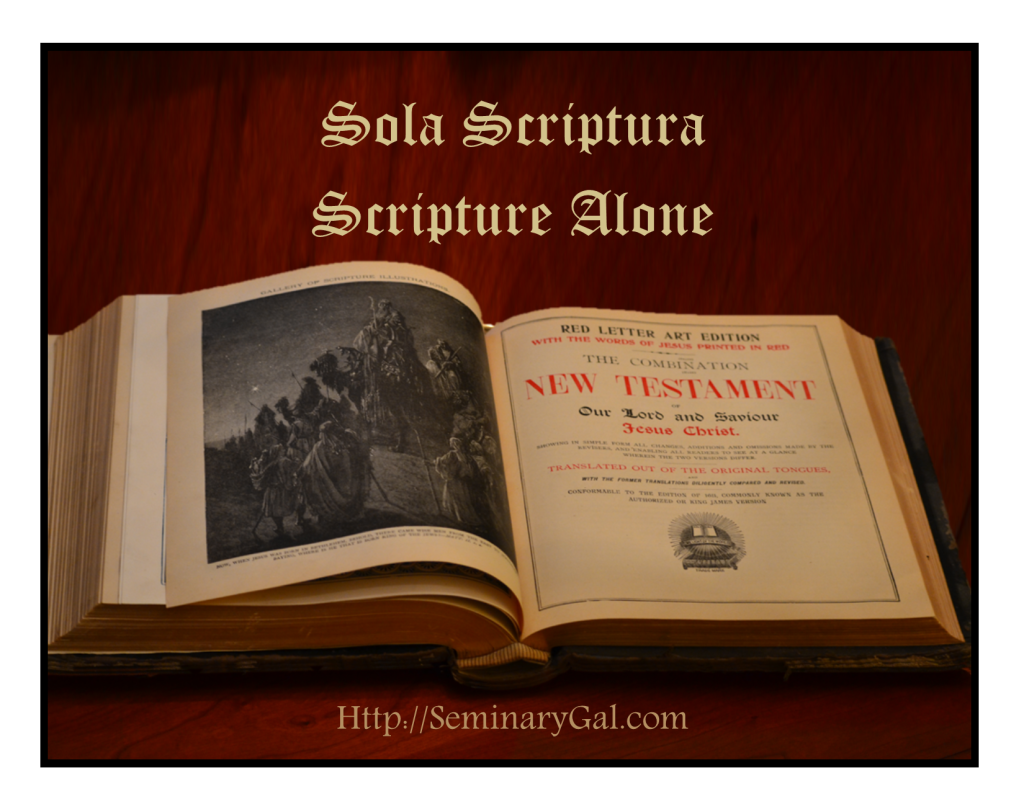
Today is October 31st.  It’s Halloween.  It’s also Reformation Day, the day in 1517 that a monk named Martin Luther nailed 95 theses (or proposals) to the door of the castle church located in Wittenberg, Germany.  The Protestant Reformation—that Luther’s actions brought about—included a return to the teachings of the Bible above and beyond the traditions that had long usurped a primary role in the lives of Christians in Europe.

Martin Luther was a vastly imperfect man, but one whose actions were completely suited for the times—needed for the spiritual transformation of people.  Sometimes things have been accepted for so long that we simply assume they’re true.  Luther’s theses challenged some long-held views and pointed to the Scriptures as the basis for all Truth.  It’s often referred to as Sola Scriptura, Latin for “Scripture alone.”

While Scripture alone is our basis for Truth, Martin Luther has also been credited with a return to the understanding that we are saved by God’s grace alone (sola gratia).  There is nothing we can do to bring about our own salvation by working hard, being “good people,” better than average on a scale of 0 to 10, or by accumulating enough random acts of kindness to tip the balance.

Our faith is a gift of God and should result in changes in how we approach life.  By God’s grace, a spiritual transformation occurs and becomes outwardly reflected in our lives, visible evidence of the inward event of being “born-again.”

Ephesians 2:8 For it is by grace you have been saved, through faith– and this not from yourselves, it is the gift of God– 9 not by works, so that no one can boast. 10 For we are God’s workmanship, created in Christ Jesus to do good works, which God prepared in advance for us to do.

The Church can be Reformed by going back to the Scriptures to find Truth.  Believers can be transformed by the Holy Spirit as the Truth contained in the Word of God find its outworking in our lives.  We are changed by the Truth…it’s an ongoing transformation!

Truth is hard to come by in our culture, particularly at the time of national elections in the US.  In America, in the year 2014, we’d be wise to return to Wittenberg in 1517 and hear the hammer ring:  The only place where we can find Truth is Sola Scriptura.

sola scriptura

(For those of you who regularly read my writings, you’ll notice I am not posting full-length sermons this month.  I have been permitted time off to enjoy the upcoming birth of our first grandchild and therefore, my sermons will instead appear as a series of shorter devotionals for the month of November.)

Continue Reading

Cut to the Heart (sermon text version)

Monica Lewinski.  Oscar Pistorius.  OJ Simpson.  Lindsay Lohan.  Tiger Woods.  Lance Armstrong.  Richard Nixon.  Pete Rose.  The list goes on of people who actually had a lot going for them until they did stupid things, immoral things, and/or illegal things that got them noticed for the bad in their lives instead of the good.  The bad ranges from shoplifting to gambling to lying to murder.  In the case of all the living ones, they’re still paying a price in one way or another.
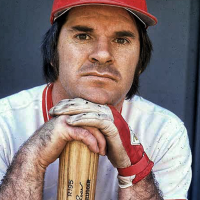
Pete RosePete Rose—the Hit King–was interviewed on ESPN in a program “Outside the Lines” remembering the 25th anniversary of Rose’s banishment from baseball and he said,

I’ve been led to believe America is a forgiving country, and if you do the right things – keep your nose clean, be a good citizen, pay your taxes, do all the things you’re supposed to do – eventually you’ll get a second chance.”

Rose, you may remember was banned from organized baseball for gambling.  In the program, the interviewer, Jeremy Schaap, asked Rose to role-play his pitch to the commissioner for reinstatement.  Rose’s response was:

I wish some way in your heart you’d find an opportunity to give me a chance, a second chance…”

He’s looking for forgiveness actually—well, enough to get him into the Hall of Fame, though he admits he still gambles in legal ways.  When you think about it, professional sports figures and celebrities these days can get away with steroid use, beating up women, hiring prostitutes, fast driving-before-crashing cars, being drunks, being drug addicts; they get suspended for shoplifting, for dog fighting, for bullying, and host of other things we would be less likely to tolerate from lesser known people.  They get a pass because they’re famous.  Rose’s offense stands as remarkably tame in comparison to many of these things and yet, he’s still banished from baseball 25 years later.  His response?

skeleton in the closet“For anybody listening out there that has a skeleton in the closet, get it quickly as you possibly can,” Rose tells Schaap.  “Because as soon as you get it out, the healing starts; the process starts.”

We all have skeletons in our closet…and not because Halloween is coming up.  Because they’re there year-round, year after year, and many of us hope to take our skeletons—our offenses, our sins, our lies, our secret embarrassing mistakes of varying magnitude—to the grave without their ever becoming public. These skeletons of shame haunt us.  Fear of their becoming known while we’re still alive is a thought that keeps us awake at night.  So we try to push it out of our minds…but it silently consumes us.  Sin is that way.

Monica Lewinski can testify to how stupidity at the age of 19 still haunts at the age of 41.  Haunted for 2 decades.  22 years lost in bitterness and humiliation.  More than half her life has been spent carrying that weight of shame.  She’s been cut to the heart by the public exposure, but what has she done with it?

Even trying to cover it up with a crusade against cyber-bullying doesn’t take it away.  Talking about it doesn’t take it away.  A therapist, a social worker, a psychologist, and water under the bridge does not take it away.  Not when you’ve been cut to the heart like that.

Have you ever been cut to the heart?  By someone pointing out something you did?  By bringing it to light?  In a public way?  The Jewish hearers of the Apostle Peter in the book of Acts found out exactly how that feels.

Over the past couple of weeks, I’ve been breaking apart Peter’s sermon to bring the various points to emphasis.  Today I’d like to read the whole thing, end to end, not because I’m looking to plagiarize Peter’s sermon as my own, but because now we can hear it how the Jewish hearers would have heard it.  It will make their response of being cut to the heart all the more understandable.

The text of Peter’s sermon is in our passage for today, Acts 2:14-36.

Acts 2:14 Then Peter stood up with the Eleven, raised his voice and addressed the crowd: “Fellow Jews and all of you who live in Jerusalem, let me explain this to you; listen carefully to what I say. 15 These men are not drunk, as you suppose. It’s only nine in the morning! 16 No, this is what was spoken by the prophet Joel: 17 “‘In the last days, God says, I will pour out my Spirit on all people. Your sons and daughters will prophesy, your young men will see visions, your old men will dream dreams. 18 Even on my servants, both men and women, I will pour out my Spirit in those days, and they will prophesy. 19 I will show wonders in the heaven above and signs on the earth below, blood and fire and billows of smoke. 20 The sun will be turned to darkness and the moon to blood before the coming of the great and glorious day of the Lord. 21 And everyone who calls on the name of the Lord will be saved.’ 22 “Men of Israel, listen to this: Jesus of Nazareth was a man accredited by God to you by miracles, wonders and signs, which God did among you through him, as you yourselves know. 23 This man was handed over to you by God’s set purpose and foreknowledge; and you, with the help of wicked men, put him to death by nailing him to the cross. 24 But God raised him from the dead, freeing him from the agony of death, because it was impossible for death to keep its hold on him. 25 David said about him: “‘I saw the Lord always before me. Because he is at my right hand, I will not be shaken. 26 Therefore my heart is glad and my tongue rejoices; my body also will live in hope, 27 because you will not abandon me to the grave, nor will you let your Holy One see decay. 28 You have made known to me the paths of life; you will fill me with joy in your presence.’ 29 “Brothers, I can tell you confidently that the patriarch David died and was buried, and his tomb is here to this day. 30 But he was a prophet and knew that God had promised him on oath that he would place one of his descendants on his throne. 31 Seeing what was ahead, he spoke of the resurrection of the Christ, that he was not abandoned to the grave, nor did his body see decay. 32 God has raised this Jesus to life, and we are all witnesses of the fact. 33 Exalted to the right hand of God, he has received from the Father the promised Holy Spirit and has poured out what you now see and hear. 34 For David did not ascend to heaven, and yet he said, “‘The Lord said to my Lord: “Sit at my right hand 35 until I make your enemies a footstool for your feet.”‘ 36 “Therefore let all Israel be assured of this: God has made this Jesus, whom you crucified, both Lord and Christ.” 37 When the people heard this, they were cut to the heart and said to Peter and the other apostles, “Brothers, what shall we do?” 38 Peter replied, “Repent and be baptized, every one of you, in the name of Jesus Christ for the forgiveness of your sins. And you will receive the gift of the Holy Spirit. 39 The promise is for you and your children and for all who are far off– for all whom the Lord our God will call.” 40 With many other words he warned them; and he pleaded with them, “Save yourselves from this corrupt generation.” 41 Those who accepted his message were baptized, and about three thousand were added to their number that day.

Peter doesn’t pull any punches.  He delivers the one-two punch:  You crucified the Lord.  You crucified the Messiah you’ve been waiting for.

36 “Therefore let all Israel be assured of this: God has made this Jesus, whom you crucified, both Lord and Christ.

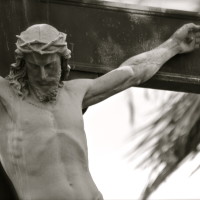
jesus cross black and whiteIt’s no wonder that the people were cut to the heart.

For those who had been listening, knew their Jewish prophecies, and had been taking the message to heart, their skeleton was out. 

They’d killed the Messiah!  Now what?

37 When the people heard this, they were cut to the heart and said to Peter and the other apostles, “Brothers, what shall we do?”

What shall we do?

Once you’ve crucified your Messiah, there is no going back and undoing it.

One day a little boy said some awful things to his parents.  As punishment, the dad sent the boy out with a box of nails and told him to nail all of them into the fence.  So the boy did and thought his punishment was through.  He said, “Pop, I finished.  All the nails are in the fence now.”  The dad brought him back outside and said “Now I want you to remove them all and put them back in the box.”  The little boy found it was harder to remove them than to drive them in…and he also found that they no longer fit in the box.  Finally he finished and came to his dad and said, “OK, Pop, I’m finished.  They’re all out.”  The dad took him outside and they sat on the grass and looked at the fence.  Light from the setting sun peeped through all the holes.  The dad said, “Son, what do you see?”  The boy replied, “I see a lot of holes.”  The dad proceeded to explain that careless words were like nails into a fence.  You can apologize and try to remove them, but there’s always a hole left behind.

Pete Rose found that out. You can say you’re sorry and even try to make up for mistakes by spending time in jail, but 5 months for tax evasion still doesn’t take it away!  You can try to make up for it by being baseball’s biggest fan and promoter!  You can try to make up for it by giving interviews and pleading with authorities to take the punishment away.  But like the fence, only forgiveness fills the hole left behind.

Forgiveness doesn’t come cheap.

It’s not enough for people to forgive you and for you to forgive yourself, but it’s a start.

All sins committed are actually committed against the Image of God in you and in me.  Because when we sin, we make the Image of God (broken through sin but never removed) shoplift or gamble or lie.  The offense is against God.  For these Jewish hearers, it was one step worse than that.  When your sin is crucifying God’s only Son, the Messiah, repentance is all you can do because the offense was eternal and limitless.

That’s the bad news: your skeleton is out and it’s huge and never goes away on its own.  It will haunt you ‘til the day you die and without God’s forgiveness, it will haunt you beyond the grave. 

Here’s the Good News:  God’s forgiveness is eternal and limitless…and enough to pay for any sins, even for crucifying your Christ…because God knew beforehand that you were going to do it.

So in verse 38 Peter replied, “Repent and be baptized, every one of you, in the name of Jesus Christ for the forgiveness of your sins.

Then Peter continues by saying “And you will receive the gift of the Holy Spirit. 39 The promise is for you and your children and for all who are far off– for all whom the Lord our God will call.” 40 With many other words he warned them; and he pleaded with them, “Save yourselves from this corrupt generation.”

Peter is not advocating a do-it-yourself salvation program, but he is begging them in every way he knows how to realize that the blood of Christ covers sin—the small secret ones and the great big public ones.  The blood of Christ forgives and takes away fear of the skeletons in the closet, under the bed, on the porch, or on the street corner for all to see.  There’s forgiveness in the shed blood of Christ.  You can “save yourself” by repenting and by identifying with the death of Christ through public baptism.  God is the One who fills the holes in the fence, but we can agree with God that only Jesus can give us victory over sin, only Jesus can save us, and that while our sins are as scarlet, God can wash us as white as snow (Isaiah 1:18).

41 Those who accepted his message were baptized, and about three thousand were added to their number that day.

That’s the key, isn’t it?  Accepting the message.  Accepting the Good News.  Accepting that we cannot do anything about our sins.  And accepting that God CAN and DID do something about our sins in the death of the person of Jesus Christ, your Messiah, the Son of God.

It’s amazing that this altar call at the end of one sermon produced about 3000 converts…

  • 3000 people who were no longer in bondage to their sins,
  • 3000 people whose skeletons were out before God, had been covered by the blood of Christ, and therefore were nothing to fear anymore,
  • 3000 people who were set free to be the Image bearers God always intended that they would be…
  • 3000 people who heard that there is a solution for sin and that His Name is Jesus.

And while it’s amazing that 3000 heard and responded, what’s even more amazing for us today is HOW it happened.  Peter preached a message that focused on sin and the Cross…something that’s suspiciously missing from much of Christianity today.  What is preached today is often what Richard Niebuhr famously described as,

A God without wrath brought men without sin into a kingdom without judgment through the ministrations of a Christ without a cross.”

We tiptoe very carefully to avoid talking about sin.  But if we have no sin, what use is there for a Savior?  We’ve been convinced that we can’t—in a culture of moral relativism—even talk about sin without someone being offended and saying so.  We can’t talk about sin without someone turning on you and asking “Who are you to judge?”…and it’s no wonder the Church in America is slowly being made irrelevant at best and dying out at worst.  It’s what happens when we don’t have sin.  We don’t need a Savior.  We’ve come a long way since Jonathan Edwards preached about “Sinners in the Hands of an Angry God” and brought about the Great Awakening.  Today, it’s more like Daniel Patrick Moynihan’s “Defining Deviancy Down,” by normalizing sin instead of repenting it.

Being cut to the heart means we know the truth of who we are and the forgiveness God offers.  In the movie, Walk the Line about the life of Johnny Cash and June Carter Cash, Johnny has just made it through a rough time of getting off drugs.  Johnny Cash thanks June for seeing him through this tough time and she simply replies that she had a friend who needed help.

  • Johnny Cash: But I’ve done so many bad things.
  • June Carter: You’ve done a few, that’s true.
  • Johnny Cash: My Daddy’s right. It should have been me on that saw. Jack was so good. He would have done so many good things. What have I done? Just hurt everybody I know. I know I’ve hurt you. I’m nothin’.
  • June Carter: You’re not nothin’. You are not nothin’. You’re a good man, and God has given you a second chance to make things right, John.

The next scene shows them going to church with June reassuring him that it was OK.  God’s house is a place to hear about forgiveness.  Forgiveness by God is even better than a second chance to do it right by ourselves.

Some of us are waiting for second chances when what we really need is forgiveness.

Where are you?  Are you waiting for a second chance to do things right?  Or are you waiting for a clean slate and a fresh start?  Are you looking for forgiveness?  That’s what being “born-again” is all about and it begins with being cut to the heart about our sins.  So where are you today?  Let’s pray.

 

Continue Reading

David Said (sermon text version)

My license plate proudly states “Land of Lincoln.”  Want to know why that is?  It’s because by many measures, Illinois hasn’t had an honest politician since then.  Land of Lincoln, our glory days!

  • No one wants a license plate that says Land of Blagojevich since it’s hard to pronounce, harder to spell, and would probably involve a huge tax hike in order to fit such a long name on such a small space.  Art imitates life.  Hmm.
  • No one wants a license plate that says Land of Lyin’ George Ryan…it brings back bad memories, especially as a truck license plate.  Hmmm.
  • No one wants it to say Land of Daley Corruption even if the Daley machine and all its corruption happen more than daily, just like voting among the dead in IL…where voting is done early, often, and from beyond the grave.  Halloween will be celebrated on November 4th in IL this year as the walking dead and the zombies come to cast their votes in Chicago, but they won’t walk to the polling places, they’ll be rounded up by bus.  Now that’s scary–the fate of the nation in the hands of such as these!

No, we keep “Land of Lincoln.”  Why?  Because he’s the favorite son of the State of Illinois even if he didn’t move there until he was in his 20s and he was born in Kentucky and lived in Indiana prior to that.  We were his third choice and it’s only to escape “milk sickness” that killed his mother years before when Honest Abe was only 9 years old.  But in IL, we’ll take what we can get—even third runner up—and we honestly appreciate Honest Abe hailing from our state.  He’s our favorite son.

david saidPeter, in our passage of Acts today, invokes the name of the Jews’ favorite son, David.  He was not only their favorite son, but a favorite king, and the figurehead of the Davidic dynasty, the Royal House of David. 

David’s immediate legacy, though, included a cast of characters that may have started well, but finished poorly.  More like Dynasty the TV show or reality TV as the Kingdom was divided up and split apart and almost all of them ended in exile, some never to return.  No wonder it’s not the Solomonic or Rehoboamic Dynasty…which is even harder to pronounce than Blagojevich.

No, David is their favorite son, the head of the Davidic Dynasty and the one Peter’s Jewish listeners (both the devout Jews and the Jewish converts of Acts 2) would have known as Messianic in its meaning.  Peter’s a really smart guy and a Jew who understood how to talk to Jews.  First, he brings up Joel’s prophecy regarding the last days and nails plank #1: Jesus is the Messiah who ushered in the Last Days by his Resurrection from the dead.

Now he enters the part of his speech—his sermon, really!—where he’s appealing to their favored son, David, and all the Messianic hopes that had been building over the years since David ruled…had been building during the time of the Exile…and had been building during the time of Roman rule…and were going to be fulfilled during the last days.  These Jewish hearers hated Roman rule and at this point, they would have been all ears!

Peter’s Jewish hearers would have been filled with all the “House of David” Messianic hopes that became central to their understanding while the Jewish people had been in Exile after David’s son Solomon died and a period of hundreds of years!  What was that hope?

  • Re-establishment of the throne of David
  • Deliverance from oppressors
  • People from all over would flock to Jerusalem to be in the presence of YHWH (Yahweh)—The Name of the Covenant-keeping God of Israel—in order to behold His glory!

But Peter clarified that hope of the Son of David, having learned at the feet of Jesus (and maybe also explicitly taught during Jesus’ post-Resurrection appearances before His ascending to heaven).  Peter knew that the Messiah is the Son of David, but is not a biological son alone like simple genealogy, as if Peter’s going online at Ancestry.com and plugging in “Jesus of Nazareth.”  (Christ is not Jesus’ last name, but a title meaning Messiah).  Son of David was his genealogy, but it was more than that.  It was Messianic.

Interestingly, Jesus never referred to Himself as the Son of David, perhaps to avoid the people’s viewing Him as a nationalistic, earthly, military leader.  That’s what the expectation was.  That’s what David was:  a military man.  David killed Goliath and that was just the start of his killing spree.  David KILLED to overcome and to free people.  (1 Chron 28:3).   Jesus is different.  Jesus DIED to overcome death and to set people free! (Romans 6:3-11).

Jesus is not just “a” son of David, but “THE Son of David” foretold as the Messiah in the promise to King David (2 Samuel 7:10-16) given through the prophet Nathan.

Therefore, not just a Son of David, but The Son of David/The Son of God, Jesus is a transcendent being—One whose glory and authority and power and holiness far surpasses that of an earthly leader.  In other words, this Messiah (Jesus) is not earthly.  He’s heavenly, first having come down to earth, but rising from the dead, and He lost nothing of His glory in the process.  His deliverance of “Israel” (the ALL of God’s people from last week) is not earthly, political, or militarily.  It will be heavenly redemption.  Jesus came down to earth to set men free, and He displayed God’s glory in the process.

So, with this as background of how Peter is approaching Jewish evangelism, let’s look at our passage Acts 2:25-35 to see how the Resurrection of a Divine Messiah is Key and even their favorite son David said so.

Acts 2:25 David said about him: “‘I saw the Lord always before me. Because he is at my right hand, I will not be shaken. 26 Therefore my heart is glad and my tongue rejoices; my body also will live in hope, 27 because you will not abandon me to the grave, nor will you let your Holy One see decay. 28 You have made known to me the paths of life; you will fill me with joy in your presence.’

This quotation is from a Davidic psalm, one that Peter’s Jewish hearers would have viewed as having Messianic importance.  David is speaking of a resurrection that he was anticipating for himself and for God’s Holy One.  It couldn’t be that David was thinking of himself as God’s Holy One.  Why?  Peter tells us:

29 “Brothers, I can tell you confidently that the patriarch David died and was buried, and his tomb is here to this day. 30 But he was a prophet and knew that God had promised him on oath that he would place one of his descendants on his throne. 

(That is what we saw in 2 Samuel 7).

31 Seeing what was ahead, he spoke of the resurrection of the Christ,

(The Christ is another word for Messiah.  Jesus, Messiah, is the Holy One!  And that a thousand years earlier, David spoke of a resurrected Messiah was huge!  It’s the KEY! )

“that he was not abandoned to the grave, nor did his body see decay. 32 God has raised this Jesus to life, and we are all witnesses of the fact. “

To the Jewish hearers of Peter, the death of Jesus was definitely not a plus!  It had been proof-positive (in their minds) that he wasn’t the Christ.  Not that He was the Christ!  Why?  Because, according to Gordon Fee, a “crucified Christ” makes as much sense to these Jews as “fried ice” would mean to us.  It’s nonsensical.  How can you fry ice?

It’s more nonsensical than the CDC director saying you can transmit Ebola on a bus, but you can’t catch Ebola on a bus.  Huh?? It’s more than an oxymoron like jumbo shrimp, alone together, business ethics, or airline food which are just considered humorous contradictory terms.

In a very real way, the death of Jesus, to these Jews (and yet today, I might add) was the stumbling block, the #1 reason why he couldn’t be the Messiah.  Death is the ultimate disqualifier.  But Resurrection changes everything!

So Peter points out that Jesus didn’t remain dead.  He is alive just as their King David—their favored son—had prophesied!  And this is why the post-Resurrection appearances that we talked about in the earliest weeks of Acts were SO important!  Peter appeals to his having seen with his own eyes the Risen Lord!  He was a witness of the fact!

Resurrection of the Divine Messiah is Key!  And while it makes no sense for an earthly son of David who was a sinner like everyone else, it makes perfect sense when we’re dealing the Sinless One, not just the Son of David, but also the perfect Son of God.  It makes sense when we’re talking about the ways of the Almighty and the glory of the Son of God.

Peter continues:  33 Exalted to the right hand of God, he [Jesus] has received from the Father the promised Holy Spirit and has poured out what you now see and hear.

(Do you see Peter looping back to explaining how the Ascension of Christ was proof that Jesus’ sacrifice for sin was accepted by God the Father and now the Holy Spirit was free to come in the last days?  And do you see how Peter is continuing to drive home the point that the speaking in tongues is NOT wine, but what they see and hear—what they are witnesses of!!!–is the pouring of the Holy Spirit and a sign that the last days the Jews have all been waiting for are now upon us?!)

garden tombIt’s because of the RESURRECTION of THE DIVINE MESSIAH!  IT’S THE KEY!

Peter continues appealing to the favorite son, “34 For David did not ascend to heaven,”

(It wasn’t David, earthly David or any earthly David offspring…but Jesus who is the Son of God in addition to THE Son of David who was exalted to the right hand of God!  Resurrection of the Divine Messiah is KEY!)

34 For David did not ascend to heaven,” and yet he said, “‘The Lord said to my Lord: “Sit at my right hand 35 until I make your enemies a footstool for your feet.”‘

Our English translations simply do not do this justice.  In Psalm 110:1, the Hebrew words would be “YHWH (Hashem, The Name which is Yahweh) said to my Adonai (Lord)”.  Peter clearly sees this as God speaking to Jesus Messiah who is David’s Lord…even if He is David’s son.

Why would Peter have seen it this way?  Well, he probably remembered Jesus teaching about it that we have recorded in 3 of the 4 Gospels, one of which is

Matthew 22:41 While the Pharisees were gathered together, Jesus asked them, 42 “What do you think about the Christ? Whose son is he?” “The son of David,” they replied. 43 He said to them, “How is it then that David, speaking by the Spirit, calls him ‘Lord’? For he says, 44 “‘The Lord said to my Lord: “Sit at my right hand until I put your enemies under your feet.”‘ 45 If then David calls him ‘Lord,’ how can he be his son?” 46 No one could say a word in reply, and from that day on no one dared to ask him any more questions.

The Jews’ Messianic expectation was that a son of David—an earthly military and nationalistic ruler—would rise up and deliver them from oppressors.  But Jesus taught Peter that the Christ, the Messiah, THE Son of David, is also THE Son of God, The Holy One, and He would deliver them from the ultimate oppressor: sin, the wages of which Scripture tells us is death.  If sin and death are the ultimate oppressors, then Resurrection Life is the Key to understanding this Messiah (who He is and the work He did)!

Why?  Because King David was still in his tomb—in Jerusalem—for all to see where it was.  Any biological sons of David will all go to a tomb too.  There’s a 100% chance of death unless Christ returns.

Christ Jesus returned once as resurrected–a Risen Lord–and showed Himself to people for a period of 40 days.  We saw that in the earliest chapter of Acts.

And Jesus will return in the final Advent, the Return of Christ.  How?  Because He broke the chains of death and He is not only the Son of David, but the Son of God.  He’s at God’s right hand.  He’s the One whose throne lasts forever.  He’s the One who vindicates at the end of the last days.  He’s the One who delivers.  He’s the One who saves…who TRULY saves.

When He returns—because He alone has been resurrected—He won’t just be a king.  He will be The King. The King of Kings…and Lord of Lords…the Lamb of God who is both the Savior and the Perfect Sacrifice.

As a teaser to next week’s passage of Scripture, Peter concludes this great sermon with the following statement which we’ll look at next week:  Acts 2:36 “Therefore let all Israel be assured of this: God has made this Jesus, whom you crucified, both Lord and Christ.”

Boom!  A crucified Christ is possible because Jesus is the Son of David and importantly, also the Son of God.  Peter connects the two by saying this Jesus who was crucified….He is the Lord and He is the Christ and even King David, the favored son with the dynasty that never ends, said so.

So what does this mean for us?

  1. Well, first it means that what we do with Jesus has eternal consequences.  Will we consider it impossible to have a crucified Christ or will we think that all things are possible with God?  Will we accept that Jesus is the Messiah and He came to save you and me…while we were yet sinners?  Or will we die in our sins thinking He was just a failed son of David and it’s the tomb for all of us?
  2. Second, it means that we need to look at the ways Jesus is not meeting with our expectations and place the blame where it squarely lies: with our ruts, old tapes, and preconceived ideas, especially about the end times!  Jesus is not just an earthly son of David with a physical lineage back to King David.  He is God’s Son and His perfection ought to cause us to re-evaluate whether we are right to pin Him to our small expectations.  We think too little of God…in way too many ways.
  3. Third, as it relates to Jewish evangelism, we need to have deep empathy for those who are still looking for this son of David who will overthrow the oppressors.  Their view that a crucified Christ is impossible needs to be treated gently (because this is the KEY) and we can do as Peter did by pointing them to their favored son, King David, and saying that David foretold all this–including a Resurrected Messiah.  It’s been my experience that in certain segments of Judaism, they don’t know their Tanakhs just as many Christians have no clue what’s in their Bible.  We need to show them grace and keep pointing them to King David’s own words in the Psalms and do as Peter did: show them why Jesus had to die and explain that it’s not confusing at all if Jesus is also the Son of God, the Lord, as well as the Christ.
  4. Fourth, we can keep in mind that the Crucifixion and Resurrection of Christ form not only the turning point of all history, but is the Key to understanding the Divine Messiah and His role in the last days and the vindication to come!  He will be the King of Kings and Lord of Lords.
  5. And finally, for today at least, is Jesus your King of Kings?  Is He your Lord of Lords?  Or is He just fire insurance or a “Get out of Hell Free” card?  If He is your King and He is your Lord, how ought that to change your decisions and how you live your life and how you spend your time and money?  If He’s Lord and not just Savior?

Because He’s not just an earthly son of David.  He’s the Lord.  And even David said so.  Let’s pray

Continue Reading