All About Encouragement-sermon text version

Meghan Trainor has a song that says “It’s all ‘bout the bass, ‘bout the bass, no treble” which really isn’t about music at all…but for Paul, it wasn’t all about his body or what was music to his ears. It was all about encouragement. Today’s passage, Acts 20:1-12 is all about encouragement.

Some of you might think that I decide what I’m going to preach about by reading the newspaper and preaching it. I’m not all about the “base” things of life, but I do notice that the world is full of “treble” and people out there are in a world of hurt.

If the Gospel can’t speak to today, seriously…what good is it?

If the Gospel was only helpful, useful, and applicable to when Jesus walked the earth and the expiration date was, say, September 6th, 100 AD, why should we even bother studying it, reading it, or trying to make sense of our lives by applying it?

The Gospel is ageless and timeless and applies no matter what age in which we live. Because it’s all about what God has done and the encouragement we can have in Christ. The world appears to have lost hope and is sorely in need of that kind of encouragement.

Paul was an expert at that.   At encouraging others. He was not only a teacher and a preacher, but he had exhortation—encouragement—down to a science.

Think about it: People like being around encouragers.

What about you? If you had 2 hours to spend and had a choice between sitting with someone who was known as an encourager or someone who paraded their problems and whined a lot, who would you rather spend time with? What would be the end result of that 2 hours? How would you feel at the end? How would the other person feel?

What kind of person are you? Are you one who encourages or is your outlook one big downer for people around you? Is it all about that “base”…and nobody knows the trouble I’ve seen?

Well, Paul was an encourager and he made friends in the Gospel every bit as easily as he made enemies wherever he went on account of that same Gospel message. It was his encouraging–his exhortation–that produced both friends and enemies. The Gospel indeed cuts both ways.

When we last left off with Paul, he’d been in Ephesus for nearly 3 years of peaceful ministry. He grew to love the Ephesian people and they grew to love him. It was Paul’s effectiveness at both preaching and encouraging that led to the notorious riot and now, a change of course. Paul needed to move on.

Which leads us to today:

Acts 20:1 When the uproar had ended, Paul sent for the disciples and, after encouraging them, said good-by and set out for Macedonia.

Paul met with the disciples and encouraged them to stay the course, fight the good fight, and to run the race with perseverance. The riot was yesterday’s news and need not be a discouragement. Fight the good fight! To be able to say at the end of one’s days what Paul said to Timothy in 2 Timothy 4:7 I have fought the good fight, I have finished the race, I have kept the faith.

Not everyone views life that way. I mentioned that some of you may think I preach the newspaper headlines. There was a bit of a contrast this past week and I’m still chewing on that thought and trying to decide what I think of it.

One item was the KY court clerk who went to jail rather than to violate her deeply held religious beliefs about marriage. She’d been employed there, had taken her oath while a deputy clerk 27 years ago. She was elected last year and installed in January, before the Supreme Court ruling on gay marriage back in June. She’s presently in jail (**see note at the end) while the issue of religious freedoms and gay marriage press to new frontiers. She believes she’s doing what Martin Luther King, Jr. did in writing from the prison in Birmingham. She took a stand for the Gospel and is paying the price in jail, a place that the judge in the case says she’ll stay until she changes her mind and fulfills her oath…one taken when the law was one she could pledge to and was elected to uphold. But now the law has changed. Not by a vote. Not even by her state. She’s saying she will sacrifice her freedom for God’s view of marriage, not that she’s personally lived it. But her divorces were before she was a Christian and came to know grace. The encouragement of the Gospel. She won’t sacrifice her faith to gain her freedom. I wonder if I’d step down from my post and look for other work or whether I’d engage in civil disobedience like she is. I can see it both ways. Both would be sacrifices and I do applaud her standing up for God. I would like to believe that I’d do the same. Principles based in Scripture are worth fighting for. Jesus is worth fighting for. Witness is certainly greater by civil disobedience than by stepping down. And I do believe her struggles highlight freedom of religious expression in all areas of one’s life and the Courts will be revisiting this issue for a long time.

But I said there was a contrast in the news. The other news story is about all the thousands of migrants and refugees flooding Europe out of the Middle East, particularly Syria. They are coming in every which way. Across the sea, over land, from the north, south, east, and west. Everyone’s hearts can be moved by the photo of the toddler who drowned along with his mother on the coast of Turkey trying to flee war-torn areas of the world. They found this little boy’s body on the beach at Bodrum, roughly 100 miles south of Ephesus. I wondered if Paul had walked there in his journeys. Scripture places Paul very near there, although centuries earlier.

The boy was buried back in Syria where he was from. His body and his grieving father remind us that fleeing also carries risk and the willingness to embrace that risk is a reminder of a degree of hopelessness that cries out for encouragement.

I can understand women and children fleeing war-torn regions. The world can open its arms to women and children as refugees…coming to a safe haven until their own country returns to a stable peace-loving situation. It’s been a long time since Syria has known that kind of peace. Syria has been in turmoil since it became an independent state and it’s doubtful that any of the people fleeing know what peace and hope feel like in their homeland. They need encouragement of the Gospel kind.

I cannot judge what I don’t know simply because I don’t understand or can’t relate from here in the safety of the United States.

migrant photo reutersBut the picture that continues to haunt me is the one on the front of the bulletin this week (at right). There isn’t a woman or child to be seen. It isn’t dramatic like the picture of the toddler. These are all young men, what one might call fighting age, some of whom are hiding their faces from the camera. Why? Perhaps they had no one back home to encourage them to fight the good fight. To do what they could to make their own land a free one in which their principles would be held in honor. I find it haunting because it’s a picture of hopelessness and men who need encouragement to do what is right.  (**see note at the end)

But what form does that encouragement take? I don’t know what to make of that. I see the man facing the camera with the shirt that says Property of the __ight Club. Fight club? The will to fight—to press on in the cause of freedom—seems to have been a casualty of the death of hope. Flight Club? Night Club? I don’t know what his shirt says. But I can say that the Gospel could inspire a man to stand and fight for Jesus against an evil world. The Gospel can also inspire a man to seek a peaceful way out. That’s what the Iraqi Christians are doing. They are fleeing their homeland to be peacemakers so far as it depends on them. But it’s a sacrifice. Everyone could use a little encouragement.

I can say that the Gospel could prompt someone to flee—not to reside in another country with the hope of a better life there—but to do what Paul did. Plant churches while passing through–churches that could encourage people in the midst of difficult circumstances. Paul fled for his life, not to pick up an easier life for himself down the road, but to let people know it’s all about encouragement in Christ.  He went back through Macedonia to encourage the churches he’d already planted.

2 He traveled through that area, speaking many words of encouragement to the people, and finally arrived in Greece, 3 where he stayed three months. Because the Jews made a plot against him just as he was about to sail for Syria, he decided to go back through Macedonia. 4 He was accompanied by Sopater son of Pyrrhus from Berea, Aristarchus and Secundus from Thessalonica, Gaius from Derbe, Timothy also, and Tychicus and Trophimus from the province of Asia. 5 These men went on ahead and waited for us at Troas. 6 But we sailed from Philippi after the Feast of Unleavened Bread, and five days later joined the others at Troas, where we stayed seven days.

Maybe the Jews who were going to Passover in Jerusalem were going to be on that same boat to Syria and they were the ones who didn’t like Paul. But Paul took this all in stride. If he can’t go by boat, he’ll walk it. Fleeing, in a sense, back through Macedonia and he’d spend Passover where he was on his journey, near Philippi. He’d have to wait until Pentecost to make it to Jerusalem. There’s sacrifice in fleeing and there’s sacrifice in fighting and wisdom knows when which one is called for. In either case, one needs encouragement.

Paul was encouraging people throughout that time using many words and by his example. Everyone could use encouragement and for Paul, it was all about encouragement in Christ.

7 On the first day of the week we came together to break bread. Paul spoke to the people and, because he intended to leave the next day, kept on talking until midnight.

This is a fascinating story. Luke is back with the group now because the passage has resumed the word “we.” We sailed from Philippi and we came together. Luke’s account of this first-hand event is filled with detail.

8 There were many lamps in the upstairs room where we were meeting.

The oil lamps to light the room after dark would have left a lingering heaviness in the air from the smoke and oil. They were upstairs.

9 Seated in a window was a young man named Eutychus, who was sinking into a deep sleep as Paul talked on and on.

It wasn’t like Paul was a boring preacher and therefore Eutychus nodded off. Eutychus would have been in the window to have fresh air in a room without much circulation. A young man would likely have had a job and come after work.

Our passage continues: When he was sound asleep, he fell to the ground from the third story and was picked up dead.

Luke, as you’ll recall was a physician. He would probably have known that a fall from a third story window would have left a person with critical injuries if they even lived to tell about it. Eutychus was picked up dead. Luke would have known whether he was dead or alive and just unconscious.

Do you remember the story a while back of Peter raising Tabitha from the dead? And Jesus raising Jairus’ daughter from the dead? Well, here Paul will do the last of 8 raising of the dead instances recorded in the Bible. Eutychus will be the last we’ll see until Jesus returns.

It isn’t like the country funeral where the casket was on a wheeled cart as people were following it to the grave site. The cemetery was atop a big hill and the mourners all followed it up to the top. Somewhere along the way, the rope gave out and the cart and the coffin flew down the hill. Crossed the crossroads as horses and pedestrians leaped out of the way. It plowed past city hall, across the town square, and smashed the glass at the pharmacy all the way to the desk where the dead man popped up and in a congested voice asked the pharmacist whether he had anything to stop this “coffin.”

For Paul, this was different. He was going to actually raise the dead…like Elijah.

10 Paul went down, threw himself on the young man and put his arms around him. “Don’t be alarmed,” he said. “He’s alive!” 11 Then he went upstairs again and broke bread and ate. After talking until daylight, he left. 12 The people took the young man home alive and were greatly comforted.

Encouragement comes in many forms. Words spoken, a life lived, standing for something godly in the face of evil. Paul stood for the Gospel and its power was evident in Paul’s life. That probably encouraged Paul, too. I work hard to keep myself encouraged. I have a bulletin board at home with all kinds of encouraging words on it.

  • A thank you note from a woman telling me how God had encouraged her through my words. The card says Matthew 17:20 He replied, ” I tell you the truth, if you have faith as small as a mustard seed, you can say to this mountain, ‘Move from here to there’ and it will move. Nothing will be impossible for you.” She wrote thanking me for sending something to her. She wrote “God is so amazing! He knew I needed this.”
  • A little pop-open Advent card from the Salvation Army thanking me for my support.. Isaiah 40:29 He gives strength to the weary and increases the power of the weak. (With the note below saying, When I am tempted to give up, God is there to encourage me.
  • A collection of leadership quotes by Theodore Roosevelt including “A leader will always prefer to be faithful than famous.” And “Heroes need heroes.” The Apostle Paul is one of my heroes.
  • And a 2010 calendar from Dr. D. James Kennedy forever posted as the month of March on my bulletin board. “Proverbs 29:2 When the righteous increase, the people rejoice” and a reminder of the biblical foundations of America and a photo of the US Capitol Building.

An odd collection to be sure. I have a whole bag of things in the closet I look through to keep myself encouraged. Because when it’s all about encouragement, we know it happens in many different ways but the result is always the same: people are comforted, inspired, and given courage to continue on…whether to fight…or have the wisdom to flee…and know when each is called for.

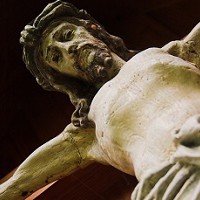
Jesus on the crossThe Gospel is special in the way it encourages.

It points to freedom in Christ. To love beyond all measure.

To hope.

And to peace.

The world needs the Gospel to turn a picture of hopelessness and refugees into a picture of hope and family.

That’s what Paul spread wherever he went. May we do likewise.

What encouragement do you need today?

Who do you know whom you can encourage? Maybe when we go out into the neighborhood next Sunday, we can be a source of encouragement to those facing all kinds of life situations here in Racine. Most all of us can use external encouragement. Knowing people are praying for us. Knowing someone cares. Knowing the Gospel is as close as the person who is willing to share it.

That’s what Paul models for us today in a variety of ways. You see, it’s all about encouragement.

===

**note at the end: 

As I post this, the court clerk, Kim Davis, has been freed from jail.  The government is still deciding what to do in her situation.  And regarding the refugees, it is being reported that many of the young men–without families to support–are looking for a better life elsewhere than fighting to bring about that situation in their homeland.  Some are using the refugee crisis as an opportunity to expand the reach of radical Islam and are hiding among the refugees which is why some of the richest Gulf States are refusing to shelter any refugees.  The saga continues…

Yet the Gospel still encourages and God still reigns.

I press on toward the goal for the prize of the upward call of God in Christ Jesus. (Philippians 3:14 )

Continue Reading

Ephesus-A Special Place (sermon text version)

Today’s passage of Scripture is all of chapter 19 and there’s a lot of interesting stuff going on here. Last week in the adventures of the early disciples known as the Book of Acts, the Apostle Paul had just finished up his second missionary journey and checked back in at Antioch which was kind of like his home base. In the meantime, we saw ministry continuing with Aquila, Priscilla, and a very learned but equally humble Apollos whose education was furthered, completed, and his ministry empowered by good Christian friends back in Ephesus and Achaia.

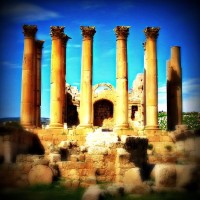
Paul has finished checking in and now while Apollos heads over to Corinth, Paul travels along the interior road checking in with churches he’d planted along the way and arrives at Ephesus…again. God made it possible for Paul to return. templeartemisephesians.jpgEphesus would be a special place for Paul.

What types of places are special to you?

What makes them special?

Warren and I were just out in Oregon for our nephew’s wedding. Oregon is special to Warren because that’s where his whole family is now. But NJ has always been special because it’s where his family grew up. He learned to fish and hike trails in NJ, but he furthered his understanding of fishing and hiking in Oregon. Deep sea fishing instead of river fishing or lake fishing. He likes fishing so Oregon and NJ are special places to him.

Some places might be special because of the scenery like the beach we visit in Florida or my childhood vacations in Hayward or as a young mom, our camping vacations in the Big Horn National Forest. Special places maybe because of things that happened there. A guy I sat next to on the plane was former NFL—a guard for the Oakland Raiders. He said they lost to the Packers that year but he showed me his AFC championship ring and every person he talked to on the plane he began by asking them where they went to high school. High School was obviously more special to him than it is to me. I want to forget I ever went to high school.

Maybe places are special because of the people we love being there: kids, parents, or good friends.

Well, Ephesus was a special place for the Apostle Paul. His heart was bonded to the Ephesian believers and their hearts to his. But Ephesus was also a special place because of several major events that happened during 27 months of relatively peaceful ministry that Paul had there.

Ephesus was also a powerful place. It was a strategic center that had few equals in the world. It was home to the Temple of Artemis (Diana) which is one of the Seven Wonders of the Ancient World. Ephesus was critical for trade given its important location as both land and sea trade routes. It ranked with Rome, Corinth, Antioch and Alexandria as an urban jewel because of its population and wealth, maybe declining a bit by the time of Paul, but important still.

And special because for Paul, what Ephesus represented was the opportunity to preach to multitudes in one place and have the effects noticed throughout the province of Asia. It did for Paul’s ministry what Peter’s speech at Pentecost did for the Jews. To those gathered, they witnessed God’s power and heard the Gospel truth and carried this to the farthest reaches of the Roman Empire.

Yes, Ephesus was special. But it was also a difficult place for ministry because that’s how it often is when a city is rich, powerful, and influential. It was also difficult because of the prominent temple of Artemis and the strong grip of the occult on the minds and hearts of those residing there and those traveling through. In fact, an entire industry had been built around the temple of Artemis of the Ephesians. She was kind of a fertility god and the silversmiths there were kind of like a unionized workforce, a guild producing silver shrines for tourism. They were organized and vocal…and very protective of their income stream.

Let’s look at a few vignettes of this special place called Ephesus and make a couple of points regarding our ministry today. Beginning in Acts 19:1-7

Acts 19:1 While Apollos was at Corinth, Paul took the road through the interior and arrived at Ephesus. There he found some disciples 2 and asked them, “Did you receive the Holy Spirit when you believed?” They answered, “No, we have not even heard that there is a Holy Spirit.” 3 So Paul asked, “Then what baptism did you receive?” “John’s baptism,” they replied. 4 Paul said, “John’s baptism was a baptism of repentance. He told the people to believe in the one coming after him, that is, in Jesus.” 5 On hearing this, they were baptized into the name of the Lord Jesus. 6 When Paul placed his hands on them, the Holy Spirit came on them, and they spoke in tongues and prophesied. 7 There were about twelve men in all.

The first vignette tells of some disciples who believed but had only a partial understanding of the Gospel. Paul completed their instruction by pinning their faith to Jesus Christ and baptizing them into His Name. They received the Holy Spirit and it was kind of a Gentile Pentecost…interestingly about 12 men in all, a picture of completion.

bibleWhat can we learn from this vignette? We all start somewhere. No one arrives from the womb with complete Bible knowledge. We all start somewhere and it’s not a sign of shame or stupidity to have incomplete faith. But it is important that we don’t become content with incomplete faith and rob ourselves of the power of the Spirit-filled life. Repentance of John’s baptism is where it starts, but in Christ Jesus, forgiveness is here and personal. The Holy Spirit is the same evidence here among the Gentiles as He was at Pentecost among the Jews and God-fearers present at that time. Were Peter and the other disciples believers before the Holy Spirit came at Pentecost? Sure! But the Holy Spirit sealed it, just like here. We all start somewhere.

A second vignette is found in 19:8-12

8 Paul entered the synagogue and spoke boldly there for three months, arguing persuasively about the kingdom of God. 9 But some of them became obstinate; they refused to believe and publicly maligned the Way. So Paul left them. He took the disciples with him and had discussions daily in the lecture hall of Tyrannus. 10 This went on for two years, so that all the Jews and Greeks who lived in the province of Asia heard the word of the Lord. 11 God did extraordinary miracles through Paul, 12 so that even handkerchiefs and aprons that had touched him were taken to the sick, and their illnesses were cured and the evil spirits left them.

What can we learn from this vignette about God doing miracles through Paul? When dealing with the occult, those involved in witchcraft, and those in pagan religions—animistic ones that worship created things and believe there’s a spirit under every rock—miracles can be helpful. Miracles can reach these folks in a way that speaks especially to them.

I knew a guy in MN who had been rescued out of the occult and he lived out the careful caution we see in Paul. We don’t engage in the occult to reach them, but some people’s Christian gifting in the area of faith healing or other miracles will be a bridgehead to launch a ministry. Paul did this for 2 years so that everyone would hear the word of God. If Paul had done miracles and left, then the Gospel would have been sacrificed though Paul would have gained a fanatical following. Yes, God did miracles through Paul, but only as a means of bringing people along to hear the Gospel that saves. Paul did not engage in the occult.

13 Some Jews who went around driving out evil spirits tried to invoke the name of the Lord Jesus over those who were demon-possessed. They would say, “In the name of Jesus, whom Paul preaches, I command you to come out.” 14 Seven sons of Sceva, a Jewish chief priest, were doing this. 15 One day the evil spirit answered them, “Jesus I know, and I know about Paul, but who are you?” 16 Then the man who had the evil spirit jumped on them and overpowered them all. He gave them such a beating that they ran out of the house naked and bleeding. 17 When this became known to the Jews and Greeks living in Ephesus, they were all seized with fear, and the name of the Lord Jesus was held in high honor. 18 Many of those who believed now came and openly confessed their evil deeds. 19 A number who had practiced sorcery brought their scrolls together and burned them publicly. When they calculated the value of the scrolls, the total came to fifty thousand drachmas. 20 In this way the word of the Lord spread widely and grew in power.

In this third vignette, we hear the strange story of the seven sons of Sceva. They were driving out evil spirits as Jews, but not as Christians. When they encountered the demon-possessed, they’d invoke the name of Jesus. One day, we’re told that the evil spirit answered them instead of coming out of the man. This story is creepy and really strange. The sons were beaten up and fled naked and bleeding after the guy who was possessed was used by the evil spirits to beat up these seven sons. People involved in the occult heard about it, the name of Jesus was honored and many believed, confessed their sins, and burned their magic scrolls.

What can we take home from this third vignette? The spiritual realm is nothing to mess with. We don’t dabble, play, or horse around with spiritual evil. It will not end well for the person doing this as seven sons can tell you. As Christians, we don’t drive out evil under our own power, but it is Christ in us whom the spirits know is God…and only our status as followers of Christ giving us the armor of God that Paul speaks of in Ephesians 6 to protect us.

Don’t you find it interesting that (1) the word of the Lord spread widely and grew in power (remember our cycle: Pure Church, Powerful Church, Growing Church) in such a context, but also (2) that many of the Apostle Paul’s writings about spiritual evil and the spiritual realm’s power and Christ’s superior power…are found in Paul’s letters to the Ephesians? Paul’s time there was formative both in his theology and in his wrestling with how to maintain godly ministry when facing a world filled with the occult.

One more thing we can take home from this story is that we’re unequal to the battle against spiritual evil on our own, but we’re better prepared to stand firm when we’re grounded in the Word of God. Study your Bible. It’s your best defense in a world going to hell in a hand basket.

A fourth vignette involves a riot that would be forever fixed in the mind of Paul. Cultures and economies and how they work would help Paul’s understanding of how to contextualize the Gospel, submit to authorities even pagan ones, and yet, how never to compromise the Gospel.

21 After all this had happened, Paul decided to go to Jerusalem, passing through Macedonia and Achaia. “After I have been there,” he said, “I must visit Rome also.” 22 He sent two of his helpers, Timothy and Erastus, to Macedonia, while he stayed in the province of Asia a little longer. 23 About that time there arose a great disturbance about the Way. 24 A silversmith named Demetrius, who made silver shrines of Artemis, brought in no little business for the craftsmen. 25 He called them together, along with the workmen in related trades, and said: “Men, you know we receive a good income from this business. 26 And you see and hear how this fellow Paul has convinced and led astray large numbers of people here in Ephesus and in practically the whole province of Asia. He says that man-made gods are no gods at all. 27 There is danger not only that our trade will lose its good name, but also that the temple of the great goddess Artemis will be discredited, and the goddess herself, who is worshiped throughout the province of Asia and the world, will be robbed of her divine majesty.” 28 When they heard this, they were furious and began shouting: “Great is Artemis of the Ephesians!” 29 Soon the whole city was in an uproar. The people seized Gaius and Aristarchus, Paul’s traveling companions from Macedonia, and rushed as one man into the theater. 30 Paul wanted to appear before the crowd, but the disciples would not let him. 31 Even some of the officials of the province, friends of Paul, sent him a message begging him not to venture into the theater. 32 The assembly was in confusion: Some were shouting one thing, some another. Most of the people did not even know why they were there. 33 The Jews pushed Alexander to the front, and some of the crowd shouted instructions to him. He motioned for silence in order to make a defense before the people. 34 But when they realized he was a Jew, they all shouted in unison for about two hours: “Great is Artemis of the Ephesians!”

When peoples’ businesses are threatened by Christianity, the business leaders lash out. This competing god of Money cannot be overlooked. It had been Paul’s powerful preaching, his saying that gods of silver and gold are manmade and not real gods, that threatened the very livelihood of those http://article.wn.com/view/2012/06/17/los_angeles_riots_figure_rodney_king_dies_aged_47manufacturing shrines and souvenirs. Their whole tourism industry was built around the temple of Artemis of the Ephesians! If worship stopped there, if the prostitution stopped there, if the tourism stopped there, if the silver smiths stopped their work, the whole economy of Ephesus could collapse as lose its status as a center of culture and trade. It wouldn’t be too good financially for any of the people who profited from it. So they rioted. They formed a mob and went into the streets. Picture the riots in Detroit in 1967 or the 1992 riots in LA after the Rodney King verdict. Picture Ferguson and Baltimore. In Ephesus—an urban center of major trade and economics—these riots, for their day at least, might have looked like chants in the streets “Death to America” and burning US flags and torching American leaders in effigy.

Paul had wanted to appear before the crowd—what an opportunity to preach! But his fellow disciples and some people of influence who were friends of Paul wisely kept him hidden so that he could live to preach another day and write a chunk of the NT.

What can we take home from this riot? Well, we must be aware, as Christians, that our faith may put our business dealings and our economic futures in jeopardy. Chick-fil-A is facing this at the Denver airport. In the US, bakers of cakes, pizza shops, Little Sisters of the Poor, Hobby Lobby, wedding photographers, and a high profile court clerk in KY are all conscientious objectors to worldly things on account of their faith. We may pay a heavy economic toll, but it is a reality we must navigate with wisdom. We must hold to the truth anyway and trust God to get us through it. Money is a deceptive competing god. Very powerful! Economics, when tied to the government’s role in our lives, is something so powerful that it ought not to be underestimated in its pull on our lives.

Interestingly this riot vignette continues:

35 The city clerk quieted the crowd and said: “Men of Ephesus, doesn’t all the world know that the city of Ephesus is the guardian of the temple of the great Artemis and of her image, which fell from heaven? 36 Therefore, since these facts are undeniable, you ought to be quiet and not do anything rash. 37 You have brought these men here, though they have neither robbed temples nor blasphemed our goddess. 38 If, then, Demetrius and his fellow craftsmen have a grievance against anybody, the courts are open and there are proconsuls. They can press charges. 39 If there is anything further you want to bring up, it must be settled in a legal assembly. 40 As it is, we are in danger of being charged with rioting because of today’s events. In that case we would not be able to account for this commotion, since there is no reason for it.” 41 After he had said this, he dismissed the assembly.

The city clerk—who would be like a government representative—was looking out for Ephesus. These were changing times when local control was being usurped by an increasingly powerful centralized command-and-control center in the Roman Empire. The local official didn’t want word to get out that riots were ongoing because it might involve bringing in the feds, so to speak, and losing their autonomy. So this clerk appeals to their heritage and encourages them to avoid doing anything rash. The courts are open. It can be handled legally. There’s no reason to riot because these Christians (and even the Jews who wished to distance themselves from the Christians) aren’t doing anything that can’t be accommodated by the courts.

Luke went to great effort to demonstrate that Christians don’t need to fear rioters or authorities. In fact, Paul in his letter to the Romans (chapter 13) would state that very thing. Even legal challenges wouldn’t keep God’s work from moving forward. It lasted in Ephesus, from the time of Paul until the Greco-Turkish War of 1921-22 ended in the signing of Treaty of Lausanne. A population exchange was formalized in which the Christian population of Greeks, Armenians, and Nestorians were expelled from their native homeland to Greece and the Greek Muslims were transferred to Turkey, whose land now would include Ephesus.

Yet, Ephesus would be a special place to Paul. It would continue to be important to Christianity–Ephesus is one of the 7 Churches of Revelation formed during this 3rd missionary journey of Paul. Yes, Ephesus would be special because it represented the ongoing evangelization of all Asia during 27 months of relatively peaceful ministry. The Ephesian believers would grow to love Paul with a deep, abiding love as we’ll see shortly in our study of Acts and he would have a special heart for them. In this chapter of Acts we see why Ephesus was special. A lasting ministry detailing things we rarely see from Paul. Miracles. Dealing with the occult. A huge riot not as an opportunity lost, but recorded by Luke and ministering to us in a lasting way. The Gospel spread widely and grew in power. Yes, for all these reasons, Ephesus would be a very special place.

Continue Reading

The Teachable Spirit

Oftentimes when someone possesses a truly brilliant intellect, pride inevitably follows. Perhaps the person is a braggart making sure everyone knows how smart he is. Perhaps the person feigns humility to be seen in a positive public light when behind closed doors, the sneer of condescension reigns supreme. Perhaps the person adopts the view of “It’s not bragging if you can do it” and one feels like he’s not really braggin’ at all. He’s just swaggin’.  All of those are pretty common.

Far rarer is the teachable spirit, particularly with the brightest and most talented among us. The teachable spirit is something truly special and in today’s passage, we see two instances of it. We see it in the Apostle Paul and we see it in Apollos.

When we last left off with Paul, he was ministering in broken Corinth as an incredibly broken man. He’d been chased from town to town, hunted down in some cases, and generally ended up fleeing for his life before he ever got a chance to witness the results of his ministry to others. To task-oriented people, this is a difficult thing to swallow. We want results. We want to check it off the list. We want that external validation that our time was well-spent. Paul got precious little of that on a strictly human level.

But now, we read in Acts 18:18 Paul stayed on in Corinth for some time. Then he left the brothers and sailed for Syria, accompanied by Priscilla and Aquila. Before he sailed, he had his hair cut off at Cenchrea because of a vow he had taken. 19 They arrived at Ephesus, where Paul left Priscilla and Aquila. He himself went into the synagogue and reasoned with the Jews. 20 When they asked him to spend more time with them, he declined. 21 But as he left, he promised, “I will come back if it is God’s will.” Then he set sail from Ephesus. 22 When he landed at Caesarea, he went up and greeted the church and then went down to Antioch. 23 After spending some time in Antioch, Paul set out from there and traveled from place to place throughout the region of Galatia and Phrygia, strengthening all the disciples.

sprouting seeds.jpgPaul had learned something very important by virtue of his life experiences.

Do the work.

Plant the seed.

And trust God with the results.

Paul knew what it was like to try to enter Mysia and Bithynia (Acts 16:7) and to desire staying on at length with every church he’d planted.

But instead, he learned to trust God even when things made no sense.

To a brilliant man like Paul, he probably wanted answers. He may have wanted the satisfaction and feedback of a job well done. An attaboy. Assurance. He had probably dispensed with needing accolades back on the road to Damascus when he met the Risen Lord. Yet, human nature wants to have food for faith and the favor of a reply to know how one is doing.

The Jews at the synagogue asked Paul to spend more time. A less teachable spirit might have said, “OK, I like all the attention.” But instead Paul trusted God. He trusted that God would bring him back if Paul was needed back there. He trusted that churches he planted didn’t depend on him. He trusted that these churches wouldn’t curl up and die without him. A few pastors in the US could take a page from the Apostle Paul’s training manual on that one.

Are you in ministry?

Do you ever feel like ministry would fall apart if you stepped aside to let someone else do the work?

* * *

Are you in business?

Do you ever feel like the whole business would fall apart if you didn’t do what you do?

Do you feel indispensable or more importantly, do you want to be?

A teachable spirit is team-minded and goal-centered. For the Apostle Paul, it wasn’t about him. It was about being the best missionary he could be. If God brought him back to do more work there, he’d be there 100%. If God didn’t bring him back to Ephesus, Paul had learned to plant and walk away. God taught him that it would be okay without Paul’s ongoing hands-on involvement. God taught Paul to trust and Paul had a teachable spirit forged through brokenness.

But Paul wasn’t the only example we see in today’s passage. We also see a teachable spirit in Apollos.

24 Meanwhile a Jew named Apollos, a native of Alexandria, came to Ephesus. He was a learned man, with a thorough knowledge of the Scriptures. 25 He had been instructed in the way of the Lord, and he spoke with great fervor and taught about Jesus accurately, though he knew only the baptism of John. 26 He began to speak boldly in the synagogue. When Priscilla and Aquila heard him, they invited him to their home and explained to him the way of God more adequately. 27 When Apollos wanted to go to Achaia, the brothers encouraged him and wrote to the disciples there to welcome him. On arriving, he was a great help to those who by grace had believed. 28 For he vigorously refuted the Jews in public debate, proving from the Scriptures that Jesus was the Christ.

Look at the glowing description of Apollos! Learned man. Thorough knowledge. Instructed in the way of the Lord. Spoke with great fervor. Taught accurately about Jesus. These are amazing attributes of someone whom God can use powerfully.

Priscilla and Aquila heard Apollos teaching and realized his knowledge of Jesus was missing some detail, especially since he knew only of the baptism of John (a baptism of repentance in v 25). So they opened their home to him and in the privacy and safety of genuine friendship, they “explained to him the way of God more adequately.”

Priscilla and Aquila saw that Apollos had a teachable spirit and a powerful gift and knew it was a blessed combination. They “completed” his faith in Christ by supplying detail that they had learned that he didn’t already know. I would like to add that Priscilla was teaching too and Apollos didn’t reject her instruction because she was a woman. Apollos had a teachable spirit.

reading glassesLet me offer an illustration to show how it is that Apollos could teach about Jesus accurately but still have an inadequate understanding.

  • Let’s say you need reading glasses. If your eyes strain to read the words on the page, you risk misreading something, but with corrective lenses, magnifiers, you can read the words fully and clearly without your risking not seeing what’s actually there. So far, so good, in the life of Apollos. Learned. Thorough knowledge. Instructed. Spoke with great fervor. But missing some detail could place him at risk, so this teachable spirit was supplied with additional detail.
  • Let’s say you need glasses for distance vision. The leaves on trees look like a big green blur. But put on your glasses and the detail you can see will take your breath away. Apollos had a slight blur. But with the detail supplied by Priscilla and Aquila, this powerful preacher could be safely unleashed by God on a wider world to do greater good.

I’m always a bit troubled by commentators who want to make Apollos into a pagan, a false teacher, or unregenerate person. The Scriptures don’t say that. They only say that Priscilla and Aquila discovered some deficiency in his teaching, not in his accuracy or in his faith. The truth is that we all start somewhere. The truth is we all have a lot more to learn. We’re all struggling under the weight of our blurry vision and deficient understanding. That’s going to continue until we meet Jesus face to face. As Paul describes it in 1 Corinthians 13:12 Now we see but a poor reflection as in a mirror; then we shall see face to face. Now I know in part; then I shall know fully, even as I am fully known.

Apollos was not so arrogant that he couldn’t accept he didn’t have all the answers. A few theologians I know could take a page from Apollos’ book. Apollos had a teachable spirit and that’s a beautiful thing.

So where are you? Do you have all the answers? Is your knowledge of Jesus complete? Or have you developed the beautiful disposition of the teachable spirit?

The teachable spirit is what makes one winsome and effective in witness, in teaching others, and in loving one’s neighbor as one loves himself. A teachable, humble spirit is what we see in Paul and Apollos. May we blessed that God would give us a teachable spirit so visible to others that they stop and take notice. May God grant us the effective evangelism that this teachable spirit inspires!

Continue Reading

Hope for the Broken-sermon text version

What a church!

  • Divided, partisan, immoral ingrates
  • selfish, greedy, lawsuit-happy swindlers
  • idolaters
  • drunks
  • slanderers
  • sexually immoral, married but cheating adulterers
  • judgmental, undisciplined, and arrogant
  • immature sensationalists acting in every way with impropriety

 And of course, I’m talking about the church at Corinth. Today we’re in Acts 18:1-17 as Paul continues on his second missionary journey—a journey of great brokenness.

Remember for a moment, Paul was kicked out of Philippi, chased out of Thessalonica where he was only bringing trouble on Jason and the other believing brothers; he had been hunted down in Berea and separated from his companions Silas and Timothy, and forced out to pagan Athens where few people would believe in the Good News.

Paul was broken on this 2nd missionary journey.  But there’s Hope for the Broken.  There’s Hope for all kinds of Broken.

Acts 18:1 After this, Paul left Athens and went to Corinth.

Corinth was an unlikely place to find Hope for the Broken. If you look up “broken” in the dictionary, you’d find a picture of the church at Corinth. Closely related words would be splintered, dysfunctional, loveless, judgmental, and trendy. Yet, for now at least, Paul will minister in Corinth as a thoroughly broken man.

Do you remember all the way back when Paul had just seen the resurrected Christ and was blinded by the light? Remember how he had those scale-like things on his eyes and Ananias had to go to Straight Street to set Paul straight and give him clear vision again? Do you remember the words that the Lord spoke to Ananias in a vision?

Acts 9:15 But the Lord said to Ananias, “Go! This man is my chosen instrument to carry my name before the Gentiles and their kings and before the people of Israel. 16 I will show him how much he must suffer for my name.”

The Word of God is eternal and true. Paul has only begun to suffer…and he’s already broken. John J. Parsons on Hebrew4Christians wrote a devotional on Psalm 34:18 [19h] stating,

Brokenness is the means through which God performs some of His deepest work within our hearts. A.W. Tozer once said, “It is doubtful whether God can bless a man greatly until he has hurt him deeply.” Likewise Alan Redpath once wrote, “When God wants to do an impossible task, He takes an impossible individual—and crushes him.”

There is healing and Hope for the Broken, for those who are willing to let God come near to touch their lives where it hurts the most.

Paul was a broken man. He had been throwing himself into the task of sharing the Gospel—exactly as he had been told—and has faced closed door after beautiful closed door…and even after seeing a vision of the open door, Paul still gets kicked out of towns even there in Macedonia in which he’s only begun to minister.

So now, Paul is alone in a strange town. He knows no one. He’s sad. And he’s probably very confused. He’s a brilliant guy, an excellent speaker, a fantastic theologian, and a compelling witness for Christ and yet, he may be wondering—in the flow of Acts—whether he’s doing any good at all. He doesn’t have the benefit of the rest of the New Testament to tell him there’s light at the end of the tunnel and to give him a vision of exactly what an earth-changing impact this one man will make in his lifetime. For now, he’s living it. He’s broken and needs an injection of hope and encouragement.

God gives him Hope for the Broken in 5 different ways.

  • First, God gives Paul companionship with like-minded people. Aquila and Priscilla. “Coincidentally”, they’re tentmakers by vocation too.

2 There he met a Jew named Aquila, a native of Pontus, who had recently come from Italy with his wife Priscilla, because Claudius had ordered all the Jews to leave Rome. Paul went to see them, 3 and because he was a tentmaker as they were, he stayed and worked with them. 4 Every Sabbath he reasoned in the synagogue, trying to persuade Jews and Greeks.

Do you see how beautiful this is? Aquila and Priscilla had been kicked out of Rome along with all the other Jews…because as Suetonias in his chronicle Claudius tells us, this expulsion order was given because of the Jews and the “continual tumults instigated by the Chrestus [the Christ].” In other words, trouble wasn’t just following Paul. It had followed all the Jews who went home from Pentecost with the coming of the Holy Spirit—all the way to Rome—and Jew and Christian alike were booted out of Rome because of all the trouble. Jesus didn’t come to bring peace but a sword because the Truth Cuts Both Ways! It divides and makes trouble for followers of Christ. It did for Aquila and Priscilla. And they had common ground with Paul. Hope for the Broken in companionship with like-minded people. But also

5 When Silas and Timothy came from Macedonia, Paul devoted himself exclusively to preaching, testifying to the Jews that Jesus was the Christ.

  • A second way that God brings Hope is by bringing a reunion with old friends and encouragement that they brought with them. The churches Paul had founded were surviving and thriving. Hope for the Broken comes in progress reports and fuel for the fire to keep going.

6 But when the Jews opposed Paul and became abusive, he shook out his clothes in protest and said to them, “Your blood be on your own heads! I am clear of my responsibility. From now on I will go to the Gentiles.”

  • God gives Hope for the Broken in the form of perspective. Paul preached to the Jews first and then the Gentiles, but there comes a time in which God releases people and tells us to let it go. It’s hard to plant seeds and walk away, but this is how it is sometimes.

Just because we can’t see what God is doing with things doesn’t mean that God is equally blind.

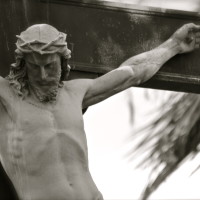
God gives perspective that, in many ways, our scars make us who we are. I look at my own life. I’m sure you can find places in yours as well. Places in our lives where we’ve experienced pain, loneliness, sadness, frustration, despair, depression, and a host of other scars upon our lives, but you know what I’ve experienced? I’ve seen that God uses the pain of life to give me perspective. jesus cross black and whiteHope for the Broken that it’s OK that I’m broken, that my body has betrayed me with illness; friends have betrayed me so I would learn forgiveness; and that ministry would be born of the places of the greatest scars.

We follow a God like that.

Look at His hands.

Pierced for the sinner’s forgiveness.

Scarred to toughen that wound we have and soften our hearts towards God and others.

Scott Krippayne has a song with lyrics that go like this:

  • All who sail the sea of faith
  • Find out before too long
  • How quickly blue skies can grow dark
  • And gentle winds grow strong
  • Suddenly fear is like white water
  • Pounding on the soul
  • Still we sail on knowing
  • That our Lord is in control
  • Sometimes He calms the storm
  • With a whispered peace be still
  • He can settle any sea
  • But it doesn’t mean He will
  • Sometimes He holds us close
  • And lets the wind and waves go wild
  • Sometimes He calms the storm
  • And other times He calms His child
  • He has a reason for each trial
  • That we pass through in life
  • And though we’re shaken
  • We cannot be pulled apart from Christ
  • No matter how the driving rain beats down
  • On those who hold to faith
  • A heart of trust will always
  • Be a quiet peaceful place

God gives Hope for the Broken in (1) companionship, (2) encouragement, and (3) perspective, but it’s more than just that.

  • (4) God is as near as you need Him to be. Scott Krippayne calls the heart of trust a quiet peaceful place. The Hebrew4Christians devotional talks about that “close to the brokenhearted” as meaning near enough to touch. In Paul’s case, God was with him and Hope was right next door where God had His work ready to roll. Right there in the neighborhood.

7 Then Paul left the synagogue and went next door to the house of Titius Justus, a worshiper of God. 8 Crispus, the synagogue ruler, and his entire household believed in the Lord; and many of the Corinthians who heard him believed and were baptized.

Success in ministry was next door. It was like God, as coach, was encouraging Paul to keep his pace going. A second wind was on its way. In the words of Dory in Finding Nemo, “Just keep swimming; just keep swimming.”

9 One night the Lord spoke to Paul in a vision: “Do not be afraid; keep on speaking, do not be silent. 10 For I am with you, and no one is going to attack and harm you, because I have many people in this city.” 11 So Paul stayed for a year and a half, teaching them the word of God.

And in case Paul didn’t pick up on Hope for the Broken from what was next door, God make a point of driving home that message in a vision. It’s not a mistake what you’re doing. It’s not a failure of ministry. It’s OK, Paul, I know what’s going on and it’s all part of what you’re going to suffer for my Name. I understand, Paul. I am with you. No one is going to attack or harm you, God says. Then He says something really interesting. “Because I have many people in this city.”

A few things immediately come to mind. Like when Elijah heard the still small voice of God at Mount Horeb while crying out that he was the only prophet left.

1 Kings 19:14 He replied, “I have been very zealous for the LORD God Almighty. The Israelites have rejected your covenant, broken down your altars, and put your prophets to death with the sword. I am the only one left, and now they are trying to kill me too.” 15 The LORD said to him, “Go back the way you came, and go to the Desert of Damascus. When you get there, anoint Hazael king over Aram. 16 Also, anoint Jehu son of Nimshi king over Israel, and anoint Elisha son of Shaphat from Abel Meholah to succeed you as prophet. 17 Jehu will put to death any who escape the sword of Hazael, and Elisha will put to death any who escape the sword of Jehu. 18 Yet I reserve seven thousand in Israel– all whose knees have not bowed down to Baal and all whose mouths have not kissed him.”

wheat fieldPaul was not alone just like Elijah wasn’t alone.

Paul might not have been crying out on the outside like Elijah, but Paul was human and part of the human condition is to become weary in spirit as we do not see fruit for all our hard work. When we feel all alone. When we’re working our fingers to the bone and there’s no encouragement to be found.

God tells Paul that He has many people there.

In a field of wheat and tares, we see the weeds but God sees the wheat. It’s there. It’s still there. It’s still wheat no matter how many weeds surround it.

God has many people, even in a broken place like Corinth. Reminds me also of Jonah’s frustration at preaching to people he didn’t feel like deserved it. To that mindset, God replies, Jonah 4:11 But Nineveh has more than a hundred and twenty thousand people who cannot tell their right hand from their left, and many cattle as well. Should I not be concerned about that great city?”

God is concerned even for people who are too broken to know that they’re broken.

Such was the Church at Corinth. I can see why Paul may have been wondering if he was wasting his time in a fruitless endeavor. Spinning his wheels. Throwing good effort after bad. Imagine taking the worst of Washington DC, Las Vegas, and Chicago and making a church out of that. You’d have a picture of Corinth. It was a terribly broken place.

  • (5) Hope for the Broken means that a broken Paul would be used by God to minister to this broken city and form a church on a Gospel that heals the broken. Gives them hope in their brokenness.

Corinth was a broken place, but not without hope. If God can be concerned for Nineveh and for Corinth, no matter what brokenness you have in life, you are not beyond God’s ability to offer hope and healing. But realistically speaking, the more baggage we have the more baggage we need to lay down. And the Corinthians had lots of baggage, probably made with fine Corinthian leather.

12 While Gallio was proconsul of Achaia, the Jews made a united attack on Paul and brought him into court. 13 “This man,” they charged, “is persuading the people to worship God in ways contrary to the law.” 14 Just as Paul was about to speak, Gallio said to the Jews, “If you Jews were making a complaint about some misdemeanor or serious crime, it would be reasonable for me to listen to you. 15 But since it involves questions about words and names and your own law– settle the matter yourselves. I will not be a judge of such things.” 16 So he had them ejected from the court. 17 Then they all turned on Sosthenes the synagogue ruler and beat him in front of the court. But Gallio showed no concern whatever.

Paul would be falsely accused. Again. He was just about to speak (and demonstrate that Jesus Christ is the fulfillment of the Law) when Gallio ejected everyone from the court. To him, it was a Jewish problem not a Corinthian one. What would happen on the streets would stay on the streets. Poor Sosthenes was beaten on the courthouse steps, probably because he was the synagogue ruler. And yet Sosthenes, this Jewish synagogue leader, is mentioned one more time at the beginning of the first letter to the Corinthians as a companion of Paul’s. Evidence that there is hope for the broken. The letters of Paul to the Church at Corinth are a manual, of sorts, for how to deal with broken churches. Timeless hope for God’s Church. God offers Hope for the Broken.

Hope for a broken Sosthenes, Hope for a broken Corinth, Hope for a broken Paul. Broken in different ways, but broken all the same. Romans 5:8 But God demonstrates his own love for us in this: While we were still sinners, Christ died for us.

The Gospel is called Good News because it tells us of Hope. What kind of hope do you need today?

Hope for the Broken as…

  1. Companionship
  2. Encouragement
  3. Perspective
  4. Nearness of God and
  5. Knowing He cares about you even while you are broken?

Today is the day to pray for God to give you the kind of hope you need. We all experience brokenness. But God can give hope in all these place. He offers Hope for the Broken.

Continue Reading

Unknown God-sermon text version

Back in 1961 Ricky Nelson sang a song called Travelin’ Man with the lyrics

  • I’m a travelin’ man
  • I’ve made a lot of stops all over the world
  • And in every part I own the heart
  • Of at least one lovely girl

If Ricky Nelson had a girl he left behind in every place he went, the Apostle Paul had his heart tied to a church he left behind. Kicked out of Philippi. Kicked out of Thessalonica. Kicked out of beloved Berea with those noble Bereans who studied the Word of God like their lives depended on it. Of course, Paul’s partners Silas and Timothy stayed behind in Berea to make sure everything was up and running. But they were going to be a while. Paul was a fugitive missionary, shipped off to Athens.

Acts 17:16 While Paul was waiting for them in Athens, he was greatly distressed to see that the city was full of idols.

It’s like touring an apartment, turning on the lights and seeing the roaches the size of small automobiles scurrying for the nearest crack in the wall. Ugh. Not exactly encouraging. So for Paul, it’s like a recurring nightmare. Paul must have been wondering what on earth God was doing with him. Show up. See people for whom Jesus Christ is an unknown God. Preach the Word. Make a lot of enemies. Get persecuted, booted out, and otherwise be dismissed. He’s a travelin’ man making a lot stops and enemies, all over the world. And in every part, he left his heart with a church he’d just unfurled.

So here he is in Athens to repeat this cycle. Starting with the synagogue. Just like the last time.

17 So he reasoned in the synagogue with the Jews and the God-fearing Greeks, as well as in the marketplace day by day with those who happened to be there.

Today, we’re going to see the wisdom of Paul’s strategy when speaking to people for whom Jesus is an Unknown God.
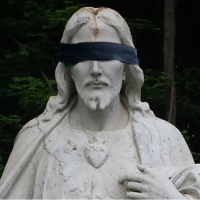
blindfolded JesusTo the Jews in the synagogue, Jesus was an Unknown God, not because they couldn’t have known Him, but because they hadn’t connected the dots. To them, before seeing Jesus revealed in their Scriptures, Jesus was not a god at all. He was just a guy.  They had a Messiah they were waiting for, but even that Christ was not supposed to be God. The Shema of Israel states it very clearly: Deuteronomy 6:4 Hear, O Israel: The LORD our God, the LORD is one. The Jews had been reciting that since the days of Moses. They knew it front and back, sideways and upside down. They could count to one and Jesus made two. Jesus was Unknown to them because they didn’t know that One God is Triune. One God, Three “Persons” which isn’t the same as “people.” Three windows of revelation into the same One God. One God to them meant “1” so Jesus was Unknown.

How did Paul deal with people who had the Scriptures, (the Torah, what our Jewish friends have even today as their Bible) our Old Testament? Paul reasoned with them from their Scriptures as the launching point.

But what do you do when someone doesn’t have a Bible background? Maybe someone grew up Catholic, never read their Bible, but only went to mass a couple of times a year and the priest said it all in Latin. Maybe someone grew up Buddhist or Hindu and has clearly formed ideas about those religions, but really no Christian background or understanding at all. Maybe someone was raised by atheists who don’t even believe God exists! Maybe people who believe that Christ is somehow related to Christmas and that’s Santa. What do you do? Paul shows us.

He goes where they are. To the marketplace of goods and services…and ideas. And he doesn’t start off by pointing to a Bible they have no clue about and reasoning from the Scriptures. Paul was starting with Jesus and the Resurrection. He was preaching Jesus as Good News.

Good news is something we can all relate to. Couldn’t we all use a little good news?

What are the needs of the people you know? What are the needs of this community here in Racine? Jobs. Safety. Food. Education. We’re entering into election season in the US. Candidates, whether Republican, Democrat, Libertarian, Communist, Green, Independent…they all are trying to focus on “felt needs” to be able to have voters relate…and say “This candidate cares about people like me.”

Paul cared and was not only widely traveled, but also highly educated and deeply discerning. What unifies all mankind? Romans 3:23 for all have sinned and fall short of the glory of God. Yup. We’re all sinners and are going to hell apart from Christ. We all need to be saved for eternity as a first order of business. If you have worship right, the rest of life is more bearable and can often fall into place in ways we don’t know at the outset.

A job? Maybe salvation in Christ will connect you with people who can give you one. Safety? Maybe salvation in Christ will reorient your life to godly living and help you to reach one person who will reach one person and result in many giving up a life of crime. Food? Maybe salvation in Christ will connect you with people who can help you today with a fish, but moreover teach you to fish and provide for yourself down the road with fish to spare to repeat the process with those you meet.

Hear me clearly: It’s not some “prosperity gospel” where you believe in Jesus and you’ll win the lottery. Believe in Jesus and flip houses and be a millionaire overnight. Jesus is not a get-rich-quick scheme with a halo.

prayerBut when we communicate Christ Jesus with others, we are sharing the greatest riches we have and if we truly believe God provides our daily bread…well, that is why we pray,

“Give us this day our daily bread.”

So who did Paul meet in the marketplace of ideas? A bunch of philosophers who sat around all day taking in the latest and greatest ideas. They were the ones on Twitter, in elite colleges, and writing Op-Eds long before those things existed.

18 A group of Epicurean and Stoic philosophers began to dispute with him. Some of them asked, “What is this babbler trying to say?” Others remarked, “He seems to be advocating foreign gods.” They said this because Paul was preaching the good news about Jesus and the resurrection.

Babbler because what he was proclaiming sounded like nonsense to them—resurrection? Ha! Advocating foreign gods because the Greeks didn’t have a temple or an idol that looked like Jesus. To them, Jesus was an Unknown God. He wasn’t on the list of “approved gods.” He was destined for their spam folder or blocked by their firewall.

Who were these Epicureans? They believed in pursuit of pleasure. They believed that all pain could be and should be eliminated from life. They believed that all those Greek gods were a bunch of hooey. They were intellectual elites. They may have believed that there’s some sort of god who put everything in motion, but that this god didn’t involve himself in anyone’s life. Not a relational god, but more like a Big Bang and auto-pilot. If you think this sounds like the National Academy of the Sciences, you’ve got a pretty good modern picture of the Epicureans whose expert advice could save the world by pursuing goodness and pleasure, eliminating pain, and by human philosophic and scientific ingenuity.

They talked a lot. They argued a lot. Kind of like Congress. Arguing because there was little bipartisanship with the Stoics, that other group in the Athenian marketplace.

Stoicism was a popular philosophy of that day. Stoics were like their name sounds. They are seemingly indifferent to or unaffected by joy, grief, pleasure, or pain. They were nose-to-the-grindstone kind of people. Realists, believing that there IS a supreme god, but he’s left me on my own. Be real. Get real. Life is short. Then you die. Or in the words of author David Gerrold, “Life is hard. Then you die. Then they throw dirt in your face. Then the worms eat you. Be grateful it happens in that order.”

To the Stoics, the world is determined by fate and random chance, and you either win life’s lottery or you don’t. John Stott described their mindset: “human beings must pursue their duty, resigning themselves to live in harmony with nature and reason, however painful this might be, and develop their own self-sufficiency.”

You’re on your own. Be a Stoic, unless you’re an Epicurean who wants pleasure and no pain. And they were both there in the marketplace of ideas and had some sort of generalized sense of a god who put everything in place and who then went away on a forever vacation, leaving us to cope on our own.

So here comes Paul, preaching about Jesus who was raised from the dead and both the Epicureans and the Stoics would have thought no one would want to be resurrected from the dead. It’s not pleasurable and it’s more of a painful hard life to be endured. To them, Paul was a babbler, making no sense whatsoever!

19 Then they took him and brought him to a meeting of the Areopagus, where they said to him, “May we know what this new teaching is that you are presenting? 20 You are bringing some strange ideas to our ears, and we want to know what they mean.” 21 (All the Athenians and the foreigners who lived there spent their time doing nothing but talking about and listening to the latest ideas.)

At least they were open to hearing ideas. Don’t invite Paul to speak unless you’re prepared to get the Gospel with both barrels, full strength, undiluted, uncut, untrimmed, and with all the power of the Holy Spirit. He’s going to tell them that Jesus is God. They just don’t know it yet. Jesus is presently unknown.

22 Paul then stood up in the meeting of the Areopagus and said: “Men of Athens! I see that in every way you are very religious. 23 For as I walked around and looked carefully at your objects of worship, I even found an altar with this inscription: TO AN UNKNOWN GOD. Now what you worship as something unknown I am going to proclaim to you.

Now, let me add clarification that the Athenians weren’t worshiping Christ as THE Unknown God. The Athenians were covering their bases.

It was fire insurance. Just in case they’d overlooked a god who was important, they could just point to that altar and tell that god, “Oh! That one’s for you! We just didn’t know what to call you.” Covered so he wouldn’t get angry and throw lightning bolts or something. Hedging all their bets and covering all the angles. The altar to AN UNKNOWN GOD is not concerned about an inability to identify like the Tomb of the Unknowns at Arlington Cemetery. It’s all about making sure you’re not passing over the real one.

But Jesus, however unknown He presently was to the Athenians, is not just one god among many. He’s the only One. So Paul, having already mentioned Jesus and the resurrection (which are not two separate gods: Jesus and the one named Resurrection, Anastasis) goes on to build off of what the Athenians knew…just like Paul built off the Scriptures with the Jews. With philosophers, he points to what they already know. Education, it is said, is like creating Velcro hooks onto which one builds a body of knowledge. Gotta start hanging things somewhere. So Paul says,

24 “The God who made the world and everything in it is the Lord of heaven and earth and does not live in temples built by hands. 25 And he is not served by human hands, as if he needed anything, because he himself gives all men life and breath and everything else. 26 From one man he made every nation of men, that they should inhabit the whole earth; and he determined the times set for them and the exact places where they should live. 27 God did this so that men would seek him and perhaps reach out for him and find him, though he is not far from each one of us. 28 ‘For in him we live and move and have our being.’ As some of your own poets have said, ‘We are his offspring.’ 29 “Therefore since we are God’s offspring, we should not think that the divine being is like gold or silver or stone– an image made by man’s design and skill. 30 In the past God overlooked such ignorance, but now he commands all people everywhere to repent. 31 For he has set a day when he will judge the world with justice by the man he has appointed. He has given proof of this to all men by raising him from the dead.”

shot glass.jpgThere’s a lot packed into this speech. And we won’t have time today to look at it in the depth we could. But let me draw a few points about what is called “contextualization” of the Gospel by Paul even quoting one of their own poets! Paul was an intellectual in addition to being the greatest evangelist the world has known. Remember our friends the Bereans? They were noble because they examined the Scriptures to see if what Paul was telling them was true. The Athenians had a whole pantheon of gods and adding one more was no big deal. The more, the merrier. Had Paul said adding one more among many is fine, that would have been compromise of the truth and what is sometimes called syncretism (basically a great big religious soup blended together) or pluralism (like a collection of divine shot glasses).  Paul does not compromise.  Jesus stands alone!

But along comes Paul who can quote their own poets, but also tells them that there’s only One God. He is the Lord of heaven and earth and cannot be contained in any temple no matter how marvelous or beautiful it seems to us. God doesn’t need anything we can bring to the table. God gives us life, not the other way around. To both the Epicureans and the Stoics, Paul says, 27 God did this so that men would seek him and perhaps reach out for him and find him, though he is not far from each one of us.

He’s not far. He’s not impersonal. He’s real. And He cares how you live. He cares what you find pleasure in. He cares what you do with your pain. He cares about your life. Personally. Individually. You’re not just one in a crowd to Him. And “Life is short then you die.” And therefore, God wants people to repent. A Judgment Day is coming.

Humans are different. They are not like a leaf on the forest floor, dirt in our faces, eaten by worms until all we are is just compost. We die and then we are judged. The whole world will be judged. Some will be judged on the basis of what they did with their lives because Jesus was unknown to them and they remained unknown to Him as saved. “I never knew you” (Matthew 7:23).

Others will be judged on the basis of the finished work of Christ—and believing the Good News, resurrected to everlasting life. All the dead will face judgment, Scripture says in Hebrews 9:27. And Jesus is the Judge because He was the first to be resurrected from the dead and accepted to be the man [God] has appointed.

Do you know Jesus? Does He know you?

It’s as easy as believing that Jesus died for human sin and that you need His forgiveness. That’s why Paul’s speech says, 30 In the past God overlooked such ignorance, but now he commands all people everywhere to repent.

Confessing sins to God means admitting that no matter how good or smart or moral or clever we are, we sin. And we don’t ever want to be judged on our own merit. Stop and think for a moment. Can you remember any mistake, any harsh word, any unloving thought or action, any stolen cookie from Grandma’s plate of cookies? For every one of those you can remember, God remembers millions that you don’t maybe even recall at all! When you’re judged it won’t be on a curve. Any one of those sins, left unforgiven, is enough to send you to hell because God won’t allow unforgiven sin in heaven. That’s scary!

But here’s where it’s GOOD News! In Christ, we don’t have to remember them all. Instant forgiveness of every sin. God wants all people to repent and be forgiven so that He can save them to eternal life and be resurrected to the new heaven.

32 When they [the Epicureans, Stoics, and Athenians] heard about the resurrection of the dead, some of them sneered, but others said, “We want to hear you again on this subject.” 33 At that, Paul left the Council. 34 A few men became followers of Paul and believed. Among them was Dionysius, a member of the Areopagus, also a woman named Damaris, and a number of others.

Was Paul’s ministry there a failure because only a few came along and believed? Can such a few make a difference?

Was his technique a flop? Maybe he needed a different strategy like he used with the Jews and God-fearing Greeks at the synagogue where the woman named Damaris presumably heard the message since she wouldn’t have been at the Areopagus.

I’d argue that it was not a failure. There were places where Jesus’ ministry was less because of unbelief (his hometown of Nazareth being one notable example). But we have a record in our Bibles of that and of Paul’s speech. Seeds sown through the generations because it was recorded.

We may not be large in number here at Plymouth, but I’m trusting God that few in number isn’t small in significance because we are about making Jesus known. The sermons are posted. They are recorded. You can hand them to people, forward them via email and they are out there in the world wide web for anyone to hear and read on Plymouth’s web site.   We’re touching the globe from the corner of College and 12th in Racine.

Jesus doesn’t need to be an Unknown God when you can make Him known. Let’s pray.

 

Continue Reading

Unknown God-audio version

On the Apostle Paul’s 2nd missionary journey, he ends up in Athens alone.  He reasons with the Jews at the synagogue and then heads to the marketplace where he meets some philosophers to whom Jesus was an unknown God.    Paul speaks at the Areopagus and teaches us the difference between careful contextualization of the Gospel message (which the Apostle Paul does artfully) and a reckless compromising of the integrity of Scripture which Paul would never do.  This message was first preached at Plymouth Congregational Church of Racine, WI on August 9, 2015 by Barbara Shafer.

Continue Reading