Advent 24 (2012)–When God Interrupts
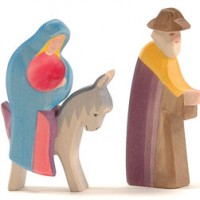 Luke 2:1 In those days Caesar Augustus issued a decree that a census should be taken of the entire Roman world. 2 (This was the first census that took place while Quirinius was governor of Syria.) 3 And everyone went to his own town to register. 4 So Joseph also went up from the town of Nazareth in Galilee to Judea, to Bethlehem the town of David, because he belonged to the house and line of David. 5 He went there to register with Mary, who was pledged to be married to him and was expecting a child. (NIV)
From the moment that we’re born, we enter mortality— life with an end.
We don’t enter into immortality–eternal life–when we’re born. We enter it when we’re born again.
The sad story of humanity has been that since the fall of mankind, mortality is the routine we get. We’ve been going to hell in a hand basket, personally, as families, as governments, as a culture,–indeed in every way possible our routines have followed the same old rut of mortality.
But then God interrupts all of this. He interrupts with a Savior.
Today’s passage—indeed the whole Christmas story—is God’s interruption in the midst of man’s routines. Our plans involve getting up every morning and living life in the same old way until our lives are over. But for Mary and Joseph, God’s design interrupted their whole future and gave it entirely new meaning.
While God interrupts and inconveniences us in many ways, He doesn’t view these interruptions as veering from the plan. They ARE the plan and in light of eternity, we can see that it’s all by God’s perfect design. Just look at these interruptions:
- Mary would supernaturally conceive the Christ child, Jesus –even though it would strain her relationship with almost everyone she knew (including Joseph who was originally thinking of divorcing Mary quietly).
- But after an angel appeared to Joseph in a dream, he would take Mary home as his wife even though it would ruin his reputation forever as a righteous man.
- In the last days of Mary’s pregnancy, the government would suddenly get the bright idea to inconvenience everyone by making them go to register in a census in Bethlehem, about 100+ miles from home.
- Walking at the speed of a full-term pregnancy, they would arrive presumably later than many others and they would find no room at the inn. They’d stay in a stable.
- So on Christmas night, Jesus would be born in a most inconvenient place: a stable. His first bed would be a feeding trough.
But here we see evidence that when God interrupts, He does it by design. In this way, Jesus would be born exactly as the Scriptures foretold and the shepherds would know where to find him, distinguished from all the other babies in Bethlehem.
Luke 2:8 And there were shepherds living out in the fields nearby, keeping watch over their flocks at night. 9 An angel of the Lord appeared to them, and the glory of the Lord shone around them, and they were terrified. 10 But the angel said to them, “Do not be afraid. I bring you good news of great joy that will be for all the people. 11 Today in the town of David a Savior has been born to you; he is Christ the Lord. 12 This will be a sign to you: You will find a baby wrapped in cloths and lying in a manger.” 13 Suddenly a great company of the heavenly host appeared with the angel, praising God and saying, 14 “Glory to God in the highest, and on earth peace to men on whom his favor rests.” 15 When the angels had left them and gone into heaven, the shepherds said to one another, “Let’s go to Bethlehem and see this thing that has happened, which the Lord has told us about.”
Advent 23 (2012)–Three Month Stay to Prepare the Way
“Mary stayed with Elizabeth for about three months and then returned home.” (Luke 1:56)
I wonder about “about”. Three plus six equals nine. Elizabeth was six months along when Mary heard the angel’s words and hurried to see her relative. Elizabeth would be at nine months at this point. The question would be, “Did Mary stay until Elizabeth had delivered her baby or did she leave just prior?” Scripture (interestingly) doesn’t say. Instead, it just describes the birth of John the Baptist who would prepare the way for the Messiah.
Luke 1:57 When it was time for Elizabeth to have her baby, she gave birth to a son. 58 Her neighbors and relatives heard that the Lord had shown her great mercy, and they shared her joy. 59 On the eighth day they came to circumcise the child, and they were going to name him after his father Zechariah, 60 but his mother spoke up and said, “No! He is to be called John.” 61 They said to her, “There is no one among your relatives who has that name.” 62 Then they made signs to his father, to find out what he would like to name the child. 63 He asked for a writing tablet, and to everyone’s astonishment he wrote, “His name is John.” 64 Immediately his mouth was opened and his tongue was loosed, and he began to speak, praising God. 65 The neighbors were all filled with awe, and throughout the hill country of Judea people were talking about all these things. 66 Everyone who heard this wondered about it, asking, “What then is this child going to be?” For the Lord’s hand was with him. 67 His father Zechariah was filled with the Holy Spirit and prophesied: 68 “Praise be to the Lord, the God of Israel, because he has come and has redeemed his people. 69 He has raised up a horn of salvation for us in the house of his servant David 70 (as he said through his holy prophets of long ago), 71 salvation from our enemies and from the hand of all who hate us– 72 to show mercy to our fathers and to remember his holy covenant, 73 the oath he swore to our father Abraham: 74 to rescue us from the hand of our enemies, and to enable us to serve him without fear 75 in holiness and righteousness before him all our days. 76 And you, my child, will be called a prophet of the Most High; for you will go on before the Lord to prepare the way for him, 77 to give his people the knowledge of salvation through the forgiveness of their sins, 78 because of the tender mercy of our God, by which the rising sun will come to us from heaven 79 to shine on those living in darkness and in the shadow of death, to guide our feet into the path of peace.” 80 And the child grew and became strong in spirit; and he lived in the desert until he appeared publicly to Israel.
Advent 22 (2012)–Magnificat
And Mary said: “My soul magnifies the Lord, And my spirit has rejoiced in God my Savior.'” Luke 1:46-47 New King James Version
 The Magnificat, as Mary’s song is often called, is rich with theology. The name Magnificat comes from the Latin for [My soul] “magnifies” translated this way in the New King James (above), but below as “glorifies” in the NIV.
Mary knew how to praise. She was no uneducated neophyte when it came to the Scriptures and her command of Hebrew poetry is obvious too.
A noticeable feature of Hebrew poetry is parallelism. It is largely displayed in the Psalms, but also in songs interspersed elsewhere in the Bible. Parallelism happens when nearby words express a similar general idea. Here is the whole song of Mary from the NIV. See if you can find the parallel thoughts:
Luke 1: 46 And Mary said: “My soul glorifies the Lord 47 and my spirit rejoices in God my Savior, 48 for he has been mindful of the humble state of his servant. From now on all generations will call me blessed, 49 for the Mighty One has done great things for me– holy is his name. 50 His mercy extends to those who fear him, from generation to generation. 51 He has performed mighty deeds with his arm; he has scattered those who are proud in their inmost thoughts. 52 He has brought down rulers from their thrones but has lifted up the humble. 53 He has filled the hungry with good things but has sent the rich away empty. 54 He has helped his servant Israel, remembering to be merciful 55 to Abraham and his descendants forever, even as he said to our fathers.”
- My soul. My spirit.
- Magnifies/glorifies. Rejoices.
- The Lord. God my Savior.
- Generations will call me blessed. His mercy extends to the generations.
Then there are 3 parallel contrasts outlining God’s care for the righteous poor and their ultimate vindication contrasted with the self-made man who does not need God :
- He performs mighty deeds on behalf of those who fear Him (i.e. the humble) but He scatters those who don’t (i.e. the proud).
- He brings down rulers but raises up the humble.
- He fills the hungry, but sends the rich away empty.
And finally, the praise begun at the outset of the Magnificat repeats a refrain extolling the King who helps His servants. He is mindful of Mary (v 48) and He remembers His people Israel (v 54).
This lovely song expressed Mary’s heart of praise and thanksgiving as she awaited the baby who would be born Messiah. As we wait for Jesus’ return, let our souls magnify the Lord and rejoice in God our Savior!
Advent 21 (2012)–Women Blessing Women
The angel has just left Mary and she would not hear from him again.
No booster shots of encouragement.
No bolstering of her faith from an angelic messenger.
Instead, God uses another woman, her relative Elizabeth, to do the work of encouraging and affirming.
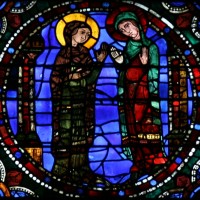 “At that time Mary got ready and hurried to a town in the hill country of Judea, where she entered Zechariah’s home and greeted Elizabeth. When Elizabeth heard Mary’s greeting, the baby leaped in her womb, and Elizabeth was filled with the Holy Spirit. In a loud voice she exclaimed:
‘Blessed are you among women, and blessed is the child you will bear! But why am I so favored, that the mother of my Lord should come to me? As soon as the sound of your greeting reached my ears, the baby in my womb leaped for joy. Blessed is she who has believed that what the Lord has said to her will be accomplished!'” (Luke 1:39-45)
One of the things I like best about the Gospel account from Luke regarding the birth of Christ is the presence of three women of faith: Mary, Elizabeth, and Anna. It is here that Elizabeth—filled with the Holy Spirit—loudly proclaims Mary’s faith in the promises of God.
Scripture does not tell us specifically whether Mary sent a message to Elizabeth ahead of her arrival, but after the angel left, “Mary got ready and hurried.” This suggests that she didn’t wait but rather went straightaway. Maybe she was eager to see God’s proof, the evidence in the life of Elizabeth. Maybe she didn’t want for people to think—in her small town of Nazareth—that she was secretly having relations with Joseph so she got out of town for nine-month-calculation purposes.
What is clear is that Elizabeth believed (just as Mary did) and that the ministry of John the Baptist–preparing the way for Jesus—began while both babies were yet in utero. That is an amazing thing in and of itself.
Women blessing women. It was a two-way street. Mary would have affirmed Elizabeth’s pregnancy was a miracle of God and this would have blessed Elizabeth. In return, the sixth month for Elizabeth’s pregnancy just as the angel had said, Elizabeth’s baby leaping for joy, and also Elizabeth’s words would have encouraged Mary three times over.
It is amazing the way God uses us to encourage one another!
To whom can you be an encouragement today?
Advent 20 (2012)–Beautiful Obedience; Lovely Submission
Luke 1:36 Even Elizabeth your relative is going to have a child in her old age, and she who was said to be barren is in her sixth month. 37 For nothing is impossible with God.” 38 “I am the Lord’s servant,” Mary answered. “May it be to me as you have said.” Then the angel left her.
 Obedience.
Submission.
If there are two words that strike fear into many women in our modern culture, these would be two.
That is so unfortunate! For those two words wrap up the beautiful response of faith that Mary gave.
“I am the Lord’s servant,” Mary answered. “May it be to me as you have said.” (Luke 1:38)
Maybe part of the reason we fail to see the beauty of obedience and submission is because we are in a world obeying the wrong things and we are submitting in wrong places.
Notice that Mary’s response wasn’t:
- I need to ask Mom and Dad if all of this is OK with them.
- Joseph isn’t going to like this. I don’t know. Let me check with him first.
- Joseph is the man and I need to submit to his will on this.
Mary knew that her obedience and submission were to God alone.
For that reason, she gave us an example of beautiful obedience and lovely submission–an example worthy of using as a pattern for godly living…for men and women…in whatever age.
* * *
For further meditation:
What are your initial sentiments regarding obedience? How about submission?
How have these issues divided men and women throughout the ages?
Advent 19 (2012)–Perfect Evidence
 Have you ever wondered if God was calling you to do something or if you just imagined it?
It happens to me a lot.
* * *
In fact, the stranger the thing is that God wants me to do, the more I have a tendency to put it off and/or debate myself over it.
Was that little voice God or me?
I have been known to ask God for an indication that He’s behind it because if it’s just me, I don’t want to do it.
But if it’s God, well then that’s a different situation entirely.
Obedience to God is required.
Obedience to myself is typically foolhardy.
The angel spelled out for Mary what would happen, but notice that Mary didn’t ask God for a sign or any proof at all. Why would God include this piece of evidence?
“Even Elizabeth your relative is going to have a child in her old age, and she who was said to be barren is in her sixth month” (Luke 1:36).
I wonder if God gave her a little proof that her faith was not unfounded because it would be easy to doubt the whole thing after the angel left. This evidence God provided was perfect!
By reminding her of the miracle of Isaac’s birth to Abraham and Sarah (who was barren), by giving Mary a corollary living example of the present miracle in Elizabeth’s life, God anchored Mary’s hope in the past covenant promises and directs her hope in the direction of God’s faithfulness to do what He says.
For further meditation:
By faith Abraham, even though he was past age– and Sarah herself was barren– was enabled to become a father because he considered him faithful who had made the promise. And so from this one man, and he as good as dead, came descendants as numerous as the stars in the sky and as countless as the sand on the seashore (Hebrews 11:11-12, NIV)
Is there anything in your life right now that could use an anchor of hope?
Advent 18 (2012)–He is the Son of God
Luke 1:35 And the angel answered her, ”The Holy Spirit will come upon you, and the power of the Most High will overshadow you; therefore the child to be born will be called holy—the Son of God.” (ESV)
The Son of God.
Earlier the angel had said “Son of the Most High” which was also a Messianic term. But, here it is unmistakable: He is the Son of God!
Think about how significant this is.
Jesus was—at one point in time–a nanoseconds old embryo formed in the womb of a humble peasant girl from Nazareth.
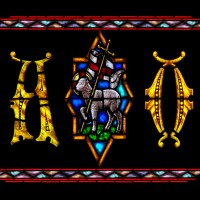 Yet He was, is, and always will be God.
- He is the Eternal One, the Alpha and the Omega.
- The Creator of the universe, sustaining all things by his powerful word.
- His hands formed Adam and Eve from dust of the ground.
- He is the greatest representation of love to ever walk the earth.
- At His command, the winds were silenced, the sea was stilled, and Lazarus would return from death to life.
- His words would heal the blind man and restore a dead son alive to his mother.
- He is the radiance of God’s glory
- The perfect Image of God.
- He saw and knew the Father in His glory from before recorded time.
- He is the King of Kings and the Lord of Lords forevermore.
- Angels fall at His feet in worship.
Scripture says,
He is the image of the invisible God, the firstborn over all creation. For by him all things were created: things in heaven and on earth, visible and invisible, whether thrones or powers or rulers or authorities; all things were created by him and for him. He is before all things, and in him all things hold together. And he is the head of the body, the church; he is the beginning and the firstborn from among the dead, so that in everything he might have the supremacy. For God was pleased to have all his fullness dwell in him, and through him to reconcile to himself all things, whether things on earth or things in heaven, by making peace through his blood, shed on the cross. (Colossians 1:15-20 NIV)
Jesus is the One and Only Son of God sent on a mission to save us.
Conceived by the Holy Spirit in the womb of Mary, He is the Son of God.
Advent 17 (2012)–A Most Holy Moment
Luke 1:35 And the angel answered her,
The Holy Spirit will come upon you, and the power of the Most High will overshadow you; therefore the child to be born will be called holy—the Son of God. (ESV)
There are plenty of misunderstandings and much genuine warping of what happened to Mary. Contrary to what some in a feminist culture wildly assert:
- this was no instance of divine rape;
- it was not consensual sex between God and a human being;
- it was not abusive;
- it was not degrading to women;
- it was not the work of Joseph and Mary;
- and it was not unholy.
Rather, what happened was beautifully holy–exactly what we’d expect from God whose heavenly worshipers are recorded in Scripture as extolling His holiness:
Each of the four living creatures had six wings and was covered with eyes all around, even under his wings. Day and night they never stop saying: “Holy, holy, holy is the Lord God Almighty, who was, and is, and is to come.” (Revelation 4:8)
A thread of pure holiness runs throughout the angel Gabriel’s short answer.
First, there is the agency of the Holy Spirit whose presence will surround Mary with holiness. It was the Holy Spirit’s work to perform the miracle known as the Incarnation. Matthew records it like this:
Matthew 1:18 This is how the birth of Jesus Christ came about: His mother Mary was pledged to be married to Joseph, but before they came together, she was found to be with child through the Holy Spirit. 19 Because Joseph her husband was a righteous man and did not want to expose her to public disgrace, he had in mind to divorce her quietly. 20 But after he had considered this, an angel of the Lord appeared to him in a dream and said, “Joseph son of David, do not be afraid to take Mary home as your wife, because what is conceived in her is from the Holy Spirit. 21 She will give birth to a son, and you are to give him the name Jesus, because he will save his people from their sins.” 22 All this took place to fulfill what the Lord had said through the prophet: 23 “The virgin will be with child and will give birth to a son, and they will call him Immanuel”–which means, “God with us.” 24 When Joseph woke up, he did what the angel of the Lord had commanded him and took Mary home as his wife. 25 But he had no union with her until she gave birth to a son. And he gave him the name Jesus.
Notice how both Mary and Joseph respected the holiness of the situation. Given the cavalier manner in which American youth treat their sexuality in our present culture, it is worth noting how different things were in Mary and Joseph’s day. Purity, honor, righteousness, and respectability were considered virtues.
Next, we see that the power exerted by the Most High was holy. It overshadowed Mary. The word used here for overshadowing carries the meaning of an enveloping protection. (This same word is used when speaking of Jesus at the Mount of Transfiguration. Mark 9:7 Then a cloud formed, overshadowing them, and a voice came out of the cloud, “This is My beloved Son, listen to Him!”–[NAS])
This overshadowing was a most holy moment! Lovingly blanketed in the protection of God’s power, Mary would conceive without human help. The one to be born was conceived in holiness and was uniquely the Son of God.
Advent 16 (2012)–He Answered
Luke 1:35 And the angel answered her,
The Holy Spirit will come upon you, and the power of the Most High will overshadow you; therefore the child to be born will be called holy—the Son of God.(ESV)
Hurrying to the response will make us overlook something really important: God answered.
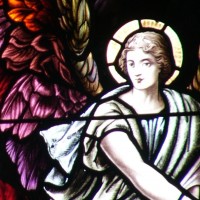 Angels are created beings. Their role was to mediate heavenly revelation from God to man (prior to the coming of the Christ and nowadays the indwelling of His Holy Spirit), to help the pious, and in the future to do God’s will with respect to judgment. Basically, they are servant messengers of God. So when the angel answered, it was because God gave Gabriel an answer to give.
Consider the compassion of God. Rather than just assigning a duty to Mary and expecting her to do it (like a slave), God brings Himself near to Mary and has compassion upon her. He treats her like a beloved child.
He listened. He answered.
God understood that the news would be hard for Mary to hear and to understand. Had the answer been informationally complete, it would have overwhelmed her. It would be too hard for any human being to understand. It is reminiscent of Jesus’ words to His disciples in John 16:12, “I have much more to say to you, more than you can now bear.”
The virgin conception was not part of the Jewish expectation. It stood in stark contrast to the pattern of humanity since Creation. So God unfolded the mystery in beautiful and remarkably simple terms. You can hear His love as an undercurrent, knowing that even the smartest among us is incapable of making what is supernatural into something rational.
With gentleness and compassion, He answered.
What is hard to understand in your life today?
Is there anything you’re finding difficult to bear?
How might knowing that God hears your prayers, knows your confusion, has compassion upon your fears, and also that He answers minister to you in this moment?
Advent 15 (2012)–More Outrageous than Informative
Luke 1:34 And Mary said to the angel, “How will this be, since I am a virgin?” (ESV)
 Out of the million possible answers to her question, the angel responds simply and factually with the most outrageous claim since “Let there be light.” The response is actually far more outrageous than informative. Today, enjoy this photo from Hubble, consider the wonder of creation, the new miracle of the Incarnation, and let the words of Scripture spoken to Mary speak for themselves:
Luke 1:35 And the angel answered her,
The Holy Spirit will come upon you, and the power of the Most High will overshadow you; therefore the child to be born will be called holy—the Son of God. (ESV)
Photo from NASA, ESA and the Hubble Heritage (STScI/AURA)-ESA/Hubble Collaboration, more available at link above.