Back in 1961 Ricky Nelson sang a song called Travelin’ Man with the lyrics
- I’m a travelin’ man
- I’ve made a lot of stops all over the world
- And in every part I own the heart
- Of at least one lovely girl
If Ricky Nelson had a girl he left behind in every place he went, the Apostle Paul had his heart tied to a church he left behind. Kicked out of Philippi. Kicked out of Thessalonica. Kicked out of beloved Berea with those noble Bereans who studied the Word of God like their lives depended on it. Of course, Paul’s partners Silas and Timothy stayed behind in Berea to make sure everything was up and running. But they were going to be a while. Paul was a fugitive missionary, shipped off to Athens.
Acts 17:16 While Paul was waiting for them in Athens, he was greatly distressed to see that the city was full of idols.
It’s like touring an apartment, turning on the lights and seeing the roaches the size of small automobiles scurrying for the nearest crack in the wall. Ugh. Not exactly encouraging. So for Paul, it’s like a recurring nightmare. Paul must have been wondering what on earth God was doing with him. Show up. See people for whom Jesus Christ is an unknown God. Preach the Word. Make a lot of enemies. Get persecuted, booted out, and otherwise be dismissed. He’s a travelin’ man making a lot stops and enemies, all over the world. And in every part, he left his heart with a church he’d just unfurled.
So here he is in Athens to repeat this cycle. Starting with the synagogue. Just like the last time.
17 So he reasoned in the synagogue with the Jews and the God-fearing Greeks, as well as in the marketplace day by day with those who happened to be there.
Today, we’re going to see the wisdom of Paul’s strategy when speaking to people for whom Jesus is an Unknown God.
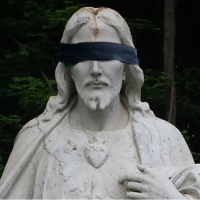 To the Jews in the synagogue, Jesus was an Unknown God, not because they couldn’t have known Him, but because they hadn’t connected the dots. To them, before seeing Jesus revealed in their Scriptures, Jesus was not a god at all. He was just a guy. They had a Messiah they were waiting for, but even that Christ was not supposed to be God. The Shema of Israel states it very clearly: Deuteronomy 6:4 Hear, O Israel: The LORD our God, the LORD is one. The Jews had been reciting that since the days of Moses. They knew it front and back, sideways and upside down. They could count to one and Jesus made two. Jesus was Unknown to them because they didn’t know that One God is Triune. One God, Three “Persons” which isn’t the same as “people.” Three windows of revelation into the same One God. One God to them meant “1” so Jesus was Unknown.
How did Paul deal with people who had the Scriptures, (the Torah, what our Jewish friends have even today as their Bible) our Old Testament? Paul reasoned with them from their Scriptures as the launching point.
But what do you do when someone doesn’t have a Bible background? Maybe someone grew up Catholic, never read their Bible, but only went to mass a couple of times a year and the priest said it all in Latin. Maybe someone grew up Buddhist or Hindu and has clearly formed ideas about those religions, but really no Christian background or understanding at all. Maybe someone was raised by atheists who don’t even believe God exists! Maybe people who believe that Christ is somehow related to Christmas and that’s Santa. What do you do? Paul shows us.
He goes where they are. To the marketplace of goods and services…and ideas. And he doesn’t start off by pointing to a Bible they have no clue about and reasoning from the Scriptures. Paul was starting with Jesus and the Resurrection. He was preaching Jesus as Good News.
Good news is something we can all relate to. Couldn’t we all use a little good news?
What are the needs of the people you know? What are the needs of this community here in Racine? Jobs. Safety. Food. Education. We’re entering into election season in the US. Candidates, whether Republican, Democrat, Libertarian, Communist, Green, Independent…they all are trying to focus on “felt needs” to be able to have voters relate…and say “This candidate cares about people like me.”
Paul cared and was not only widely traveled, but also highly educated and deeply discerning. What unifies all mankind? Romans 3:23 for all have sinned and fall short of the glory of God. Yup. We’re all sinners and are going to hell apart from Christ. We all need to be saved for eternity as a first order of business. If you have worship right, the rest of life is more bearable and can often fall into place in ways we don’t know at the outset.
A job? Maybe salvation in Christ will connect you with people who can give you one. Safety? Maybe salvation in Christ will reorient your life to godly living and help you to reach one person who will reach one person and result in many giving up a life of crime. Food? Maybe salvation in Christ will connect you with people who can help you today with a fish, but moreover teach you to fish and provide for yourself down the road with fish to spare to repeat the process with those you meet.
Hear me clearly: It’s not some “prosperity gospel” where you believe in Jesus and you’ll win the lottery. Believe in Jesus and flip houses and be a millionaire overnight. Jesus is not a get-rich-quick scheme with a halo.
But when we communicate Christ Jesus with others, we are sharing the greatest riches we have and if we truly believe God provides our daily bread…well, that is why we pray,
“Give us this day our daily bread.”
So who did Paul meet in the marketplace of ideas? A bunch of philosophers who sat around all day taking in the latest and greatest ideas. They were the ones on Twitter, in elite colleges, and writing Op-Eds long before those things existed.
18 A group of Epicurean and Stoic philosophers began to dispute with him. Some of them asked, “What is this babbler trying to say?” Others remarked, “He seems to be advocating foreign gods.” They said this because Paul was preaching the good news about Jesus and the resurrection.
Babbler because what he was proclaiming sounded like nonsense to them—resurrection? Ha! Advocating foreign gods because the Greeks didn’t have a temple or an idol that looked like Jesus. To them, Jesus was an Unknown God. He wasn’t on the list of “approved gods.” He was destined for their spam folder or blocked by their firewall.
Who were these Epicureans? They believed in pursuit of pleasure. They believed that all pain could be and should be eliminated from life. They believed that all those Greek gods were a bunch of hooey. They were intellectual elites. They may have believed that there’s some sort of god who put everything in motion, but that this god didn’t involve himself in anyone’s life. Not a relational god, but more like a Big Bang and auto-pilot. If you think this sounds like the National Academy of the Sciences, you’ve got a pretty good modern picture of the Epicureans whose expert advice could save the world by pursuing goodness and pleasure, eliminating pain, and by human philosophic and scientific ingenuity.
They talked a lot. They argued a lot. Kind of like Congress. Arguing because there was little bipartisanship with the Stoics, that other group in the Athenian marketplace.
Stoicism was a popular philosophy of that day. Stoics were like their name sounds. They are seemingly indifferent to or unaffected by joy, grief, pleasure, or pain. They were nose-to-the-grindstone kind of people. Realists, believing that there IS a supreme god, but he’s left me on my own. Be real. Get real. Life is short. Then you die. Or in the words of author David Gerrold, “Life is hard. Then you die. Then they throw dirt in your face. Then the worms eat you. Be grateful it happens in that order.”
To the Stoics, the world is determined by fate and random chance, and you either win life’s lottery or you don’t. John Stott described their mindset: “human beings must pursue their duty, resigning themselves to live in harmony with nature and reason, however painful this might be, and develop their own self-sufficiency.”
You’re on your own. Be a Stoic, unless you’re an Epicurean who wants pleasure and no pain. And they were both there in the marketplace of ideas and had some sort of generalized sense of a god who put everything in place and who then went away on a forever vacation, leaving us to cope on our own.
So here comes Paul, preaching about Jesus who was raised from the dead and both the Epicureans and the Stoics would have thought no one would want to be resurrected from the dead. It’s not pleasurable and it’s more of a painful hard life to be endured. To them, Paul was a babbler, making no sense whatsoever!
19 Then they took him and brought him to a meeting of the Areopagus, where they said to him, “May we know what this new teaching is that you are presenting? 20 You are bringing some strange ideas to our ears, and we want to know what they mean.” 21 (All the Athenians and the foreigners who lived there spent their time doing nothing but talking about and listening to the latest ideas.)
At least they were open to hearing ideas. Don’t invite Paul to speak unless you’re prepared to get the Gospel with both barrels, full strength, undiluted, uncut, untrimmed, and with all the power of the Holy Spirit. He’s going to tell them that Jesus is God. They just don’t know it yet. Jesus is presently unknown.
22 Paul then stood up in the meeting of the Areopagus and said: “Men of Athens! I see that in every way you are very religious. 23 For as I walked around and looked carefully at your objects of worship, I even found an altar with this inscription: TO AN UNKNOWN GOD. Now what you worship as something unknown I am going to proclaim to you.
Now, let me add clarification that the Athenians weren’t worshiping Christ as THE Unknown God. The Athenians were covering their bases.
It was fire insurance. Just in case they’d overlooked a god who was important, they could just point to that altar and tell that god, “Oh! That one’s for you! We just didn’t know what to call you.” Covered so he wouldn’t get angry and throw lightning bolts or something. Hedging all their bets and covering all the angles. The altar to AN UNKNOWN GOD is not concerned about an inability to identify like the Tomb of the Unknowns at Arlington Cemetery. It’s all about making sure you’re not passing over the real one.
But Jesus, however unknown He presently was to the Athenians, is not just one god among many. He’s the only One. So Paul, having already mentioned Jesus and the resurrection (which are not two separate gods: Jesus and the one named Resurrection, Anastasis) goes on to build off of what the Athenians knew…just like Paul built off the Scriptures with the Jews. With philosophers, he points to what they already know. Education, it is said, is like creating Velcro hooks onto which one builds a body of knowledge. Gotta start hanging things somewhere. So Paul says,
24 “The God who made the world and everything in it is the Lord of heaven and earth and does not live in temples built by hands. 25 And he is not served by human hands, as if he needed anything, because he himself gives all men life and breath and everything else. 26 From one man he made every nation of men, that they should inhabit the whole earth; and he determined the times set for them and the exact places where they should live. 27 God did this so that men would seek him and perhaps reach out for him and find him, though he is not far from each one of us. 28 ‘For in him we live and move and have our being.’ As some of your own poets have said, ‘We are his offspring.’ 29 “Therefore since we are God’s offspring, we should not think that the divine being is like gold or silver or stone– an image made by man’s design and skill. 30 In the past God overlooked such ignorance, but now he commands all people everywhere to repent. 31 For he has set a day when he will judge the world with justice by the man he has appointed. He has given proof of this to all men by raising him from the dead.”
 There’s a lot packed into this speech. And we won’t have time today to look at it in the depth we could. But let me draw a few points about what is called “contextualization” of the Gospel by Paul even quoting one of their own poets! Paul was an intellectual in addition to being the greatest evangelist the world has known. Remember our friends the Bereans? They were noble because they examined the Scriptures to see if what Paul was telling them was true. The Athenians had a whole pantheon of gods and adding one more was no big deal. The more, the merrier. Had Paul said adding one more among many is fine, that would have been compromise of the truth and what is sometimes called syncretism (basically a great big religious soup blended together) or pluralism (like a collection of divine shot glasses). Paul does not compromise. Jesus stands alone!
But along comes Paul who can quote their own poets, but also tells them that there’s only One God. He is the Lord of heaven and earth and cannot be contained in any temple no matter how marvelous or beautiful it seems to us. God doesn’t need anything we can bring to the table. God gives us life, not the other way around. To both the Epicureans and the Stoics, Paul says, 27 God did this so that men would seek him and perhaps reach out for him and find him, though he is not far from each one of us.
He’s not far. He’s not impersonal. He’s real. And He cares how you live. He cares what you find pleasure in. He cares what you do with your pain. He cares about your life. Personally. Individually. You’re not just one in a crowd to Him. And “Life is short then you die.” And therefore, God wants people to repent. A Judgment Day is coming.
Humans are different. They are not like a leaf on the forest floor, dirt in our faces, eaten by worms until all we are is just compost. We die and then we are judged. The whole world will be judged. Some will be judged on the basis of what they did with their lives because Jesus was unknown to them and they remained unknown to Him as saved. “I never knew you” (Matthew 7:23).
Others will be judged on the basis of the finished work of Christ—and believing the Good News, resurrected to everlasting life. All the dead will face judgment, Scripture says in Hebrews 9:27. And Jesus is the Judge because He was the first to be resurrected from the dead and accepted to be the man [God] has appointed.
Do you know Jesus? Does He know you?
It’s as easy as believing that Jesus died for human sin and that you need His forgiveness. That’s why Paul’s speech says, 30 In the past God overlooked such ignorance, but now he commands all people everywhere to repent.
Confessing sins to God means admitting that no matter how good or smart or moral or clever we are, we sin. And we don’t ever want to be judged on our own merit. Stop and think for a moment. Can you remember any mistake, any harsh word, any unloving thought or action, any stolen cookie from Grandma’s plate of cookies? For every one of those you can remember, God remembers millions that you don’t maybe even recall at all! When you’re judged it won’t be on a curve. Any one of those sins, left unforgiven, is enough to send you to hell because God won’t allow unforgiven sin in heaven. That’s scary!
But here’s where it’s GOOD News! In Christ, we don’t have to remember them all. Instant forgiveness of every sin. God wants all people to repent and be forgiven so that He can save them to eternal life and be resurrected to the new heaven.
32 When they [the Epicureans, Stoics, and Athenians] heard about the resurrection of the dead, some of them sneered, but others said, “We want to hear you again on this subject.” 33 At that, Paul left the Council. 34 A few men became followers of Paul and believed. Among them was Dionysius, a member of the Areopagus, also a woman named Damaris, and a number of others.
Was Paul’s ministry there a failure because only a few came along and believed? Can such a few make a difference?
Was his technique a flop? Maybe he needed a different strategy like he used with the Jews and God-fearing Greeks at the synagogue where the woman named Damaris presumably heard the message since she wouldn’t have been at the Areopagus.
I’d argue that it was not a failure. There were places where Jesus’ ministry was less because of unbelief (his hometown of Nazareth being one notable example). But we have a record in our Bibles of that and of Paul’s speech. Seeds sown through the generations because it was recorded.
We may not be large in number here at Plymouth, but I’m trusting God that few in number isn’t small in significance because we are about making Jesus known. The sermons are posted. They are recorded. You can hand them to people, forward them via email and they are out there in the world wide web for anyone to hear and read on Plymouth’s web site. We’re touching the globe from the corner of College and 12th in Racine.
Jesus doesn’t need to be an Unknown God when you can make Him known. Let’s pray.
 Jason and the Thessalonian church brothers sent Paul and Silas away under the cover of darkness. That tells you something about how Paul and Silas were viewed by the authorities. They were treated as fugitives, two guys on the run. They had to sneak away and hope they wouldn’t be found…kind of like those two prisoners who escaped the maximum security prison in NY, one to be gunned down and the other apprehended alive after an extensive manhunt. The difference is that Paul and Silas hadn’t done anything wrong. Just words…of truth…spoken to people who didn’t want to hear it.
 he Bereans got that. They studied all the Scriptures they had (which at that point was our Old Testament) and they didn’t get grossed out by all the blood, get confused by a God of wrath, get bogged down in genealogies, get overwhelmed by all the history involving hard to pronounce names, or bored with all the legal stuff about animal sacrifices.
 God-fearers among the Jews and the Gentiles would have had some knowledge of the Scriptures. But there’s nothing like seeing that something has always been there in familiar pages to be convincing. It’s like
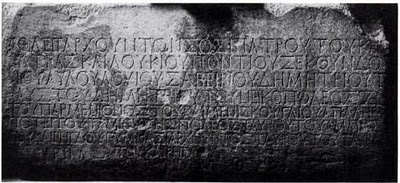 inscription on the Vardar Gate spanning the Egnatian Way barely west from where Paul and Silas were preaching. Though the arch was destroyed in 1867, that
 make my living off the evening news
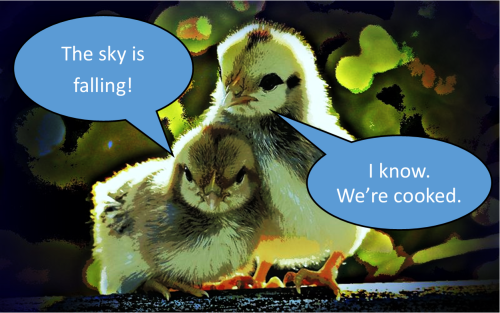 In a world of so many pastors and Christian so-called leaders who are either “Chicken Littles” or chicken livers, we need more than voices of those who believe the sky is falling (with God apparently helpless to stop it) or the voices of those complacent singers of Que sera, sera, whatever will be, will be. Those chicken livers with chicken voices clucking around that standing for God’s truth in an age of moral relativism will hurt their back-pocket and frankly they prefer—and need—that chicken’s scratch to keep the church business running. And therefore, they shrink from the public square, they shirk their responsibilities, they skirt the truth, and they shun the kind of spiritual leadership that God calls church leaders to exhibit even if…and especially when… the world is falling apart at such a rapid pace.
 25 About midnight Paul and Silas were praying and singing hymns to God, and the other prisoners were listening to them. 26 Suddenly there was such a violent earthquake that the foundations of the prison were shaken. At once all the prison doors flew open, and everybody’s chains came loose.
 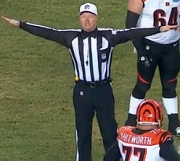 So, they insisted on being escorted from prison, heads held high, the officials hanging their heads (and thanking their lucky stars that they were not executed for publicly beating Roman citizens), and the Gospel came out of prison in triumph. That in itself would have encouraged the people at Lydia’s house, but then word of how all the events transpired…great testimony always encourages. But great testimony does not equal a photo-op. Had Paul and Silas spiked the ball, so to speak, it would have ruined their testimony since it would have become about them and about winning, and not about the Gospel. They perceived the optics but weren’t driven by them.
 Today, I’m going to let you in on a few secrets of my life. Things that people don’t necessarily know about me. They are all related to today’s message on The Powerful Beauty of a Closed Door.
 God like one of those automated door opening pads they used to have at the grocery store. You step on the pad, or today, step into the doorway, and if the door opens, walk through it. If the door is closed, consider why it’s closed (is the store not open yet or are you after-hours? Is it a holiday? Is it not the right door? Are you trying to get in to a place where you don’t have one of those approved id’s that tells the door to open? Or maybe it’s like the old TV show Get Smart where all the doors open for Agent 86 until he dead ends at a phone booth and he needs to phone it in. If there’s no good reason why the door is closed, then try it again since perseverance can be a good thing. But if it remains closed after repeated tries, move on. Not even a phone in your shoe will help you get CONTROL over the KAOS.
 aul was only doing what Jesus had called him to do. He was probably pretty confused. He may have felt like a rat in one of those mazes with nothing but dead ends and no cheese.
 But down the hall and down the road, there is an open door and an answer to the mystery. For this reason, the verses we’re about to look at are among my favorites in the entire Bible. Another secret told.
 The road ahead is rarely as predictable as the road behind. The future can be unclear but hindsight is almost always 20/20. Depending on our goals and our calling, the same road which led us to the present may diverge and become a fork in the road. Such is the case in today’s passage from the Book of Acts.
 Opposition never gives up.
  Scholars are quick to say that “It is significant that after so many centuries of study, the church is still not sure who was at fault in the conflict between Paul and Barnabas.”
 And the whole of God’s plan takes the sovereign high road, seeing disagreement and scattering as increasing a harvest.
 Sometimes, the road ahead is a familiar road back home, to report back on all the good that has been faithfully done.