Lent 31 (2012)–Justice for All

Mark 10:32 They were on their way up to Jerusalem, with Jesus leading the way, and the disciples were astonished, while those who followed were afraid. Again he took the Twelve aside and told them what was going to happen to him. 33 “We are going up to Jerusalem,” he said, “and the Son of Man will be betrayed to the chief priests and teachers of the law. They will condemn him to death and will hand him over to the Gentiles, 34 who will mock him and spit on him, flog him and kill him. Three days later he will rise.” 

Justice Gets Done!  But it’s not always the way we expect. 

We’re putting the Lukan travel narrative on pause briefly as we continue following Jesus’ march of victory all the way “Up to Jerusalem.”  Each of the Gospel writers has a particular style, emphasis, and arrangement of material.   The Gospel according to Luke has been emphasizing the humanity of Jesus—it has a profoundly human touch.  It was also a Gospel written for the Greek (Gentile) world showing the physician Luke’s particular love for the arts (poetry and song), his heart for women and outsiders, and his knowledge of medicine.  All of this highlights the unique and perfect humanity of the Son of God, Son of Man, Jesus Christ.

But if Luke’s Gospel was all we had, there would be emphases we wouldn’t see.  There would be stories of Jesus we wouldn’t have.  We’d miss the rich and deep perspective that the other Gospels give us when we see them in light of each other. So today we’ll visit the Gospel of Mark whose perspective highlights the servanthood of Jesus.  In Mark 10:45 we read,
“For even the Son of Man did not come to be served, but to serve, and to give his life as a ransom for many.”

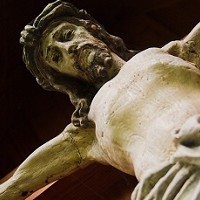
 In Mark 10:32-34,  Jesus–Son of Man, Son of God–reveals how true Justice Gets Done!  It gets done through the Cross. 

The high cost of following ought to have been in plain view, yet the disciples were astonished.  Apparently only the crowd of people was afraid.  The disciples were a little slow on this point because Jesus had already told them as much in Mark 8:31, 9:9-10, 9:30-32.  And even after Jesus says it here, He’ll have to repeat it a few more times (Mark 14:21, 41).

As followers of Jesus Christ, we ought to have a more sobering view of how Justice Gets Done!  Justice for All seems like something we would want.  But apart from Jesus, Justice for All means that you and I would be cast down as sinners, each and every one of us, because God is the perfect standard.  Astonished is hardly an appropriate reaction to understanding what it means when we want Justice for All.  John 3:16-17 reads,

For God so loved the world that he gave his one and only Son,

that whoever believes in him shall not perish but have eternal life.

For God did not send his Son into the world to condemn the world, but to save the world through him.

At the highest possible cost, the precious blood of Jesus, Justice Gets Done!

Continue Reading

Lent 30 (2012)–Justice Gets Done!

Psalm 129:1 A song of ascents. They have greatly oppressed me from my youth– let Israel say– 2 they have greatly oppressed me from my youth, but they have not gained the victory over me. 3 Plowmen have plowed my back and made their furrows long. 4 But the LORD is righteous; he has cut me free from the cords of the wicked. 5 May all who hate Zion be turned back in shame. 6 May they be like grass on the roof, which withers before it can grow; 7 with it the reaper cannot fill his hands, nor the one who gathers fill his arms. 8 May those who pass by not say, “The blessing of the LORD be upon you; we bless you in the name of the LORD.” (NIV)

We’ve been marching “Up to Jerusalem” with Jesus in Luke’s Gospel and singing the pilgrim songs called the Songs of Ascents. 

Today we come to the tenth Song of Ascents, and it’s kind of disturbing in a way.  It’s not uplifting or sentimental, but raw with a desire for vindication. 

Have you ever been making good progress feeling all spiritual and then you remember someone who hurt you, or some situation that was just plain wrong? 

This is kind of like today’s pilgrim song.  Expect Opposition, Seek God’s Presence and Know His Peace, God is the One from Whom All Blessings Flow, the Blessed Fear of the Lord is the beginning of wisdom.  It seems like such good progress!  And then, the enemy interjects a thought of someone mean, a situation that was bad, or the opposition rises to be faced again.

What do you do when this happens?  You can do what the psalmist does.  Gaze Beyond the Hills to the presence of God in His temple and know that, just like this psalm expresses in hope, Justice Gets Done.  Maybe not today, but eventually.  Eyes ahead.  Center your thoughts.  Focus your gaze on God.  Keep walking to the temple.  Press on!

So while there have been troubles, oppression, backstabbers and wicked people trying to trip you up, “May all who hate Zion be turned back in shame.”  Let them not be blessed and may they wither. 

If you stop to think about how many centuries the Jewish people have been persecuted and opposed, hated and expelled, pursued and murdered, the survival of the Jewish people throughout a long suffering is nothing short of miraculous.  Evidence of God’s protection.  Jews and Christians alike face opposition and there is something very honest about admitting—as the imprecatory portion of this psalm does—that we want assurance:  Justice Gets Done!

We want to know that God’s enemies will have their plans foiled.  We want to know that while they pursue evil, they will not be blessed for it, and that eventually they will be judged.  We want to know that God and His faithful people will be vindicated in the end.   Justice Gets Done!

For further thought:

  • Are you ever uncomfortable with the Bible’s writers honest wrestling with unjust suffering and calling upon God to judge?
  • How do you reconcile this with Jesus’ call for us to pray for our enemies (Matthew 5:44-45)?


Continue Reading

Lent 29 (2012)–Seeing Spiritually

Luke 18:35 As Jesus approached Jericho, a blind man was sitting by the roadside begging. 36 When he heard the crowd going by, he asked what was happening. 37 They told him, “Jesus of Nazareth is passing by.” 38 He called out, “Jesus, Son of David, have mercy on me!” 39 Those who led the way rebuked him and told him to be quiet, but he shouted all the more, “Son of David, have mercy on me!” 40 Jesus stopped and ordered the man to be brought to him. When he came near, Jesus asked him, 41 “What do you want me to do for you?” “Lord, I want to see,” he replied. 42 Jesus said to him, “Receive your sight; your faith has healed you.” 43 Immediately he received his sight and followed Jesus, praising God. When all the people saw it, they also praised God.

Lord, I want to see, he says. 

Ironically, even as a blind man, he saw more clearly than those around him whose sight was ostensibly 20/20. 

The crowd of people walking with Jesus only said “Jesus of Nazareth is passing by.”  The blind man saw deeper, presumably having heard that this is no mere man from Nazareth.  He sees Jesus as the Son of David–a Messianic term.

When he calls out “Jesus, Son of David, have mercy on me!” he’s confessing that Jesus has the power to heal his blindness.  The blind man sees.  The seeing crowd is still blind.  The crowd rebuked the blind man and tried to silence him.  The more they rebuked, the more persistent the blind man became, seeing that encountering Jesus could make a profound impact on his life because of who Jesus is:  Jesus, the Messiah, Son of David, Son of God.

The crowd wants him quiet, but the man shouted all the more.  Far from disrespectful, it’s a bold and confident proclamation that God’s promised Messiah is in his midst.  He sees spiritually: Cry Out, Have Mercy!    Jesus stops and…orders, commands…that the man be brought near.  Jesus doesn’t run from people in dire straits.  He draws them near. 

In response to the man’s cry for mercy,  Jesus asks  “What do you want me to do for you?”      The blind man responds, “Lord, I want to see.” 

  1. In stating this, the blind man demonstrates his knowledge that Jesus, the Son of David heals people.
  2. He wants Jesus to use that same power on his behalf so that he can see. 
  3. But Jesus does more than give him use of his two eyes.  He affirms the man’s faith showing that he’d had spiritual sight all along.
  4. In Jesus’ drawing out a public declaration of what he obviously wanted, Jesus pronounced in the presence of the crowd that his faith has healed him.
  5. The man sees and instantly follows Jesus, giving glory to God.  This is the Blessed Fear.  Praise God  from Whom All Blessings Flow.

Scripture says, “When all the people saw it, they also praised God.” I wonder if that’s the moment when the rest of the people began Seeing Spiritually.

Continue Reading

Lent 28 (2012)–Horizontally Proud, Vertically Challenged

Luke 18:9 To some who were confident of their own righteousness and looked down on everybody else, Jesus told this parable: 10 “Two men went up to the temple to pray, one a Pharisee and the other a tax collector. 11 The Pharisee stood up and prayed about himself: ‘God, I thank you that I am not like other men– robbers, evildoers, adulterers– or even like this tax collector. 12 I fast twice a week and give a tenth of all I get.’ 13 “But the tax collector stood at a distance. He would not even look up to heaven, but beat his breast and said, ‘God, have mercy on me, a sinner.’ 14 “I tell you that this man, rather than the other, went home justified before God. For everyone who exalts himself will be humbled, and he who humbles himself will be exalted.”

We’re climbing higher on Step 9 out of 15 in our Songs of Ascents, exploring The Blessed Fear which is fear of the Lord.  The pilgrims sang, “Blessed are all who fear the LORD, who walk in his ways.” 

Remembering God is the One from Whom All Blessings Flow, a man could easily find many things for which to give thanks. 

“That I am not like other men” wouldn’t be one of them.

Some people can be so horizontally competitive in comparing righteousness and blessing, so proud in their self-assessment, that they can become nothing short of Vertically Challenged in relation to The Blessed Fear

The Pharisee in today’s parable was just that kind of guy.  Thoroughly pompous and self-aggrandizing, he stood up and prayed…about himself.   The tax collector, on the other hand, realized that the standard was not the Pharisee or any other man.  The standard was the One from Whom All Blessings Flow

Understanding the majesty of the One whose presence was in the temple, he couldn’t even look up.  All he could do was Cry Out, Have Mercy!  He knew he was a sinner.

Our being justified before God is God’s prerogative.   Whatever God says is what counts, not where we think we stand in relation to others.  With God as our standard, we need to have a holy, reverent, and Blessed Fear.  With God’s perfect standard in view, the tax collector knew he was a sinner, but the Pharisee was still busy surveying the religious landscape.  So proud of what a great and religious guy he was compared to everyone else, he never even noticed that he was seen by God as just like every other man: a sinner. 

It is possible to be so Horizontally Proud that one becomes Vertically Challenged indeed.

For further thought:

  1. Ask the Holy Spirit to reveal to you any ways in which you’ve considered your standard to be your neighbor, or brother or sister in Christ.
  2. Read this and ponder God’s majesty today:  1 Chronicles 29: 10 David praised the LORD in the presence of the whole assembly, saying, “Praise be to you, O LORD, God of our father Israel, from everlasting to everlasting. 11 Yours, O LORD, is the greatness and the power and the glory and the majesty and the splendor, for everything in heaven and earth is yours. Yours, O LORD, is the kingdom; you are exalted as head over all. 12 Wealth and honor come from you; you are the ruler of all things. In your hands are strength and power to exalt and give strength to all. 13 Now, our God, we give you thanks, and praise your glorious name.”
Continue Reading

Lent 27 (2012)–The Blessed Fear

Psalm 128:1 A song of ascents. Blessed are all who fear the LORD, who walk in his ways. 2 You will eat the fruit of your labor; blessings and prosperity will be yours. 3 Your wife will be like a fruitful vine within your house; your sons will be like olive shoots around your table. 4 Thus is the man blessed who fears the LORD. 5 May the LORD bless you from Zion all the days of your life; may you see the prosperity of Jerusalem, 6 and may you live to see your children’s children. Peace be upon Israel. (NIV)

Fear of the Lord is really misunderstood by some in our culture.  They picture an angry parent taking a belt to the behind of an unruly child to “put the fear of God into him.”  Actually, that’s not fear of God.  Fear of the parent or fear of the belt, maybe.  But not fear of God.

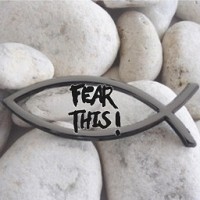
Fear in general isn’t considered something people like, except perhaps those with “Fear This” decals on their cars.  But, I’ve never seen one with an ichthus (Jesus fish symbol) as Fear of the Lord. 

Jesus and fear don’t really seem to go together in the minds of most people.  That’s because they misunderstand fear…and they underestimate Jesus as Lord.

Blessed are all who fear the LORD” is what our passage says.  This Blessed Fear might be the title of the discipleship lesson of our ninth Song of Ascents.  This fear is a good fear, connected with both wisdom and prosperity. 

Fear of the Lord is the beginning of wisdom.

Scripture speaks of this often, perhaps nowhere more eloquently than in the book of Job:

 Where then does wisdom come from?     Where does understanding dwell?    …        God understands the way to it and he alone knows where it dwells,  for he views the ends of the earth and sees everything under the heavens.   When he established the force of the wind and measured out the waters,  when he made a decree for the rain and a path for the thunderstorm,  then he looked at wisdom and appraised it;  he confirmed it and tested it.  And he said to man, ‘The fear of the Lord– that is wisdom,  and to shun evil is understanding.'” (Job 28:20-28)

So for pilgrims walking in repentance, thanksgiving, and praise Up to Jerusalem, Psalm 128 would be a good reminder to fear the Lord, having an appropriate reverence for the majesty of God whose presence they are preparing to enter.  They consider wisdom, blessing, and honor which have been evidence of God’s favor upon their lives.  They have been living in the protection of wisdom and fear of the Lord. 

This is the Blessed Fear.

For further thought:

  1. With what have you associated fear of the Lord?
  2. What do you think when you read this passage? Luke 12:4-5:  “I tell you, my friends, do not be afraid of those who kill the body and after that can do no more.  But I will show you whom you should fear: Fear him who, after the killing of the body, has power to throw you into hell. Yes, I tell you, fear him.”
  3. How might this passage inform your reverence for Jesus? Revelation 19:11-16, “I saw heaven standing open and there before me was a white horse, whose rider is called Faithful and True. With justice he judges and makes war.  His eyes are like blazing fire, and on his head are many crowns. He has a name written on him that no one knows but he himself.  He is dressed in a robe dipped in blood, and his name is the Word of God.  The armies of heaven were following him, riding on white horses and dressed in fine linen, white and clean.  Out of his mouth comes a sharp sword with which to strike down the nations. ‘He will rule them with an iron scepter.’ He treads the winepress of the fury of the wrath of God Almighty.  On his robe and on his thigh he has this name written: KING OF KINGS AND LORD OF LORDS.”
Continue Reading

Lent 26 (2012)–The Samaritan’s Conundrum

Luke 17:11 Now on his way to Jerusalem, Jesus traveled along the border between Samaria and Galilee. 12 As he was going into a village, ten men who had leprosy met him. They stood at a distance 13 and called out in a loud voice, “Jesus, Master, have pity on us!” 14 When he saw them, he said, “Go, show yourselves to the priests.” And as they went, they were cleansed. 15 One of them, when he saw he was healed, came back, praising God in a loud voice. 16 He threw himself at Jesus’ feet and thanked him– and he was a Samaritan. 17 Jesus asked, “Were not all ten cleansed? Where are the other nine? 18 Was no one found to return and give praise to God except this foreigner?” 19 Then he said to him, “Rise and go; your faith has made you well.”

The Songs of Ascents were the pilgrim songs for those traveling Up to Jerusalem.  Jesus was traveling along the border between Samaria and Galilee where normally He could Expect Opposition.

Typically Jews and Samaritans would have kept separate, but common adversity creates strange fellowship.  Outside of the village, ten men with leprosy all Cry Out, “Have Mercy!” 

Jesus hears their cry, sees them, and tells them to “Go, show yourselves to the priests.”  This would have meant something slightly different to the Jews and to the Samaritans.  For the Jews, showing themselves to the priests would mean they had been cleansed, so they anticipated healing and went. 

The Jews present would have viewed the Samaritan as doubly unworthy, first because he was a Samaritan, and second because he had leprosy.  Leprosy could be cured, one’s ethnicity couldn’t be. 

To which priest would (or could) the Samaritan go, given that he’d still be considered unclean even if he’d been physically healed?  It would have been a logical conundrum: do you go to a Jewish priest as their law required, knowing you might be rejected?  Or do you show yourself to a Samaritan priest?  Does that count, after all, Jesus—a Jew—said priests (plural)? 

One thing became clear:   Jesus made him clean.

 So he returns,  praising God!

Either way, his perspective showed he knew the right answer.  Praise God from Whom All Blessings Flow!  The other nine were content following religious procedures.  This Samaritan—blessed with leprosy in order to be physically healed by Jesus—receives a further and more significant blessing: saving faith and eternal spiritual healing.  “Your faith has made you well,” Jesus says. 

For further thought:

  1. Jesus reached out to those on the fringes.  Are there people with whom you hesitate to share the Gospel, perhaps out of cultural differences?
  2. In what ways was the Samaritan in our story blessed far more than the other nine lepers?
  3. In Hebrews 4:14 it reads, “Therefore, since we have a great high priest who has gone through the heavens, Jesus the Son of God, let us hold firmly to the faith we profess.”  Is there a way in which the Samaritan came before a priest to be pronounced clean?
Continue Reading

Lent 25 (2012)–Frail Grasp on the Big Picture

Luke 16:19 “There was a rich man who was dressed in purple and fine linen and lived in luxury every day. 20 At his gate was laid a beggar named Lazarus, covered with sores 21 and longing to eat what fell from the rich man’s table….22 “The time came when the beggar died and the angels carried him to Abraham’s side. The rich man also died and was buried. 23 In hell, where he was in torment, he looked up and saw Abraham far away, with Lazarus by his side.

Our journey’s discipleship lesson from Psalm 127 (the eighth Song of Ascents) is that God is the One from Whom All Blessings Flow.  We live in a culture where people don’t quite get that.  Or maybe we don’t want to get it because it would require us to make choices differently.  The danger with ignoring this discipleship lesson is that we can overlook the plight of those who haven’t been similarly blessed.  Such is the lesson from the Rich Man spoken of in today’s passage.

The irony of this story is that whether God has blessed us with riches … or with afflictions, the humble spirit will recognize that—in a strange sense—both are blessings from God. 

The Beatitudes from Matthew 5:3-12 contain plentiful references to the strange blessing of humble suffering and no acknowledgement of the kind of finery enjoyed by the Rich Man.  Lazarus was the one truly blessed, laid at the gate of the Rich Man, to be an opportunity for the Rich Man to discover the blessing of serving more than just himself.

It’s been a long road for me to see the suffering in my life as blessing.  Suffering is a peculiar mustard seed of blessing.  It can become strong faith and eternal joy—invisible blessings revealed in the end.  Did I want the tiny seed of cancer?  No.  But planted in hope, it has become a ministry to people at a hospital.  A tiny seed of my stillborn daughter, planted in the hands of God has become theological training and an Internet ministry of comfort to others.

But when riches come our way and we think somehow that we get the glory, God can easily show us that we can’t take it with us.  Such is the lesson from the Rich Man.

There are no do-overs once we die.  Such is the lesson from the Rich Man who wanted to be in heaven.  Luke 16:25 “But Abraham replied, ‘Son, remember that in your lifetime you received your good things, while Lazarus received bad things, but now he is comforted here and you are in agony.”

The Rich Man’s problem was not that he was rich!  His problem was that he was living the lyrics of a Glenn Frey song, he had a “Frail grasp on the big picture, light fading, and the fog is getting thicker.”  The more we focus on ourselves as both the source and the ultimate consumer of riches, the light fades; the fog gets thicker; and we have a frail grasp on the big picture that God is the One from Whom All Blessings Flow.  Such is the Lesson from the Rich Man.


Continue Reading

Lent 24 (2012)–From Whom All Blessings Flow

Psalm 127:1 A song of ascents. Of Solomon. Unless the LORD builds the house, its builders labor in vain. Unless the LORD watches over the city, the watchmen stand guard in vain. 2 In vain you rise early and stay up late, toiling for food to eat– for he grants sleep to those he loves. 3 Sons are a heritage from the LORD, children a reward from him. 4 Like arrows in the hands of a warrior are sons born in one’s youth. 5 Blessed is the man whose quiver is full of them. They will not be put to shame when they contend with their enemies in the gate (NIV).

As our Songs of Ascents continue, we’ve seen that we can:

  • Expect Opposition
  • Gaze Beyond the Hills
  • Seek God’s Presence and Know His Peace
  • Cry Out, ‘Have Mercy’
  • Remember God’s Ways of Escape
  • Have Blessings of Security Coming from Him
  • Reap a Harvest of Joy

And today, we come to the eighth Song of Ascents.  Blessings of Security come from God –we’ve seen that already.  Today, we’re seeing the bigger picture that God is the One from Whom All Blessings Flow.

In Psalm 127, we see that it’s not just security that God provides.  He is the giver of everything from the place in which we live…to the food we eat…to the jobs we need… to the roof over our heads…to the sleep we require…to the children we are blessed to have…to the confidence of a right standing with God. 

In God We Trust needs to be a lifestyle lived by a grateful people, not just a slogan printed on our currency and an issue to be tossed about like a political football.

Ultimately when we live as though it’s just a national motto or a political advertising campaign, we risk leaving God completely out of the picture.  It’s as if our life’s blessings arose by our own will.

      • Are we grateful to God? 
      • Do we believe He exists apart from any benefit we might be able to gain from Him? 
      • Have we been living with the humble acknowledgement that He alone is God?  Do we truly depend on Him? 

When we act as though we’ve provided everything for ourselves, in Babel fashion, we will be put to shame.  Shame isn’t the same as being embarrassed.  It’s more like being exposed when what we have built–and been so proud of–falls apart when the storms of life come.  Unless God builds the house, its builders labor in vain.  We need to be careful where we place our trust.

The God of the Bible is the One from Whom All Blessings Flow!  Therefore, “In God We Trust” needs to be our confident and humble doxology, a thankful expression, a lifestyle, and confession of God-fearing believers everywhere.

Continue Reading

Lent 23 (2012)–Giving It Up for Lent

The story of the prodigal son is a familiar one.  It’s a story of rebellion and envy and of what the Father’s forgiveness and love look like. 

It’s also the third story of Joy in the Lost and Found and an expression of the true spirit of Lent.

Every once in a while, people ask me what I’m giving up for Lent. 

  • A meal each day? 
  • Chocolate?
  • Red meat?
  • TV?
  • Internet?

None of those.  It may surprise some of you who know me to learn that this year for Lent, I’ve given up self-loathing.  

It’s been my secret sin as I’ve tried to earn love and favor only to find it’s not something I can earn.   Many of my closest friends have probably seen a confident façade, unaware that I’ve been carrying this people-pleasing, sin-recalling, self-flagellating, rejection-wallowing, failure-clinging, and never-measuring-up-self-loathing around for the better part of 50 years.  This year, I came to my senses. 

For me, Lent isn’t about giving up something for a season.  It’s giving something up for life.

In Luke 15, Jesus says that the younger son came to his senses and got up and went to his father (picking up verse 20)  “But while he was still a long way off, his father saw him and was filled with compassion for him; he ran to his son, threw his arms around him and kissed him. 21 “The son said to him, ‘Father, I have sinned against heaven and against you. I am no longer worthy to be called your son.’ 22 “But the father said to his servants, ‘Quick! Bring the best robe and put it on him. Put a ring on his finger and sandals on his feet. 23 Bring the fattened calf and kill it. Let’s have a feast and celebrate. 24 For this son of mine was dead and is alive again; he was lost and is found.’ So they began to celebrate. 25 “Meanwhile, the older son was in the field. … 26 So he called one of the servants and asked him what was going on. 27 ‘Your brother has come,’ he replied, … 28 “The older brother became angry and refused to go in. So his father went out and pleaded with him. 29 But he answered his father, ‘Look! All these years I’ve been slaving for you and never disobeyed your orders. Yet you never gave me even a young goat so I could celebrate with my friends. 30 But when this son of yours who has squandered your property with prostitutes comes home, you kill the fattened calf for him!’ 31 “‘My son,’ the father said, ‘you are always with me, and everything I have is yours.

Ironically both the younger and older son learned that the currency of the father’s love wasn’t found in check boxes of duty.   The father’s love couldn’t be earned or lost.  The father’s love for both of his sons was found in relationship.

So, this year, I’ve repented of self-loathing and dutifully trying to earn favor.  Instead, I choose to embrace the true spirit of Lent.  I have come to my senses and given up something that grieves the Father who loves me.  I’m not just giving it up for a season, but a lifetime, embracing the relationship I can never earn and can never lose.  There is a Harvest of Joy as we celebrate how our Father loves us by sending His Son Jesus so that we can experience true forgiveness!

Continue Reading

Lent 22 (2012)–A Cause for Celebration

Or suppose a woman has ten silver coins and loses one. Does she not light a lamp, sweep the house and search carefully until she finds it?  And when she finds it, she calls her friends and neighbors together and says, ‘Rejoice with me; I have found my lost coin.’ In the same way, I tell you, there is rejoicing in the presence of the angels of God over one sinner who repents” (Luke 15:8-10, NIV).

A cause for celebration.  Is this how you view your faith in Jesus Christ?

In today’s parable, the second installment of Joy in the Lost and Found, there is a woman who lost a coin and finds it.  She calls her friends and neighbors to share her joy.  I can relate.

I remember a time when I worked at Home Depot and would go home every day for lunch.  One day, I put on my coat and headed home.  When I arrived home and was fixing my lunch, I noticed that the prong on my ring was empty.  The diamond was gone.

Now I didn’t have an engagement ring.  My husband proposed to me over a pay phone from a Munich (West) Germany post office.  He flew home and we got married and for 15 years, I had a wedding ring and I was happy.  For our 15th wedding anniversary, he bought me a ring that had a diamond on it.  By American engagement standards, he felt like something important had been left undone, so fifteen years later, he wanted to celebrate our marriage by giving me a ring.  I’m not a jewelry kind of person by nature, but this ring was special…every bit as special as my wedding ring because it was celebrating something significant.

It meant a lot.  Far beyond its material value, it represented love.

When the diamond was missing, I was brokenhearted.  I was in a panic, frantically searching the kitchen.  No diamond.  I searched the car.  No diamond.  I drove back to Home Depot with my mind fixated on one thing: finding that diamond.  I scoured the parking lot, retracing every step I’d taken.  I looked over every inch of the floor in the store where I’d walked.  I went to the greenhouse where I worked, my heart sinking as I remembered the work I’d done that morning of moving a million plants.  As I shared my sadness with my co-workers who could see that I was worried, we all began to look…and then the most wonderful thing happened.  On the floor near where I’d put on my coat, the sunlight suddenly hit the loose diamond and I saw it.  I’d found something special and valuable that had been lost.  Now every analogy falls apart, but the lesson wasn’t lost on me:

There is a Harvest of Joy in finding something of great value that had been lost. 

I celebrated.  My co-workers celebrated with me.  I confessed it to my husband at dinner and together we celebrated that it was found.

Likewise and more so, God and all the angels celebrate at what was lost being found, what was broken being restored, and what had fallen apart being reclaimed and put back in its setting by its original Owner: the image of God in every human being is very precious in God’s sight and so valuable that Jesus Christ died on the Cross to allow us to be found again, in Him.  We celebrate our being found by worshiping Him and by inviting others to celebrate with us.  Heaven and all the saints on earth reap a Harvest of Joy when one sinner repents.  It is a cause for celebration.


Continue Reading