Never in Their Lifetimes
Last time, we looked at Genesis 22 where God ended up preserving the line of Isaac by supplying a ram for the sacrifice instead of Abraham’s beloved son. As we keep investigating My People/Not My People as portrayed in the Bible, we’d think all should be going well! Passed that test! Promised Land, here we come for My People!
Wait. Let’s go back to Genesis 15 and take another look at what happens before the Promised Land. There’s a significant detour, planned by God.
“The LORD said to [Abraham], “Know for certain that for four hundred years your descendants will be strangers in a country not their own and that they will be enslaved and mistreated there. But I will punish the nation they serve as slaves, and afterward they will come out with great possessions… In the fourth generation your descendants will come back here, for the sin of the Amorites has not yet reached its full measure” (Genesis 15:13-14,16).
That “country not their own” would be the nation of Egypt. Why would God plan such a delay, such a detour?
Four hundred years is a long time to wait, an even longer time to be enslaved and mistreated, and that means that Abraham’s immediate descendants, even among the Chosen People, would never in their lifetimes see the land that their future generations would inherit someday. Only enslavement and misery. Does that look like Chosen to you?
Hebrews 11:1 Now faith is confidence in what we hope for and assurance about what we do not see. 2 This is what the ancients were commended for.
Questions for further thought:
The fourth generation would mean that only those alive (who had been enslaved for 400 years) would begin to know the journey back. It would happen after the time of Joseph (Jacob/Israel’s son and Abraham’s great-grandson) whose bones were brought back by Moses. Do you think their national identity as descendants of Abraham and their faith in God were integral to their successfully remembering after 400 years of suffering?
For context, America is about to celebrate 250 years. What risk does America run in forgetting our founding principles and documents, including the part of our rights coming from God? Did our God-given rights play any part in ending America’s slavery issue? How does growing biblical illiteracy (unknown to our founders) jeopardize America’s future? About the Judeo-Christian religious underpinnings, Josh Hammer writes,
“Over the course of many hundreds of years, Jewish thought and values became deeply intertwined with, and seamlessly integrated within, the broader Anglo-American conservative political and legal tradition as we know it today.”
Israel and Civilization: The Fate of the Jewish Nation and the Destiny of the West
Why does it take faith in and believing God (credited as righteousness) to accept that the promise given you would begin to find fruition well after you died? That you’d never live to see it?
How do you think Abraham might have felt about knowing that his descendants, the My People of the Covenant, would be slaves? Would it be reassuring enough to know that after that, God promised to bring them out to the Promised Land?
Jesus told the men on the Road to Emmaus, “Did not the Messiah have to suffer these things and then enter His glory?” And beginning with Moses and all the Prophets, He explained to them what was said in all the Scriptures concerning Himself (Luke 24:26-27). How does the pattern of suffering before glory show itself in the Covenant to Abraham? How might it express itself in the Chosen People today?
Life and Trials for My People
Today, October 7th, is a somber reminder that being the Chosen People has never been a life of rainbows and unicorns, but persecutions and testing in addition to experiencing God’s favor, leading to the Messiah who also would suffer. Continuing our look at My People/Not My People…
In the Covenant’s aftermath, the seeds of antisemitism have been sown. Forever. Because the Covenant is forever and as long as Not My People continue to live among My People, there will be animosity, hatred, and persecution. Being set apart as My People doesn’t give you a Get of Jail Free card as a monopoly on God’s favor or an easy life.
In fact, being set apart as My People comes with unique tests and trials and judgments to keep behavior in check, to keep the Messianic line pure, and to live righteously as is fitting for God’s people who are a testimony to the light (Isaiah 42:6).
Abraham was tested with an awful test (Genesis 22): sacrifice the child of promise and in doing so, all the My People who come from you and Sarah are finished. Only Isaac’s line is My People and sacrificing him would end the line and put God’s covenant in jeopardy. Why would God ask such a thing?
To be fair, Abraham’s culture performed child sacrifice all the time as religious ritual, so that wouldn’t have presented as horror to him as it does to us. The test was one of allegiance, did Abraham love God more than Isaac, the boy, his son, my son (as Scripture repeats over and again in the story from Genesis 22)? Was he willing to obey when every earthly instinct of familial love said, “No, please Lord, not this one”? The fact that God specified “Take your son, your only son, whom you love– Isaac” meant that he couldn’t do a switcheroo with Ishmael instead and still be faithful.
Questions for further thought:
Four times in Romans 4, and once each in Galatians 3:6 and James 2:23, Scripture reminds us that this event in which Abraham believed God was “credited to him as righteousness.” What does it mean, “credited to him as righteousness”?
Abraham’s culture performed a great deal of child sacrifice, and we find that abhorrent. How does child sacrifice differ from abortion that many consider to be no problem, even late term?
What obstacles to Abraham’s faithfulness existed? Is there any indication he consulted Sarah? See Genesis 22. By this time, Isaac wasn’t a baby or a toddler, but old enough to understand animal sacrifice, speak full sentences, and carry a heavy stack of wood on his back. God only knows the conversation and confrontation in the binding of Isaac. Why do you think Scripture doesn’t record that?
The Land of the Covenant
Just because a topic is controversial doesn’t mean we should ignore it. In fact, its controversial nature is the most compelling reason to learn about it. We’re still looking at My People/Not My People after God scattered everyone at Babel and Shem’s line becomes Eber’s line (the two names from which we get the words “Semite” and “Hebrew”). Hundreds of years pass from Babel before a landmark event happens: a man named Terah settles in Harran. Terah’s son and daughter-in-law (Abram and Sarai) have no children to carry on the legacy.
Look, there have been millions of childless couples throughout history. But this one is different because today we come to the covenant through which God establishes My People and forever separates My People apart for His use and glory.
God makes Abram/Abraham a promise, a covenant, as God tells him, “Go from your country, your people and your father’s household to the land I will show you. “I will make you into a great nation, and I will bless you; I will make your name great, and you will be a blessing. I will bless those who bless you, and whoever curses you I will curse; and all peoples on earth will be blessed through you.” (Genesis 12:1-3)
Not all of those peoples will be My People, especially the cursing ones, even if Abraham would be their father. Indeed, there would be 3 great Abrahamic religions arising that we still see today. Ishmael would be the child of impatience (Hagar was his mother) as God kept Sarah barren until time arrived for the “child of promise” Isaac. At Sarah’s age of 90 years old, Isaac was a miracle.
Ishmael was none-too-pleased that the baby of the family would inherit the blessings, in direct contradiction of the traditional expectations, and it’s been “division perfected” ever since, especially regarding the land.
The blessings for Isaac’s line include great nation status, God’s favor, and the land of milk and honey, specifically Canaan…the greatly disputed land between Israel (Isaac’s line) and “the Palestinians” (descended from Ishmael). To reiterate that covenant of separation and blessing to ensure no one thinks it was a mistake, God repeats it 3 chapters later and again in Chapter 17. Do you see why there’s been an ongoing fight?
God said to Abraham, “The whole land of Canaan, where you now reside as a foreigner, I will give as an everlasting possession to you and your descendants after you; and I will be their God.” 9 Then God said to Abraham, “As for you, you must keep my covenant, you and your descendants after you for the generations to come. 10 This is my covenant with you and your descendants after you, the covenant you are to keep: Every male among you shall be circumcised.” (Genesis 17:8-10)
Questions for further thought:
Why do people avoid talking about controversial topics?
There are two phrases critical to the current land dispute. “The whole land of Canaan” and “everlasting possession.” How do those phrases determine whether one believes God at His Word or doesn’t?
Are those who refuse to take God at His Word My People, or Not My People?
Why did God establish the Chosen People/My People before Isaac was born and not wait to select him afterward?
How does God’s covenant and the long-delayed child of promise as Abraham’s second son codify faith (Romans 4:3), and create a wedge of separation, leading to “division perfected”?
In ancient times, the eldest son inherited double blessing (Deuteronomy 21:15-17) and had primacy over younger sons. Why might Ishmael, the firstborn, have felt entitled based on this Scripture, particularly?
In what way does God’s election of Abraham’s second son before he was born point forward to rejecting tradition, man’s ideas of natural biological inheritance, or earning favor, and the world’s expectations?
Part of that blessing included property … the land. Why might the people of Palestine feel entitled to the land when God promised it to Isaac, father of Jacob also known as Israel, and his descendants forever? Read the reiteration of the blessing in Chapter 15 to see the people groups to be displaced (especially verses 18-21).
Unity Without Righteousness is Folly
Sometimes people say they want unity–it’s the best thing, even between us and our enemies and insist that’s what God wants. Ignore sin. “Pursue peace,” they say. Then they quote cherry-picked Bible verses to prove their point, whether Christian or not.
That’s not how God works. God doesn’t want unity at the cost of righteousness.
Having taken some time to honor the life of Charlie Kirk, a true hero of the faith, it’s time to return to our look at My People/Not My People. Did you notice we witnessed those two groups in action? In many regards, worldwide.
There can be no unity with people who hate you …unless you’re willing to compromise life, liberty, and righteousness. Just sayin’.
Way back in Genesis, there was unity, but it was unity of the wrong kind–unity the world’s way.
Genesis 11:1 “Now the whole world had one language and a common speech. 2 As people moved eastward, they found a plain in Shinar and settled there. 3 They said to each other, ‘Come, let’s make bricks and bake them thoroughly.’ They used brick instead of stone, and tar for mortar. 4 Then they said, ‘Come, let us build ourselves a city, with a tower that reaches to the heavens, so that we may make a name for ourselves; otherwise, we will be scattered over the face of the whole earth.’”
The Table of Nations (sons of Noah, importantly all from the same Remnant of Adam’s son Seth) came together at a plain in Shinar (Babel), in unity, the sons of Noah, the whole world…before each got scattered and took his own path.
God doesn’t want unity the world’s way.
Questions for further thought:
What is the world’s interest in unity (v 4)? What is God’s plan for unity?
“Sanctify them by the truth; Your word is truth. As You sent Me into the world, I have sent them into the world. For them I sanctify Myself, that they too may be truly sanctified. My prayer is not for them alone. I pray also for those who will believe in Me through their message, that all of them may be one, Father, just as You are in Me and I am in You. May they also be in us so that the world may believe that You have sent Me.” (John 17:17-21)
From the Table of Nations, only My People are followed in Scripture by specific genealogy. The genealogy of Shem carries through to Jesus Christ. (Luke 3:36). Why is it important that the genealogy of Shem is preserved?
What does it mean about those who are Not My People? Does God care about them? Does He care enough about them to ensure they do not continue to believe lies or live in a state of unrepentant sin? What did God do to show He cares about people who are still sinners? See Romans 5:8.
In Revelation 22:12-15, God makes it clear that division, being separate, is good thing when it comes to righteousness. Only those who have washed their robes (believe upon Jesus Christ for remission of sin) enter heaven. Why would that be important for heaven to remain pure?
Enemies Within
Continuing our look at My People, Not My People to understand current events, we’re at the point where only Noah’s son Shem would be the remnant…and his descendent that we’ll see soon is Abram/ Abraham, the first great patriarch of all 3 Abrahamic religions (Islam, Judaism, and Christianity).
Just as Adam and Eve’s children were not the same, one going his own way, wandering the earth as Not My People and the other named Seth, going on to call on the Name of the Lord, we’ll see that Abraham’s children are not the same either. We’ll get there.
For now, let’s find out what happened to Noah’s other sons who’d been saved in the Ark. They aren’t the same either. Read their history in Genesis 10, a passage often called the Table of Nations. Even if genealogies are not your thing, if you’ve been a student of Scripture for a while or are simply aware of world geography or history, some names will probably pop out at you.
Perhaps you noticed Genesis 10:1 “This is the account of Shem, Ham and Japheth, Noah’s sons, who themselves had sons after the flood.” Japheth’s line included Magog, the sons of Ham: Cush, Egypt, Put and Canaan, and how they established famous political centers of Babylon … Assyria… building Nineveh, and then Canaan’s kids became the Hittites, Jebusites, Amorites, and Girgashites. Later the Canaanite clans scattered (verse 19) “and the borders of Canaan reached from Sidon toward Gerar as far as Gaza, and then toward Sodom [and] Gomorrah.”
Questions for further thought:
Do they pop out as My People or often enemies of My People?
How is this possible? They shared the same Ark, were saved through the same flood, were born from the same stock and had the same upbringing! It’s hard to say why some go astray and others do not. That’s the danger of the enemy within. They’re kind of hard to see sometimes.
There was a righteous line: 21 “Sons were also born to Shem, whose older brother was Japheth; Shem was the ancestor of all the sons of Eber” [the beginning of the Hebrews], many of whom are listed in the genealogy of Jesus Christ from Luke 3.
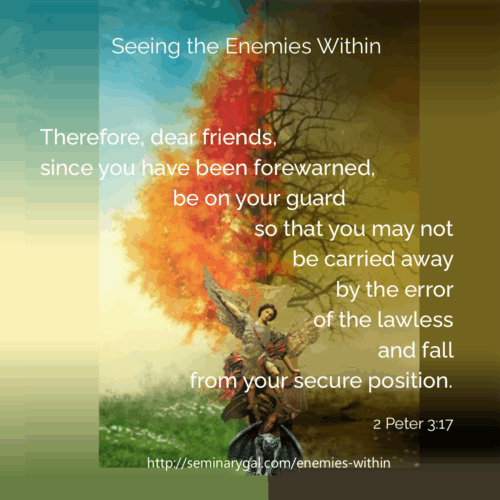
Are all the Hebrews righteous? Let me answer that: No. It’s not antisemitic to point out that among any people group there are the faithful My People and the Not My People enemies within.
Therefore, dear friends, since you have been forewarned, be on your guard so that you may not be carried away by the error of the lawless and fall from your secure position. 2 Peter 3:17
Why is the enemy within so dangerous?
When God Says It’s Judgment Time
Genesis 6: 3 Then the LORD said, “My Spirit will not contend with humans forever, for they are mortal; their days will be a hundred and twenty years.”… 5 The LORD saw how great the wickedness of the human race had become on the earth, and that every inclination of the thoughts of the human heart was only evil all the time. 6 The LORD regretted that He had made human beings on the earth, and His heart was deeply troubled. 7 So the LORD said, “I will wipe from the face of the earth the human race I have created– and with them the animals, the birds and the creatures that move along the ground– for I regret that I have made them.” 8 But Noah found favor in the eyes of the LORD. (Genesis 6:3, 5-8)
By now, the Bible depicts an abundance of wicked Not My People and only a handful of My People. Sometimes God has no choice but to judge. It’s not a democracy or majority rule. God is King and Judge, not just Creator. It’s a last resort, for sure, but Judgment is the one thing that curbs evil every time. The bottom line for you and me is to endeavor to be My People because it always ends badly for Not My People.
Questions for further reflection:
A cute depiction of the ark with cuddly animals isn’t the picture God had in mind. He intended a massacre of every one of Not My People. No sane parent would decorate the baby’s room with Texas Chainsaw Massacre. Why do people diminish the horror of the Flood and the total elimination of Not My People, but instead, give us cute and chubby baby animals safe in the ark, even for people well above adolescence?
I’m not a wet blanket. Go ahead, decorate the baby’s room, but be sure to correct the record when they come of age. Teach them what really happened in the Flood…to explain what the rainbow really means.
Noah (a descendant of Seth) and his family (8 in all) become the remnant of My People although Noah’s wife and his sons’ wives are not named so we have no idea if they were from Seth’s clan or from among “Not My People.” One thing we can say for certain is that every one of those 8 carried beyond Noah’s Ark their inherited sin nature that began in Adam. Yeah, Noah did too.
Even so, the choice remains before every man, woman, and child: follow God or don’t. Be My People as a remnant or Not My People as wanderers to Destination: Hell.
Think about Cain, Able, and Seth. How does God’s choice of a Remnant mean we cannot rely on our parents’ or grandparents’ faith?
Biblical Cycles and Forever Paths
Last time, we saw that God provided for Himself a Remnant to be called My People. But God’s choice to go with a Remnant doesn’t absolve God’s people from dire consequences when they don’t act like My People.
Within the forever path of My People, expressed through a series of Remnant after Remnant, there are cycles of Judgment to remind God’s people of their responsibility to act like My People.
Adam and Eve found that out. Make one really bad choice to sin and suddenly, My People in Eden became Not My People in the Garden.
Even after they tried to resume acting like My People who worship God, their two kids find a fork in the road and show it with their offerings to God. One heads down the path of murder, embarking upon restless wandering away from God’s presence, and the other one (who gave his best to God) was killed by his brother Cain, ending his line.
But then God provides for Himself a Remnant of My People in Seth.
This is a historical pattern we see time after time.
God doesn’t force Himself on people who don’t want Him. Not My People who form the hardened branch of the family tree never resume being a whole branch sprung from My People. Once they choose idolatry and rebellion against God, the branch becomes spiritually dead to Him.
Now, of course, the Bible has examples of isolated people from a genetic branch of Not My People whose hearts, by God’s grace, remember their Creator. Notable examples include Ruth and Rahab (who are in the lineage of Christ), and in the New Testament, famous examples of Gentiles like Luke, Cornelius, Lydia, and even Timothy whose father was a Gentile.
In whatever manner they come to be My People, when they rebel, they will experience cycles of favor, judgment, and restoration. It’s how God purifies His People. Ultimately “Adam” and “Eve” (My People) will be restored to the New Garden in Revelation 22 with many cycles of favor, judgment, and restoration along the way.
Questions for further thought:
Is the world presently trending toward a state of favor, judgment, or restoration?
Think about nations (the Americas, European, Israel, etc.). Are they in equivalent places along that cycle?
Aside from the Flood (which we’ll look at next time), how does God often use the enemies of My People (those who are Not My People) to inflict God’s purifying judgment? Read Jeremiah 1:13-16 for insight.
Why does God judge His people?
Read Ezekiel 36:20 “And wherever they went among the nations they profaned My holy name, for it was said of them, ‘These are the LORD’s people, and yet they had to leave his land.’ 21 I had concern for My holy name, which the people of Israel profaned among the nations where they had gone. 22 “Therefore say to the Israelites, ‘This is what the Sovereign LORD says: It is not for your sake, people of Israel, that I am going to do these things, but for the sake of My holy name, which you have profaned among the nations where you have gone.
23 I will show the holiness of My great name, which has been profaned among the nations, the name you have profaned among them. Then the nations will know that I am the LORD, declares the Sovereign LORD, when I am proved holy through you before their eyes.
24 “‘For I will take you out of the nations; I will gather you from all the countries and bring you back into your own land.”
How is a return to the land evidence of God’s favor upon His people as He brings His plan to fruition in the Last Days?
Not All Children are the Same
After expulsion from Eden, Adam and Eve had kids. One of those kids was “Not My People” and his actions caused strife with those who were more like “My People.”
Cain did not read the memo about how God’s people worship God and display His likeness.
God’s People act like they’re made in God’s likeness.
Cain did not. Abel did.
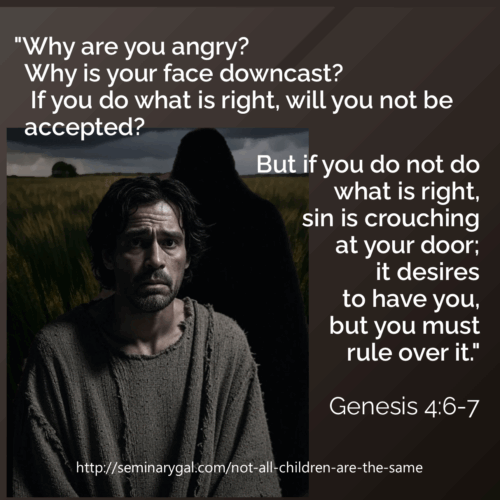
Scripture says, “In the course of time Cain brought some of the fruits of the soil as an offering to the LORD. And Abel also brought an offering– fat portions from some of the firstborn of his flock. The LORD looked with favor on Abel and his offering, but on Cain and his offering He did not look with favor. So Cain was very angry, and his face was downcast.” (Genesis 4:3-5).
It’s not a case of unfairness where God is choosing favorites because Abel won the Chopped Champion competition with a better tasting meal. Nope. God saw that Abel gave God the best he had as an act of worship. Cain “phoned it in” and went through the motions of worship but all the while harboring secret sin of keeping the best for himself. He had a different god in mind.
Questions for reflection:
Why would Cain be angry? Who does he think is God in this relationship? What does that tell you about his heart?
Presumably they had the same upbringing, and they certainly had the same parents. What would make Abel “My People” and Cain “Not My People”? What makes you different from your siblings?
God told Cain in Genesis 4:7, “If you do what is right, will you not be accepted? But if you do not do what is right, sin is crouching at your door; it desires to have you, but you must rule over it.” What characterizes “Not My People”?
How do “Not My People” often react to “My People”? Sin left to fester, will. What happens next?
“Now Cain said to his brother Abel, “Let’s go out to the field.” While they were in the field, Cain attacked his brother Abel and killed him. (Genesis 4:8)
Bring that thought to our modern world with modern Israel. Within the Middle East, how do “Not My People” react to “My People” (whether Christians or faithful Jews)?
How does antisemitism herd all Jewish people into the Not My People camp whether God-fearing or not?
Get Out and Don’t Come Back
Probably the first instance of My People who experienced the Judgment of God and became Not My People were Adam and Eve. At the start, they had it all, the quintessential My People. They’d been made in the Image of God, with His clear commission to multiply His Image, His holiness, His love, everything wonderful about God throughout all of Eden! It would be a testimony to the land, to the Created Order, and to Adam’s and Eve’s offspring of the true and loving nature of God.
It’s a fearsome responsibility to know that for every instance in which you can affect someone for good, the potential is always there to harm someone, too. Adam and Eve disobeyed the God who loved them and created them. All of creation witnessed their listening to Satan instead of obeying God.
It was sin, and because God’s Image is not that of sin, they no longer reflected God’s Image perfectly. In God’s eyes, therefore, they went from being My People in Eden to Not My People to remain in Eden. Out you must go. And don’t come back, because you can’t. Once a sinner, there’s no going back.
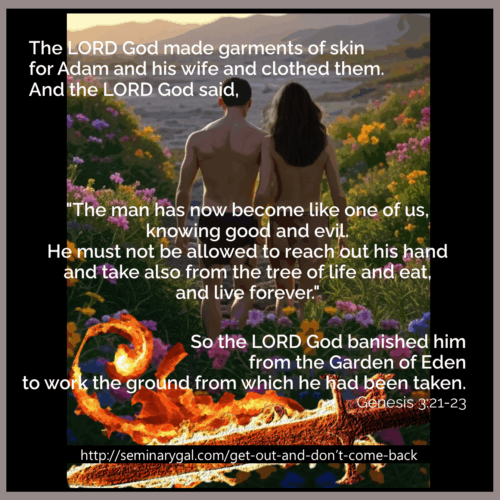
It doesn’t mean that God stopped loving them. It means they stopped worshiping Him alone and honoring Him. They could no longer be trusted with the privilege of stewardship of Eden, importantly of the tree of life which would allow them to live forever because now, their forever would be a state of disobedience and idolatry. They were sent away for their own good.
Reflection questions as we continue this study:
How is being sent out of Eden a foretaste of disobedient Chosen People becoming Not My People who many years later end up enslaved, exiled, or sidelined as God works His Judgment through other nations?
Did God leave the Israelites enslaved in Egypt, exiled in Babylon, or was there a time of redemption as He brought them back to be a nation?
God made Adam and Eve more suitable clothing (Genesis 3:21) than just fig leaves, and in Judgment, He sent them away. How are both indicators of God’s grace and ongoing love?
How does an out of context snapshot of Adam and Eve getting evicted fail to capture the grace undergirding that moment or the redemption God planned through the offspring (seed, Messiah) who would come?
If we look at modern Israel as a snapshot instead of a movie on pause, how does our view change of God’s Chosen People and God’s continual grace and love?
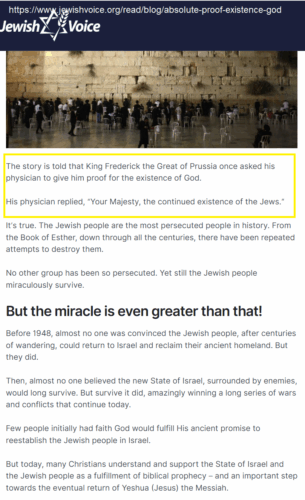
It has been said that the ongoing remnant of the Jewish people testifies to the existence of God. In what ways would that be a true statement?
Restoration for Not My People
In Hosea, God continues showing how Israel has been unfaithful to Him, much like the adulterous Gomer was unfaithful to Hosea. But God is not like man, not even a “lover-not-a-fighter” person who loves like Hosea does.
God is in the restoration business, something no human can do. He delights in restoring Not My People to My People status.
Importantly, God doesn’t judge to harm, but to call people home. God sends judgment SO He can restore a repentant people. He even points that out to Hosea:
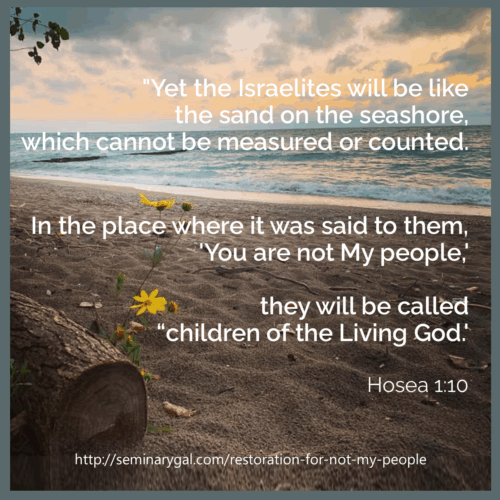
Hosea 1:10 “Yet the Israelites will be like the sand on the seashore, which cannot be measured or counted. In the place where it was said to them, ‘You are not my people,’ they will be called ‘children of the living God.’ 11 The people of Judah and the people of Israel will come together; they will appoint one leader and will come up out of the land, for great will be the day of Jezreel. (Hosea 1:10-11).
We’ll come back to this (particularly the language of “children of the living God”) but it’s worth pointing out three things.
First, these biblical times are not unlike our own. It was a time of political and economic success that almost inevitably produces people who rely on themselves and forget God. That’s why their times and also ours are itching with idolatry, spiritual failure, and moral corruption which breaks out as unrest and rebellion against God. Oh, maybe it’s hidden under the surface, but it’s still there … even if looking good on the outside.
Surface neatness hiding the junk drawer. Inside, they ignore God at best and hate Him at worst. God finds that hypocrisy and idolatry disgusting.
Second, Hosea wasn’t given a choice in message only a call to be faithful to God, or not. The only person I feel sorrier for than Hosea who was forced to marry a prostitute would be his poor kid who has a prostitute for a mother and shows up on the first day of school, introduced to the class as “Not My People.” God sure has an odd way of making His point.
And “what point was that?” you ask. Unfaithfulness on the part of the “Chosen People” Israel angered and pained God. It brought about harsher judgment because they had been God’s “Chosen People” and had turned their backs on Him.
They were intended to be a light to the nations (Isaiah 42:6-7), but instead, they led the way in unfaithfulness. That cannot go unchecked. (Ironically, that’s precisely why NO Christian should be an anti-Semite because that leads the way in our unfaithfulness as the light of the world–Matthew 5:14-17.)
But third, God’s grace abounds all the more. His amazing love astounds us. He still wants our redemption. Even after all that, His purpose is to call us home, to remembering, honoring, and loving Him…whether Christian…or Jew. Never forget that.
Reflection questions as we continue this study:
How would God asking Hosea to marry someone who is unfaithful be a prophetic sign-act and not Hosea’s sin?
Why would God give a living picture to display in human terms how God feels betrayed by Israel?
What types of things do we do that anger God?
If you’re a Christian, how is your treatment of the Jews seen by God as your treatment of His Messiah? (See Matthew 25:31-46)
If God still loves and desires to restore the Jewish people, is anti-Semitism (the devil’s orchestrated propaganda campaign in our present culture) ever going to be okay with God?
If God loves them and forgives them when they repent, who are we to question the Living God?
To be continued…