Do you see yourself as a citizen of a kingdom? That’s what the Bible says you are. You either belong to the kingdom of this earth or you are a citizen of the kingdom of heaven.
 Unlike the United States where you can be a citizen of two countries at the same time and have dual citizenship, heaven doesn’t work that way. While babies born in foreign countries often can have the citizenship of their parents in addition to the place where they were born, heaven is an all or nothing deal: You’re either born into the kingdom of heaven or you’re stuck here on earth.
The passport you carry shows where you’re from and where you’re going. This is the basic message of today’s Scripture passage, Philippians 3:17-21.
The passport is issued by your governing agency: the world or God. Using this analogy, a Christian’s “passport” is stamped throughout according to our visits and that is why Christians are encouraged to live according to heaven’s patterns. This is the faith of our fathers and mothers—a pattern set before us by those in our history, dating back to Jesus Christ. And while He lived the pattern perfectly, this pattern actually dates back even farther: to God’s calling the Israelites out of slavery in Egypt. Being a God-honoring person didn’t originate with Christ even if He perfected it.
A passport merely records proof of our identity. Our life’s deeds become our reputation, not who we are. A passport will reflect our country of origin and citizenship. We will be living in ways reflecting which place we call home.
By their fruit you will recognize them. Do people pick grapes from thornbushes, or figs from thistles? Likewise every good tree bears good fruit, but a bad tree bears bad fruit. A good tree cannot bear bad fruit, and a bad tree cannot bear good fruit. Every tree that does not bear good fruit is cut down and thrown into the fire. Thus, by their fruit you will recognize them. (Matthew 7:16-20)
As we continue in this season of Lent, pause to ask yourself:
Do the stamps in your passport of life affirm your identity? Are you a citizen of earth or a citizen of heaven by faith in Jesus Christ?
 As I watched, the cold water—once clear and pure—began to reveal that the coffee beans were leaching coffee into the water. Clean and clear became stained as the coffee coloration arose from the beans and permeated the water. While many would think it was nothing more than “every analogy falls apart when pressed,” the discoloration made me think about the opposite of whatever the teacher’s point was.
  How does Paul say we get the Holy Spirit? By faith in God through the work of the Jesus Christ (as portrayed in the Christian Bible).
 Do not be yoked together with unbelievers. For what do righteousness and wickedness have in common? Or what fellowship can light have with darkness? What harmony is there between Christ and Belial? What does a believer have in common with an unbeliever? What agreement is there between the temple of God and idols? For we are the temple of the living God. As God has said: “I will live with them and walk among them, and I will be their God, and they will be my people.” 2 Corinthians 6:14-16
 Big mistake, or so Paul says in 1 Corinthians 10: 14-15: “Therefore, my dear friends, flee from idolatry. I speak to sensible people; judge for yourselves what I say.” If you’re sensible, you will think about it. You will recognize it and not diminish its insidious pull at your life. You will flee from idolatry knowing that it endangers your soul and your relationship with God.
 This is reassuring news. We don’t need to learn from our own mistakes. We can learn from other people’s. Seeing the consequences beforehand, we don’t have to resort to trial and error as a way of moving through the obstacle course of life. We can watch those ahead of us in line.
 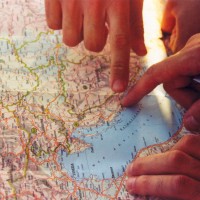 Today we begin exploring ways to walk on the Way of Holiness.
  When we travel somewhere, we carefully pack our suitcases. We assemble our supplies in a tiny plastic bag so we can make it through airport security. We take action well before our journey to ensure we will get on the plane with our carry-ons. We have our destination in mind.
  Hezekiah associated sin with its consequences (v 7). Contrasted with the Westboro so-called Baptist Church, Hezekiah didn’t command hate speech, picketing, or hurting others to throw sin’s blame on someone else. Rather, everyone sought God, recognizing there is collective and individual responsibility for sin.