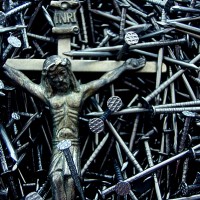
We often think of the Cross as the place where our victory has been won. Jesus’ Victory March is progressively revealed through His Seven Last Words, or statements from the Cross.
In Luke 23:34, “Jesus said, ‘Father, forgive them, for they do not know what they are doing.’ And they divided up his clothes by casting lots.”
Here are the first of Jesus’ Last Words—and interestingly, they’re about forgiveness.
It’s also remarkable that of His Last Words, this is the only petition or request made of God the Father by His Son.
 Not “Father, protect me.”
 - Not “Father, take away my pain.”
- Not “Father, grant me peace.”
- Not “Father, reassure me of your love.”
- Not “Father, help me understand your will.”
- Not “Father, give me the strength to endure this.”
- Not wisdom, not healing, not helping, not any number of other beautiful personal requests.
- Definitely not “Father, make them pay!”
“Father, forgive them.”
Why might forgiveness be a necessary first battle of the ultimate victory? For Jesus, forgiveness and the restored relationship with the Father formed the very essence of His mission.
For the Son of Man came to seek and to save what was lost (Luke 19:10).
This is my blood of the covenant, which is poured out for many for the forgiveness of sins (Matthew 26:28).
If this was Jesus’ first Last Words, what does that say about the important role forgiveness plays in our lives? What does it say about our fighting our forgiveness battle before we will ever realize true victory?
For many of us, our harboring unforgiveness toward God and others has become like a lead security blanket which simultaneously comforts us and weighs us down. We carry the bitterness. We carry the wounds. We carry the hatred and the hurt. We carry betrayals and insults. We carry them all as baggage throughout our days because we’re afraid to let it all go.
We know how we’ve been hurt and yet, Jesus’ petition for the Father to forgive us ought to give us the comfort we need to release it to Him. Where God has forgiven it, shall we continue to cling to it?
Do you want to know the Victory of the Cross? It all begins with forgiveness.
 He knew what would happen (Matthew 20:17-19):
  How do you “love on someone?” Well, you don’t talk about love. You just do it. When you don’t know what else to do, love people and listen for them to inch the door open. Then let words of comfort and peace flow like a gentle breeze into their hearts with a message that refreshes the soul.
 When John admonishes us to “walk in love,” it’s not just a cliché of love that he’s talking about. He’s talking about genuine love–the kind Jesus commanded:
 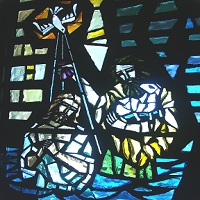 We can be in such a hurry to get to the empty tomb of Easter that we barely stop long enough at the Cross to know the importance of His death or consider the prior pivotal importance of His baptism.
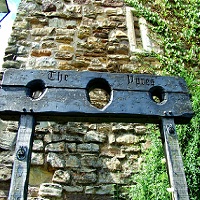 I love learning origins of words and phrases. This one, interestingly, comes from a play entitled Warning Faire Women (1599): “Upon a pillory – that al the world may see, A just desert for such impiety.” Al is apparently not a typo either, although maybe he was the author but we’ll never know because it was anonymously published. A pillory is a wooden structure with holes for the head and arms—something we often refer to as stocks, used for publicly shaming people. While all this is rather curious, what you may be really curious about is what it has to do with our devotional passage for today–1 Peter 2:19-25.
 My son is currently studying for the required GRE exams for graduate school. I’ve been quizzing him on vocabulary and among the words he stumbled over at the beginning was lapidary. I had no problem remembering lapidary relates to the art of cutting precious stones because growing up, our family would visit a lapidary museum that had—among other exhibits—a big pile of various rocks. The draw of the big rock pile was the supposed presence of gemstones including diamonds if you hunted long enough and knowledgeably enough to find them. Whatever rocks you wanted to keep were yours. An expert sat behind a table helping children to identify the rocks: agate, sandstone, aquamarine, quartz, marble, etc. If my rock was just a piece of polished glass or limestone, I’d throw it back on the pile and keep looking for something better. As a child, I didn’t have the discernment of the expert.
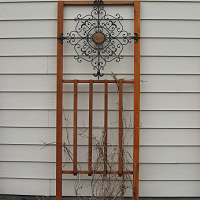 Since it’s early spring, I know now is the perfect time to make the change and to provide new garden structures. Originally, I bought some wrought iron wall art that I was going to hang on the wall and pull the clematis vines up to the ornamental plaques. But then, I began to think about rust stains developing on my siding and decided to consult my neighborhood Home Depot for better options instead.
 Our journey on the Way of Holiness during Lent began with preparation and continues with considering ways of being set apart as followers of Jesus Christ. In today’s passage,