I sometimes watch ads for products and services and I’m not sure whether to laugh myself silly or be appalled. It’s going to take more than Miracle products to have a perfect garden like those made for TV. It’ll take a real miracle: the Second Coming of Christ.
Yes, more than advertized rescue inhalers will be needed to rescue African violets planted in an outdoor flower bed next to kalanchoes and cyclamen. Even garden center ads show this very same thing. Obviously none of these people garden in the real world where houseplants want to stay in the house instead of flaunting audacity; laughing in the face of destruction, and throwing down the gauntlet for a gang of aphids.
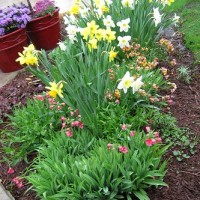 Real world gardening involves everything being beautiful its time (Ecclesiastes 3:11).
- Things bloom. Things seed.
- We sow. We harvest.
- We plant good seed and get weeds.
- Gardening has its seasonal ups and downs.
News flash: my garden isn’t perfect. I have real world gardening.
Gardening in a world marred by sin means that we have had the cloudiest April on record but the upshot is renewed compassion for friends in Seattle with their rainy days. In Chicagoland, rain and cool means we’ll have real world rot, a world of leaf diseases, and really happy slugs.
Despite the battles against the thorns and thistles outside of Eden (Gen 3:18), I rather like the challenges that each year brings. It keeps life interesting and spurs me to creative problem-solving. Every year, I try something different and even if I didn’t, the weather conditions rarely present themselves as ideal for the same things. I go back to the drawing board anyway.
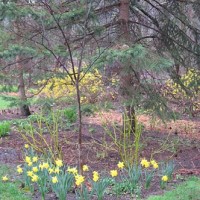 Even in the midst of dreary days, perennial features such as the cheerful yellow forsythia, “Cardinal” red-twig dogwood, and King Alfred daffodils lift one’s spirits.
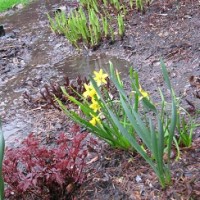 And look at the beautiful range of colors of emerging growth of turtlehead (Chelone obliqua), Astilbe ‘Fanal’, and hostas—all of which tolerate standing water for short periods. Good thing, since in every real world garden a little rain must fall. This particular garden is always among the last to be worked because it is a low spot in our yard. I find that working our higher front yard to the lowest back is always helpful since that’s how things aren’t worked when it’s too wet. Working the soil when it’s wet ruins the structure. Mulching when it’s raining causes the ground to retain the soggy conditions longer. It’s important with conditions like these to research carefully what plants will survive in such Out of Eden locations.
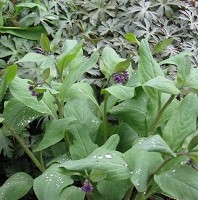 My bluebells (Mertensia virginica) are budding and my native cranesbill geranium (Geranium maculatum) won’t be outdone. Also in my woodland garden are lily-of-the-valley (Convallaria majalis) and sweet woodruff (Galium odoratum) which are not native but escaped cultivation and are real showstoppers. I like that phrase: escaped cultivation. Makes them seem like garden rebels…or too beautiful to be held captive.
Gardening in the real world: creative ups and downs. Cultivation and escape. Adversity and beauty. It doesn’t get any better than this. Until Jesus returns, that is.
 O’Reilly, this means you. While in the camera’s eye, you have the ability to persuade many people and convince them that “the spin stops here.” When you enter the realm of theology, we no longer call it spin. To the extent you are misinformed and try to play pastor-prophet-priest in your bully pulpit, you need to know the consequences of displaying such ignorance: it’s called deception. Lies. Dangerous. Infectious.
 Top Ten Things I Wish Every Jew Knew About Christians (Summary Version)
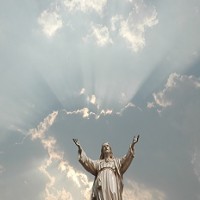 With the tomb empty—as Jesus foretold—the sacrifice was accepted. Forgiveness of our sins was made possible, once for all. Now what is left for us is to give thanks to the Lord, saying “He is good; his love endures forever.” To kneel before our Maker in humble worship. To know that He is God in heaven and that the Risen Christ is God’s glory revealed.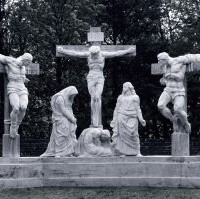
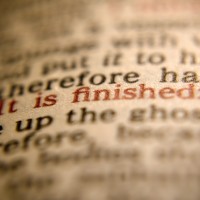 The encouragement that we get from this is that there is nothing we can do to save ourselves. There is nothing we can do to right our wrongs. There is nothing we can do about our imperfections. There is no way we can be perfectly obedient. There is no way we’ll resist every temptation. There is no way that we will speak truthfully all the time no matter how hard we try. And there is no opposition we will face that compares to what Jesus experienced. For us, it is impossible to lay our lives down for our fellow man as Jesus did. So we can stand with hearts of gratitude knowing it is for our benefit that Jesus did it all and could say, “It is finished.” It was all for our benefit. Now what remains is for us to recieve the gift of grace that He made possible by finishing the work of God.
 One of the common human sensations is thirst. When Jesus quotes Psalm 69:21 as being fulfilled, there is a sense that He was reassuring us of His humanity. He was identifying with our humanity through a very human need: thirst.
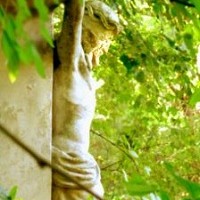 About the ninth hour Jesus cried out in a loud voice, “Eloi, Eloi, lama sabachthani?”– which means, “My God, my God, why have you forsaken me?” Matthew 27:46
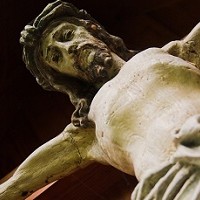 Mary had known since Jesus’ birth that something would happen to pierce her soul (Luke 2:29-35). It is unlikely she’d ever have imagined crucifixion of her son. So Jesus, upon the Cross, gazes down at His mother and His beloved disciple John. While separating Himself from both family and friend as He faces death, He gives them both a new vision and new relationship.