Advent 11 (2012)–Expecting Messiah

Luke 1:31 You will be with child and give birth to a son, and you are to give him the name Jesus. 32 He will be great and will be called the Son of the Most High. The Lord God will give him the throne of his father David, 33 and he will reign over the house of Jacob forever; his kingdom will never end.”

His kingdom “will never end” is the fifth Christological reference in just two verses.  To Mary and to the faithful Jews of her day, these five descriptors could mean only one thing: Messiah.  It harkens back to King David.

Your house and your kingdom will endure forever before me; your throne will be established forever.’ (2 Samuel 7:16)
But Mary was not an uninformed woman when it came to the promises of God.  Underscoring all the truths about God and His mercy, the Messianic expectation was that His kingdom will never end.  This idea is affirmed in many places in Scripture, but one of the most dramatic depictions can be found in the writings of the prophet Daniel.

Daniel 7:13 “In my vision at night I looked, and there before me was one like a son of man, coming with the clouds of heaven. He approached the Ancient of Days and was led into his presence. 14 He was given authority, glory and sovereign power; all peoples, nations and men of every language worshiped him. His dominion is an everlasting dominion that will not pass away, and his kingdom is one that will never be destroyed.

Mary–and faithful Jews like her–were all looking forward to the Advent of Messiah in a single dimension–a single point in time.   They were looking forward to the kingdom that will never end, but still living in a world limited by death; a world still infused with the full curse of sin; and a world in which humans were like sheep going astray.  Our patterns of life involved following our own ways, worshiping our own gods resembling our self-interests, and too often handcrafting our actions with pride as the motivating influence.

What these faithful Jews of the first century lacked in perspective cannot be blamed on anything other than needing fuller understanding of the ways and Word of God and how it all required the Cross.  Sin had to be dealt with and it’s why Messiah came—period.  Those like Mary were looking for Messiah, but they didn’t stop to fully consider that an eternal kingdom filled with sinful people would be more like hell than heaven.

This is why Messiah’s Advent must be telescoped to a beginning in which sin would be dealt a death-blow, and a Second Advent, a return of Christ to usher in a kingdom that was finally free from the stain of sin, exhibits God’s mercy and love, and focuses all worship on God alone.  Messiah had to be different than just one man born as any other man.  The mystery of how and why God would send His Son in this way was surprising and shocking.

The faithful Jews of Mary’s day were expecting Messiah. 

They just didn’t expect Him to arrive in the way He did.

We, on the other side of the Incarnation, look for the return of Christ–His Second Advent–with the same eager anticipation.  He will come with the clouds of heaven to gather His faithful followers of all ages to join Him in this eternal kingdom: the kingdom that will never be destroyed.
Continue Reading

Advent 10 (2012)–The Mystery Deepens

Warning:  I revised yesterday’s devotional for clarity purposes—just to make sure that no one attributes Jesus’ conception to anything other than the virgin conception recorded in Scripture.   

In my effort to put myself in Mary’s sandals and think about what may have been going through her mind, I mentioned the biological father of Jesus wasn’t the point of “his father David.”  It was pointing to the Messiah coming from the Davidic line (from which both Mary and Joseph were descended).

When we come to the text, we must remember we stand on the other side of the Incarnation.  Therefore we know the Incarnation is a mystery and that God did a surprising, new thing.

Mary, however, was living it.
She was present on the before and during of the Incarnation, not just on the after side, as we are.

For her, it could have been logical or mystifying.  Logic always makes more sense than mystery.  Logic would have involved Joseph since he’s the one to whom she was already betrothed.

Think about it: in all of Mary’s life (and in all of the history about which she knew), God had never brought about a baby in anything other than the normal reproductive way.  Even Adam and Eve weren’t created as babies, but fully grown reproductively capable adults.

The human mind is an amazing thing.  I picture Mary rapidly adjusting puzzle pieces of information, trying to make sense of what the angel was saying.  Particularly that “with child” part.

Meanwhile the angel continues speaking: “The Lord God will give him the throne of his father David, and he will reign over the house of Jacob forever… (Luke 1: 32-33b)

This is the fourth hint that the baby the angel is talking about will be the Messiah and further confirmation now that he will be a King.  Forever, however, is a long time.  Would this baby live forever or would he be the beginning of a new dynasty that would always be from David and the house of Jacob, the chosen people?

Mary would have been hearing and absorbing and trying to make sense of all these things.  Logical or mystifying?  The more information the angel gives, the more the mystery deepens.

Continue Reading

Advent 9 (2012)–Throne of the Eternal King

Luke 1: 32 He will be great and will be called the Son of the Most High. The Lord God will give him the throne of his father David, 33 and he will reign over the house of Jacob forever; his kingdom will never end.”

So far in our Advent devotionals series, we’ve seen two of the five Messianic references in these two verses.  Today, we’ll look at the third:

The Lord God will give him the throne of his father David…(Luke 1: 32b)

Mary would have already been tracking with what the angel said.  The angel Gabriel was talking about the Messiah.  Yes, it was probably outside of her theological box that the Messiah would actually be the Son of God, but the idea of the throne of David would have been quite familiar to Mary.

One thing we can glean from Mary’s song recorded in Luke 1:46-55 is that Mary was no theological lightweight.  She had a good grasp on Scripture and the promises of God.  Mary knew that she was a descendant of David, just as her betrothed Joseph knew that he was a descendant of David.    So when Mary heard that the Messiah would be given the throne of his father David, she wouldn’t have thought that a person named David would be the biological father.  Joseph would be presumed to be Jesus’ father, the child would be part of the Davidic dynasty, but this baby Jesus would be different.  He would be the Son of God.

She would have understood this to be a precise fulfillment of Messianic prophecy.

All of this dates back to the prophet Nathan who received a message for then King David.

2 Samuel 7: 12 When your days are over and you rest with your fathers, I will raise up your offspring to succeed you, who will come from your own body, and I will establish his kingdom. 13 He is the one who will build a house for my Name, and I will establish the throne of his kingdom forever.

In the birth of Jesus Christ, this promise would reach ultimate fulfillment.  The throne of his kingdom lasts forever.  Even though nations rise and fall, the throne of David still belongs to the Messiah and no one can take it away.  Nations thump their chests of military might and world leaders proudly assert their power.  They devise battle plans and assemble chemical and biological weapons.  They have their hands poised to use the nuclear option.  But they will not have the last say.

In the fullness of time, the Second Advent—the Return of Christ—will happen. 

Jesus will not come again as a baby, but He will still be the Son of God. 

When He returns, He will not come to die because He already conquered death. 

He will come to judge and to rule forever on David’s throne as King of Kings and Lord of Lords.

Continue Reading

Advent 8 (2012)–For Unto Us a Child is Born

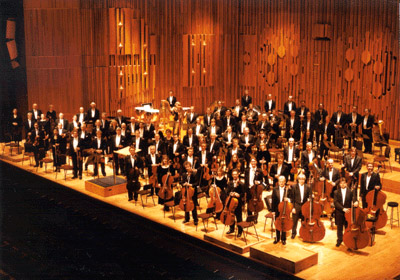
Well, this one takes the cake.  I decided to watch the London Symphony Orchestra perform my favorite selection from Handel’s Messiah. (Hint:  it’s not The Hallelujah Chorus.  It’s typically a close tie between Ev’ry Valley and For Unto Us a Child is Born, which remains my personal favorite). Watch the video here:   http://www.youtube.com/watch?v=MS3vpAWW2Zc

Beneath a comment someone wrote about the glory of Jesus and the beauty of the King James Bible’s text, I simply cannot believe the comment someone wrote in response:

Musician here, who cares about your religious or nonreligious aspects? This is a beautiful piece of music regardless. I will state that I am atheist but I do not regard this as a religious piece of music. Music is universal!“

What rock does this person live under?  Not a “religious piece of music?”  Hello.  It’s called Messiah and while there might not be such a thing as a sacred tune and Handel may not have had a sacred purpose of evangelism, nonetheless, the entire libretto is Scripture—The Word of God.

Handel’s Messiah was written in a remarkable 24 days after receiving the selected texts from librettist Charles Jennens.  In a letter to a friend, Jennens wrote: “I hope [Handel] will lay out his whole Genius & Skill upon it, that the Composition may excell all his former Compositions, as the Subject excells every other subject. The Subject is Messiah.”

Up to this point in our walk through the Lukan birth narrative, Mary may have been thinking that she would give birth to the Messiah, the long awaited deliverer.  But then God blows the whole idea wide open. 

He will be great and will be called the Son of the Most High. The Lord God will give him the throne of his father David (Luke 1:32)

The Son of the Most High.
Most High?  That’s God.  Son of the Most High?  That’s God’s Son.

Suddenly the Messianic expectation is far more than what is humanly possible:  a man growing up and experiencing the powerful favor of God.  No human grows to become God.  That’s the stuff of heresies and false religions.  Rather the angel’s statement points us back to Isaiah’s words in which we see true Incarnation!  

For to us a child is born, to us a son is given, and the government will be on his shoulders. And he will be called Wonderful Counselor, Mighty God, Everlasting Father, Prince of Peace (Isaiah 9:6)


Continue Reading

Advent 7 (2012)–Great, Greater, Greatest

Born Cassius Marcellus Clay, Jr., retired boxer Muhammad Ali is widely considered to be one of the greatest heavyweights of all time by sports commentators and historians.  To that point, he has appeared on the cover of Sports Illustrated more often than any sports figure aside from Michael Jordan. 

Ali is quoted in his autobiography, The Greatest: My Own Story (1975), with saying,

I only said I was the greatest, not the smartest.”

Well, one out of two isn’t bad.  He wasn’t the greatest or the smartest. 

John the Baptist was far greater, for far better reasons than being good at hitting people.  Scripture says of John the Baptist,

He will be a joy and delight to you, and many will rejoice because of his birth, for he will be great in the sight of the Lord. He is never to take wine or other fermented drink, and he will be filled with the Holy Spirit even from birth. Many of the people of Israel will he bring back to the Lord their God. And he will go on before the Lord, in the spirit and power of Elijah, to turn the hearts of the fathers to their children and the disobedient to the wisdom of the righteous– to make ready a people prepared for the Lord” (Luke 1:14-17).

As great in the sight of the Lord as John the Baptist was, he was still not the greatest.  No, that person is Jesus.  Mary is told regarding Jesus,

He will be great and will be called the Son of the Most High. The Lord God will give him the throne of his father David, and he will reign over the house of Jacob forever; his kingdom will never end” (Luke 1:32-33).

The first of five Christological (Messianic) references in these two verses is that Jesus will be great.  Not “great in the sight of the Lord,” but great…period.

Muhammad Ali may think the term greatest is accurately applied to himself, but the Word of God considers that there are already plenty of people in the kingdom of heaven well ahead of Muhammad Ali’s boxing greatness.

Jesus, the great one, says of John the Baptist,

I tell you the truth: Among those born of women there has not risen anyone greater than John the Baptist; yet he who is least in the kingdom of heaven is greater than he” (Matthew 11:11).


Continue Reading

Advent 6 (2012)–Great Expectations

Luke 1: 30 “But the angel said to her, ‘Do not be afraid, Mary, you have found favor with God. 31 You will be with child and give birth to a son, and you are to give him the name Jesus.’”

At first blush, the news Gabriel had for Mary doesn’t seem significantly different than the news Zechariah had received just a few verses earlier.

Luke 1: 13 “But the angel said to him: ‘Do not be afraid, Zechariah; your prayer has been heard. Your wife Elizabeth will bear you a son, and you are to give him the name John.’”

 Don’t be afraid.  Check, check.

Zechariah.  Mary.  Name.  Name. Check, check.

But here, the two birth announcements begin to diverge.  Zechariah, your prayer has been heard.  Mary, you will be with child. (Had she been praying for this? Unlikely.)

Zechariah–Your wife Elizabeth will bear you a son (naturally conceived, but through God’s doing the impossible).  Mary–you will be with child and give birth to a son (supernaturally conceived and miraculously the Son of God and Son of Man).

Zechariah—a priest—was given this message at a most sacred time of his life (while burning incense in the temple).  His doubt at Gabriel’s message stands in contrast to his priestly position and results in his being unable to speak until the words recorded in Luke 1:59-64 at John’s circumcision.

Mary, on the other hand, was by all measures living a normal day when Gabriel arrived.  But this moment inaugurated the most sacred time of her life.  She was entrusted with the most important baby ever to have been born.  The enormity of the responsibility cannot be overstated.  For nine months, she would be pregnant and at the end of this time, she would give birth to the long awaited Messiah.  The pressure to demonstrate the greatest care and nurture, knowing the importance of your role, would have been stressful if Mary had been of a different temperament.

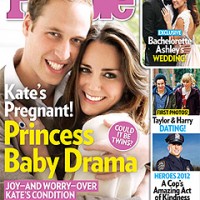
At present, Prince William and Kate Middleton (Catherine, Duchess of Cambridge) are expecting their first child.  The high profile pregnancy is exciting news and is being watched with eager anticipation of the birth of the next in line of the Royal Family.   The world’s microscope upon her pregnancy could cause additional worry and concern and might be all the more reason for the greatest medical care available.  This child is important!  Yet, the new Royal’s birth pales by comparison to the virginal conception of Jesus.

Amazingly, we do not see Mary exhibiting doubt, worry, pride, stress, or panic.  Instead, she listens and obediently assents to serve God however He chooses.  He would provide all the care His Son would need and Mary knew she was blessed to enjoy the privilege.  Never again would anyone have such a role.

And Mary said:

My soul glorifies the Lord  and my spirit rejoices in God my Savior, for he has been mindful of the humble state of his servant. From now on all generations will call me blessed, for the Mighty One has done great things for me– holy is his name” (Luke 1:46-49).

Continue Reading

Advent 5 (2012)–Hail Mary

Say the words, Hail Mary and the world suddenly divides into the world of Christians and the world of sports enthusiasts.  In the Venn diagram of life, some will catch the dual meaning. 

Ever since 1975 when Roger Staubach threw a game-winning touchdown pass to wide receiver Drew Pearson in a playoff game against the Minnesota Vikings, any forward pass that is a long shot thrown out of desperation in the waning minutes has been termed a “Hail Mary.”  Roger Staubach is reported to have closed his eyes and said a Hail Mary (prayer, in the Catholic sense) at that time and the rest is history.

In the Roman Catholic sense, it refers to one of the traditional prayers of the faithful:

Hail Mary, full of grace. Our Lord is with thee. Blessed art thou among women, and blessed is the fruit of thy womb, Jesus. Holy Mary, Mother of God, pray for us sinners, now and at the hour of our death. Amen.

This prayer of intercession–so familiar to Roman Catholics–has its root in the greeting from the angel Gabriel.   What we’ve been seeing as “Greetings” is translated “Hail” in the King James Version.

And the angel came in unto her, and said, Hail, thou that art highly favoured, the Lord is with thee: blessed art thou among women (Luke 1:28 )

The words we read as “thou that art highly favoured” in the King James Version are actually only one word in the Greek, a verbal cognate of the word we translate as grace.

Clearly, this unmerited favor/grace given by God to Mary was a means of setting her apart (giving the idea of Holy Mary that we see in the Hail Mary prayer).  Mary was chosen to bear the Son of God and throughout the centuries there has been great debate over whether it was appropriate to call her the Mother of God and if so, exactly what that means.  So in 451 AD, Church Fathers gathered to discuss this and wrote the Definition of Faith of the Council of Chalcedon, which reads (in part):

Following the holy Fathers we teach with one voice that the Son [of God] and our Lord Jesus Christ is to be confessed as one and the same [Person], that he is perfect in Godhead and perfect in manhood, very God and very man, of a reasonable soul and [human] body consisting, consubstantial with the Father as touching his Godhead, and consubstantial with us as touching his manhood; made in all things like unto us, sin only excepted; begotten of his Father before the worlds according to his Godhead; but in these last days for us men and for our salvation born [into the world] of the Virgin Mary, the Mother of God according to his manhood.

Mary didn’t birth God as Triune or exist as part of the Godhead (Father, Son, and Holy Spirit) and therefore, Hail Mary prayers are still viewed with suspicion by those in the Protestant world.  Mary–as a completely human being–is not divine at all.  Therefore her prayers are no more efficacious than say yours or mine.  Her earthly role was exceedingly important, as was John the Baptist’s, but neither of them have any special audience with Jesus.  At least nowhere near the presence that God’s Holy Spirit indwelling all believers has with Christ.

Romans 8:26 In the same way, the Spirit helps us in our weakness. We do not know what we ought to pray for, but the Spirit himself intercedes for us with groans that words cannot express. 27 And he who searches our hearts knows the mind of the Spirit, because the Spirit intercedes for the saints in accordance with God’s will.

The Holy Spirit doesn’t need Mary’s help with praying.  That is why so many Protestants and many Roman Catholics find the line between veneration (i.e. profound respect and reverence) and worship to be increasingly blurry when it comes to Mary.  Veneration is completely appropriate.  Worship is God’s alone.   The beloved disciple John writes,

Revelation 22:8 I, John, am the one who heard and saw these things. And when I had heard and seen them, I fell down to worship at the feet of the angel who had been showing them to me. 9 But he said to me, “Do not do it! I am a fellow servant with you and with your brothers the prophets and of all who keep the words of this book. Worship God!

All Christians worship God alone.  That said, Protestants can honor and respect Mary as the woman who bore the Son of God for her special role in redemptive history.  We can do this without giving her greater authority in heaven than God has actually granted to her.  I join my Roman Catholic brothers and sisters who believe veneration is good but that worship of Mary is inappropriate.  We can all look at Mary as a marvelous example of humility and faith and say that she was highly favored, full of grace.


Continue Reading

Advent 4 (2012)–After the Greeting

Luke 1:28 The angel went to her and said, “Greetings, you who are highly favored! The Lord is with you.” 29 Mary was greatly troubled at his words and wondered what kind of greeting this might be.

It’s not every day that someone has an angel arrive with a message.  No wonder Mary was greatly troubled.  But look closer: she wasn’t troubled at him.  She was troubled at the angel’s word–at his greeting.

On the surface, there doesn’t seem to be much here to be troubled about. 

  • Greetings!  (Seems friendly enough.)
  • You who are highly favored.  (Not just favored.  Highly favored…literally favored one.  That might make a person wonder what she did to become favored, but favored in general is a good thing.  Certainly better than the alternatives.)
  • The Lord is with you.  (This is the polar opposite of the Lord being against you.  Mary ought to be encouraged.)

So why would Mary be troubled?  No!  Greatly troubled?  Seems like plenty of good news going on here.  But Mary kept pondering what kind of greeting this would be.  Maybe she was waiting for the other shoe to drop.  Maybe she was waiting for him to say, “But…”

The favor of the Lord being “with her” is encouraging and yet Mary understandably didn’t know why or in what way.  Maybe she was troubled because she knew there was nothing she did to earn that favor and God would soon figure that out.

There is nothing Mary did to earn it.  God chose to bestow His favor upon Mary–though she was as human as any other person to walk the earth.  She made mistakes.  She didn’t always act in perfect accord with Scripture.  Her son Jesus would be the only person to live His entire life without sin.  Yet Mary found favor with God because grace (unmerited favor) is a defining characteristic of God.

Have you ever been in a place where you knew the Lord’s favor by how a circumstance came together or had a “wink from God” or a coincidence (which is when God chooses to remain silent)?  Maybe you’ve received a blessing so clearly from God that you knew the Lord was with you?  For others of us, we know the Lord’s being “with us” most clearly when we are sick or when we are dying.  Like the footprints story in which God carries us…

If you’ve ever been caught smack-dab in the very center of God’s will, and you’ve known the great favor of His clear presence, you know how unnerving this can be.  I’ve had 2 instances of this in my Christian walk and both times, I could feel the marrow of my bones quaking.  I wonder if that was a mild expression of how Mary felt in more profound measure–faced with the reality of the power of God and the magnitude of His grace.  I can only imagine that having an angel spell it out for you might shake you to your core.

One thing is for sure:  Mary’s life would never be the same after the greeting.

Continue Reading

Advent 3 (2012)–The Virgin’s Name was Mary

Luke 1:26 In the sixth month, God sent the angel Gabriel to Nazareth, a town in Galilee, 27 to a virgin pledged to be married to a man named Joseph, a descendant of David.  The virgin’s name was Mary.

For the record, I am really glad that God fulfilled the “Virgin Birth” when He did.  God chose Mary and boom!  Done deal! 

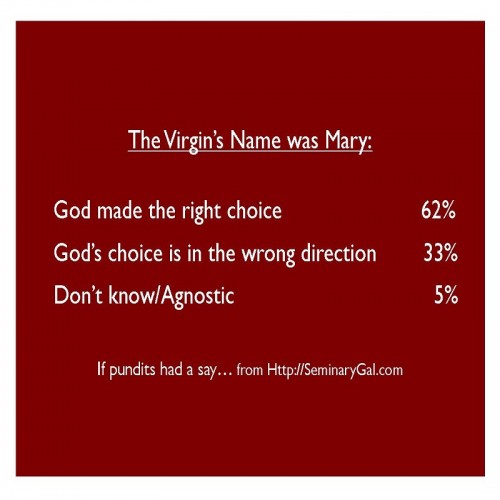
There was no pundit analysis about whether God had chosen the right virgin to bear the Son of God.  62% of the American public thinks God made the right choice, 33% think God’s choice is in the wrong direction, and 5% are agnostic and just don’t know.

Or worse, how awful things would be if He were to have waited until the present day’s reality TV and did things the modern way.  Ugh. 

Just imagine a sordid amalgamation of The Bachelor, The Apprentice, and a Woman’s Day essay contest answering, “Why I should be the Mother of the Son of God” in 500 words or less.

Fortunately for all of us, God was not on The Bachelor, gathering virgins around Himself to decide which one would be chosen at the end of the season.  God was not looking over well-crafted résumés; evaluating job performance; deciding which virgin would not move on to next week, and telling her, “You’re fired!”  The virgin didn’t have to win a talent competition, model a swimsuit, answer a question about world peace, dance with the stars, or even be interviewed by God before He might choose which lucky lady would be crowned Mother of the Son of God.  There were no tabloids featuring pictures of Mary with a baby bump with a headline that reads, “Virgin says, ‘God got me pregnant!’ Read our exclusive interview with the virgin on page 2.”

Rather, in a time of slower communication, in a rural nowhere town, there’s a humble young woman named Mary.  Luke, the writer of this Gospel, peels the onion away one layer at a time from the region of Galilee, to the town of Nazareth, to a virgin who is pledged to be married—layer by layer—until we see God knows her personally.  Her name is Mary.

No celebrity status.  No contest.  No qualifications on a resume or prior birthing experience.  Just a humble young woman—a virgin—full of godly character, having a huge heart of faith, and brimming with a willingness to serve God.  God chose.  Mary responded as God knew she would.  Simple.  Beautiful.  Humble.  Perfect.


Isaiah 7:14 Therefore the Lord himself will give you a sign: The virgin will be with child and will give birth to a son, and will call him Immanuel.


Continue Reading

Advent 2 (2012)–Can Any Good Thing Come Out of Nazareth?

Luke 1:26 In the sixth month, God sent the angel Gabriel to Nazareth, a town in Galilee, 27 to a virgin pledged to be married to a man named Joseph, a descendant of David. The virgin’s name was Mary.

It’s a big announcement of an event anticipated since the Garden of Eden, so God sends an angel (Gabriel—one of the angels mentioned in the Old Testament and New Testament as a herald) to Nazareth—an obscure little town in the middle of nowhere.   A humble rural place.

Nazareth.   It’s never even mentioned in the Old Testament but by the time of the New Testament, it was considered a no-good kind of place, although it’s not clear why.

And Nathanael said to him, “Can any good thing come out of Nazareth?” Philip said to him, “Come and see.” (John 1:46 NAS)

You can almost hear the disdain.  Nazareth’s reputation must have been common knowledge.  Was it a hick town, so small and insignificant that it wasn’t worth noting?  Or was it a place known for its lack of faith?  Scholars suggest both.  I suppose every town is known for something: Las Vegas has a reputation as Sin City–a place where your hidden activities stay secret, and Newark evokes images of smokestacks, industrial pollution, and generally being the armpit of the nation.

Yet, Nazareth was Mary’s hometown.  It became Jesus’ too.  After Joseph and Mary escape to Egypt to preserve Jesus’ life, Scripture tells us:

Matthew 2:19 After Herod died, an angel of the Lord appeared in a dream to Joseph in Egypt 20 and said, “Get up, take the child and his mother and go to the land of Israel, for those who were trying to take the child’s life are dead.” 21 So he got up, took the child and his mother and went to the land of Israel. 22 But when he heard that Archelaus was reigning in Judea in place of his father Herod, he was afraid to go there. Having been warned in a dream, he withdrew to the district of Galilee, 23 and he went and lived in a town called Nazareth. So was fulfilled what was said through the prophets: “He will be called a Nazarene.”

Nazareth was a no-good kind of place in the middle of nowhere.  But a young girl who loved the Lord lived there and she would be the mother of Jesus.  Because of Jesus, we can say “Yes, someone good and perfect  and wonderful came out of Nazareth.  He is our Savior.”

Continue Reading