Long after the teacher had concluded her example of coffee beans in a glass of water, I continued to watch the visual as it sat on the sidelines through the rest of her talk. No one probably noticed it but me. Even now, I’m not exactly sure I remember what the visual was demonstrating—maybe something about being “in the world but not of it.” I can’t remember because I was learning a totally different and far more powerful lesson.
 As I watched, the cold water—once clear and pure—began to reveal that the coffee beans were leaching coffee into the water. Clean and clear became stained as the coffee coloration arose from the beans and permeated the water. While many would think it was nothing more than “every analogy falls apart when pressed,” the discoloration made me think about the opposite of whatever the teacher’s point was.
I began to think about how even when we are unaware, a little anger and bitterness can flavor our entire lives.
In Ephesians 4:17-32, the apostle Paul talks about living as we’ve been taught. Paul says, “You were taught, with regard to your former way of life, to put off your old self, which is being corrupted by its deceitful desires; to be made new in the attitude of your minds; and to put on the new self, created to be like God in true righteousness and holiness” (verses 22-24).
Don’t even harbor a tiny bit of sin because it has no place in the new self. Like coffee beans in cold water, we can deceive ourselves into believing that sin and anger and bitterness can be contained—compartmentalized in an otherwise new and spiritual nature. Then Paul says it:
“In your anger do not sin”: Do not let the sun go down while you are still angry, and do not give the devil a foothold. Ephesians 4:26-27
While we may view it as being containment of hazardous waste (anger, bitterness, rage, malice), these things can pollute our lives in hidden ways. That’s why Paul says to get rid of it all (v 31). Don’t contain it; don’t hide it; don’t compartmentalize it; and whatever you do, don’t give the devil that kind of leverage in your life.
As we continue our walk on the Way of Holiness, take a moment to ask, “Is there a coffee bean hiding in my soul?”
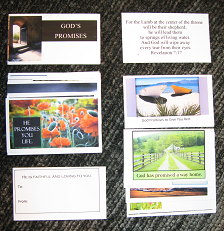
 How does Paul say we get the Holy Spirit? By faith in God through the work of the Jesus Christ (as portrayed in the Christian Bible).
 Do not be yoked together with unbelievers. For what do righteousness and wickedness have in common? Or what fellowship can light have with darkness? What harmony is there between Christ and Belial? What does a believer have in common with an unbeliever? What agreement is there between the temple of God and idols? For we are the temple of the living God. As God has said: “I will live with them and walk among them, and I will be their God, and they will be my people.” 2 Corinthians 6:14-16
 Big mistake, or so Paul says in 1 Corinthians 10: 14-15: “Therefore, my dear friends, flee from idolatry. I speak to sensible people; judge for yourselves what I say.” If you’re sensible, you will think about it. You will recognize it and not diminish its insidious pull at your life. You will flee from idolatry knowing that it endangers your soul and your relationship with God.
 This is reassuring news. We don’t need to learn from our own mistakes. We can learn from other people’s. Seeing the consequences beforehand, we don’t have to resort to trial and error as a way of moving through the obstacle course of life. We can watch those ahead of us in line.
 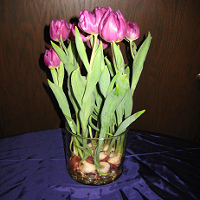 I think there’s something of the splendor of God in every emerging sprout, the jiggle of the earthworm, and the singing of the cardinals. I love spring.
 The snow isn’t completely gone from my yard, but my early spring bulbs (which are late this year because of snow cover) are coming up. Snow crocus, snowdrops, winter aconite are among my favorites for cheering the heart. Soon, the chinodoxa and daffodils will be blooming in warmer microclimates in my yard. Not all the daffodils will flower outside though–some will come indoors to bloom.
 Today we begin exploring ways to walk on the Way of Holiness.
  When we travel somewhere, we carefully pack our suitcases. We assemble our supplies in a tiny plastic bag so we can make it through airport security. We take action well before our journey to ensure we will get on the plane with our carry-ons. We have our destination in mind.
  Hezekiah associated sin with its consequences (v 7). Contrasted with the Westboro so-called Baptist Church, Hezekiah didn’t command hate speech, picketing, or hurting others to throw sin’s blame on someone else. Rather, everyone sought God, recognizing there is collective and individual responsibility for sin.