Created to BE in Community

Isn’t it interesting that God said it wasn’t good for the man to be alone (Genesis 2:18) so He made woman? 

God was there with Adam, yes?  Adam wasn’t truly alone in one sense, but very much alone in a human companionship and community way. 

God created us to be in community.

This was brought home to me in a strange way.  My husband and I have a dog named Harley—a smooth haired fox terrier.  He attracts a lot of attention, particularly from children.  Last evening, Harley was taking us for a walk when a little boy ran up and asked if he could pet our dog.  The little boy smiled when I said “Yes” and then he looked at my face with the bandage from my surgery and asked, “What’s that?”  I immediately thought of the medical answer and decided that wouldn’t be nearly as informative or age appropriate as the answer I gave him: “I had an owie on my face and so the doctor took it away.”  The little boy said “Oh, that’s good.”  While he was petting Harley, two little girls came running up to see Harley too, and one of them spoke for the pair and asked “What happened?” and they both pointed to their faces corresponding to where my bandage is.  I gave them the same answer and they said, “Oh.  OK.”  After this episode, I talked with my husband about how I ran into a woman from church while I was at the store earlier and she also asked me “What happened?”  I’m sure everyone I encountered was wondering about this prominent bandage, but only she—a friend—asked. 

Community:  husband, boy, girls, strangers, friend…

Think of all the ways this never would have happened if I were not in community.  No one to see my face or diagnose my cancer.  No one to perform the surgery.  No one to make the car that I drove home.  No bandage manufacturers.  No store at which to shop or cashiers to ring my purchase of bandages.  No friend.  No strangers.

But there was a difference between the strangers at the store and the children.  None of them knew me—they had that in common.   I’m not a child psychologist, but I thought it was really fascinating that children asked about it whereas the strangers–adults–were silent.  Were the children merely curious?  I imagine the adults were too. Was it children’s innocence and observation?  Unlike adults who also observed, perhaps children had awareness and concern because they have an association with bandages that is different—a “kiss it, make it better” mentality?

Why is it that my friend acted in a similar way to the children?  The simple answer is that she cared.  She loves me with the love of Christ. 

Observation.  Curiosity.  Concern.

Strangers observed and may have been curious, but what about their concern for another human being? Maybe it was there, but as adults they’d learned not to express it.  Then I wondered back to the children.  Could their questions evidence a rudimentary community on display before the layers of social mores and taboos would turn their thoughts inward, fear would silence their questions, or responsibilities would dull their concern and transform it into resignation or apathy?

If one part suffers, every part suffers with it; if one part is honored, every part rejoices with it.  (1 Corinthians 12:26)

Carry each other’s burdens, and in this way you will fulfill the law of Christ. (Galatians 6:2)

We were made to be in community—to be invested in one another beyond the simple “How are you?”  In the United States, most of us have the individualism as standard equipment and community is something we must relearn.  There is no better place to relearn community and our concern for others than in the church.
We were Created to BE in Community, so let’s ask ourselves how can we better show community within the church and in our neighborhoods today?
Continue Reading

Problem Gardens—Shade

Every house in which I’ve lived has had its garden problems:  too much shade, too much moisture, too much sun, too much heat.  The key to overcoming these garden problems is plant selection.

Just as every one of us has unique personal tastes, every plant has conditions that promote its best growth, conditions it will tolerate, and conditions where it will surely die.  Forcing a plant to live where it will surely die means the end result is disappointment.  Plant selection is important.

The best ways to select plants involve researching which plants perform in shade.  One of my favorite gardening web sites Dave’s Garden has the care and cultural requirements of many plants so you can see what will survive in your area (sun, shade, and hardiness zone).  These are submitted by gardeners just like us so we’re getting people’s personal experiences (positive, neutral, and negative) and advice on overcoming problems.

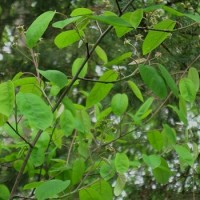
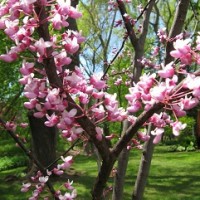
Here are photos of some of my favorite plants for part shade to full shade.  As they continue to grow and bloom, I will post more photos.  Redbud (Cercis canadensis, below left) and Serviceberry (Amelanchier canadensis, below right) are two “understory” trees which means that they can handle growing in the shade of taller canopy trees.  They generally stay shorter and they adapt well to part shade conditions.  Both flower in the springtime.  The Serviceberry blossoms have faded but it has begun to set fruit which will develop fall color in addition to the leaves which makes it multi-seasonal in its beauty.


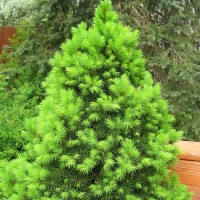
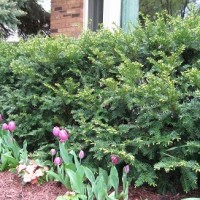
Among the evergreens that do well in shade, the Dwarf Alberta Spruce can handle significant shade, is slow growing, and is one of the few plants whose cold-hardy root systems can withstand being grown in a pot even through a Chicagoland winter.  This Dwarf Albert Spruce (Picea glauca, below left) has been growing in a pot for 5 years.  Their root systems are not large; their slow growth keeps them an ideal size for winter interest by the front door; and their new growth forms bright green “candles” that do not need trimming.  Yews (Taxus, below right) come in upright and spreading forms.  If you’re replacing some of these versatile foundation plantings, make sure of which type you have.  I keep mine  hand-trimmed to maintain a somewhat less formal look, but they respond well to mechanical trimmers.


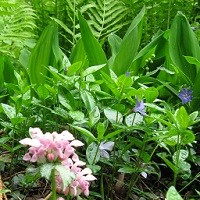
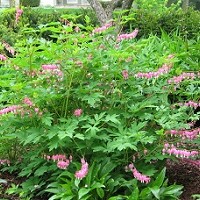
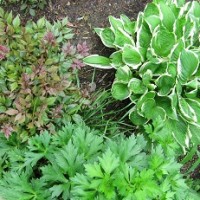
Here are some of my favorite flowers for shade.  Deadnettle (Lamium, sp) comes in a variety of leaf forms and flower colors.  This one (foreground below, left) is “Pink Pewter” and is followed by Vinca, Sweet Woodruff, Lily of the Valley and Ostrich fern.   I have some blue lungwort whose flowers resemble bluebells, but this variety “Raspberry Splash” (pictured below) provides a nice color contrast to wood violets and pink columbine.  Another fine feature is that deer don’t like any of these.


Likewise, bleedingheart (below, left) can handle shade and deer don’t like them.  Astilbe, Aconitum (below, right) will be later to bloom and I spray my hostas with TreeGuard to keep the deer from devouring them.


Why do some plants not tolerate shade? 

It has to do with several plant characteristics.  First, not all plants have the kind of capabilities in shady environments as shade-loving plants.  Plants adapted to shady environments will often have (1) thinner leaves, (2) larger leaves, (3) more chlorophyll–the green pigment in leaves that helps with photosynthesis, and (4) these plants are more concerned with light harvesting than building leaf bulk.  Sunny plants, on the other hand, build up protective mechanisms and structures within the leaves and will have a different ratio of pigments in order to protect themselves from the intensity of the sun.

Why is this important?  For two reasons:  (1) it means that some plants will never survive in sun or shade depending on its ability to adapt to the environment, and (2) it is important to allow seedlings grown indoors or plants grown in full sun to adapt—a process called acclimation or hardening-off (in the case of seedlings).

Have you ever taken tomato seedlings you’ve carefully pampered inside and brought them outdoors and they seemed to fry out in full sun?  Tomatoes are supposed to have full sun, right?  Yes.  But they need time to adjust to the increased light conditions outdoors.  So acclimating the seedlings gradually over a period of a week to 10 days will give them a chance to thicken their cuticles (waxy layer on leaves) and to structurally make changes to deal with wind, sun, rain, fluctuating temperatures, etc.

Of if you’ve ever bought a Ficus tree as a houseplant, brought it home, and it immediately dropped a lot of leaves, this is because it’s acclimating itself by putting off leaves that will be ineffective for your environment and putting on new leaves that will help the plant to survive in your home’s conditions.

Just as we were Created to BE Individuals, our understanding the individual characteristics of plants will help us to have a successful experience with garden and houseplants and demonstrate patience while our plants adjust to the changing seasons and their new environments.

Continue Reading

Created to BE Individuals

Isn’t it wonderful that when God set out to create human beings, that He made us each to be individuals?  No cookie cutter, mass-produced, dime-a-dozen clones.  Each one of us is handcrafted.

Beyond that, each of us is handcrafted for a purpose.  And while we are each gifted with personalities, talents, and abilities to do the very work we were created to do, we weren’t created as individuals simply to supply a worker-bee role with able bodies.  We were created as individuals–not just to DO but to BE. 

Maybe your voice isn’t like a songbird, but God wants to hear your voice because it is the sound of your BE-ing.  God wants to see your smile—not because it’s dental perfection—but because it’s an outward demonstration of joy in your BE-ing.  God wants for you to pour your tears out before Him when you’re sad because this too is a part of your individual life, your BE-ing.  Even the scars of our lives—the marks on our bodies and emotions—are part of the BE-ing that make each of us unique from every other human on the planet. 

I’ve been thinking about this a lot.  As of this writing, I’m recovering from having a basal cell carcinoma lesion removed from my face.  Once the pain and swelling go away, there will be a scar (hopefully it will not be too noticeable).  But for Christians, these scars are our stigmata—the marks of life—as we pick up our cross and follow Christ on a journey of BE-ing in a fallen world. 

Every scar represents a moment of trust that God is my Savior and He carries me through.

I have already been a Cancer Survivor and these scars from surgeries over the years form something like the fingerprint of God, yet unique to me. 

They are marks reminding me of how my anger at God was transformed by tears and His reassurance into trust.  If this world were the destination, my anger at God would be more enduring.  I would question, “Why me?” and ponder the unfairness of it all.  But instead I trust.  I trust that I have been made with love.

It is written: “I believed; therefore I have spoken.” With that same spirit of faith we also believe and therefore speak,  because we know that the one who raised the Lord Jesus from the dead will also raise us with Jesus and present us with you in his presence.  All this is for your benefit, so that the grace that is reaching more and more people may cause thanksgiving to overflow to the glory of God.  Therefore we do not lose heart. Though outwardly we are wasting away, yet inwardly we are being renewed day by day.  For our light and momentary troubles are achieving for us an eternal glory that far outweighs them all.  So we fix our eyes not on what is seen, but on what is unseen. For what is seen is temporary, but what is unseen is eternal.”        2 Corinthians 4:13-18

The destination is not this earth, this body, this job, or this competition.  The destination—eternity with Jesus—will involve a new earth, a new body, renewed purpose, and a purified spirit.  It will be the endless BE-ing that I was Created to BE.  Unique to me, and perfected in Christ.

Continue Reading

Created to BE Rulers

Then God said, “Let us make man in our image, in our likeness, and let them rule over the fish of the sea and the birds of the air, over the livestock, over all the earth, and over all the creatures that move along the ground.” Genesis 1:26

When God created us, He created us to be stewards, but more than that, our identity is wrapped up in being rulers.  

Do we generally start our day thinking that we’re supposed to be ruling, bringing God’s righteous rule and reign to extend throughout the earth?  Think of it this way:  God did His job of creating, forming, and filling the earth.  But, we were created to be rulers over the fish, birds, livestock, earth, and the creatures—we are regents ruling God’s prefect Kingdom, priests serving in His sanctuary. 

Those of us who live in areas of the world without an active monarchy have a hard time relating to the concept of God as King and our role as regents.  We picture fairytale monarchies and are enamored with royal weddings since we struggle to grasp what a righteous kingdom looks like.  Even in countries where monarchies exist, they are seldom the kind of kingdom that reflects God as King.  That’s because of sin.

Sin makes the earthly Kingdom necessary in a new and different way.  Without a Kingdom of God advancing the truth, how else is a broken world going to hear about the holiness required for heaven?

But sin also makes the earthly Kingdom more difficult because sin has made ruling more about power than about seeing God’s truth and perfection filling the earth.    Don’t you think it’s interesting that Genesis didn’t say we were to rule over each other until sin broke our relationship with God and with one another?  The resulting human kingship is about power, control, and authority; and this is what God had Samuel explain to the people when they rejected God’s Kingship (perfect, holy, and true) and demanded an earthly king (of power, control, and sin).  1 Samuel 8: 5-20

As a society, we have rejected God as King. 
As individuals, we can reinstate God as King over our lives. 

God’s reign and rule can be upon our hearts and spread upon the earth.   We will see His holiness and grace in the giving of the Law and in writing the Law on our hearts.  Our role as regents will involve Law-abiding and Law illuminating/ witnessing in contrast to a world of sin while this earth remains. 

But there is future Kingdom of God in which we will no longer be regents.  We will reign with Christ (because of His humanity) and enjoy the perfection of a Kingdom much like what existed before sin entered the world. 

This is an important distinction:  we will be rulers reigning together with Christ our Lord and Savior. 

Blessed and holy are those who have part in the first resurrection. The second death has no power over them, but they will be priests of God and of Christ and will reign with him for a thousand years. Revelation 20:6

This is not a kingdom of power OVER, but power TO.   The Kingdom of God—more than a Jewish nationalistic hope—is a universal hope because of what Jesus Christ did.  We have power to live righteously–both people of Jewish and Gentile heritages–and can equally access this hope by faith.  In Christ, we will have a righteousness beyond anything the Law and human achievement could give.  And unlike a sin-warped reality of ruling over one another, this future Kingdom involves reigning together with Christ as a vine and we as His branches, enjoying the perfection and holiness of God forever.

 The seventh angel sounded his trumpet, and there were loud voices in heaven, which said: “The kingdom of the world has become the kingdom of our Lord and of his Christ, and he will reign for ever and ever.”  And the twenty-four elders, who were seated on their thrones before God, fell on their faces and worshiped God,  saying: “We give thanks to you, Lord God Almighty, the One who is and who was, because you have taken your great power and have begun to reign.” Revelation 11:15-17

Continue Reading

Created to BE Stewards

Every year at this time, I get asked, “Where do you buy your plants?”  My answer reveals much about what I think of God’s first Commission for man.  We were Created to BE Stewards.

Genesis 2:7 the LORD God formed the man from the dust of the ground and breathed into his nostrils the breath of life, and the man became a living being. 8 Now the LORD God had planted a garden in the east, in Eden; and there he put the man he had formed. 9 And the LORD God made all kinds of trees grow out of the ground– trees that were pleasing to the eye and good for food. In the middle of the garden were the tree of life and the tree of the knowledge of good and evil… 15 The LORD God took the man and put him in the Garden of Eden to work it and take care of it.

It makes me smile that God’s first job for mankind to do was to enjoy gardening within God’s sanctuary.  He didn’t create us to just view the garden.  He created us to work it and take care of it: stewardship!

For us, stewardship is more than just money or time.  Despite the million sermons on stewardship that focus on giving to the Church and the need to scale back our lifestyles to give more by way of a financial tithe, stewardship is far bigger than paid pastors often admit.  Stewardship is not synonymous with stingy or cheap…even if it results in the noble goal of supporting missionaries or the Church.

Big picture stewardship is what we see in the Parable of the Talents: putting God’s resources to work as if God Himself were putting them to work (Matthew 25:14-30).  Do we ever see a penny-pinching God scaling back and being miserly in order to bless someone else?  Or do we see a God with infinite resources looking for faithful stewards on whom to lavish it?  We act sometimes as though Church-supported missionaries are the only people God cares about…or that vocational missionaries are the only ones sent to reach a world in need of God’s love.

Stewardship involves discerning where God wants us to invest what He has given to us.  So, sometimes I try to save money and grow things from seed or buy things at a “big box” store like Home Depot where I worked for several years.  Other times, I will buy plants and other products from smaller independent stores where their livelihoods depend on shoppers willing to spend more for a product to keep them in business.  There are times that I will buy things from places that are little “mom-and-pop” stores where I pay a premium for something truly unusual in order to preserve their niche in the marketplace and put food on their tables.   

Today, I will pick up flowers I ordered from a local food pantry called COOL (Christian Outreach of Lutherans).  Even though I don’t go to a Lutheran church, I love people who do and the people they help through their food pantry.  Yes, I may pay more for the joy of helping their fundraiser, but this is all part of being a steward.  Maybe you have a fundraiser in your area that does something similar.

We can witness to a world in need of God’s love through how we spend money.  When God gives resources into our families, He is using us as His hands and feet to supply the needs of others.  Church supported ministers and missionaries, yes, I don’t want to diminish that.  But people with financial needs work at Home Depot, small independents, premium outlets, and go to food pantries.  God is providing for them through us…just as others are God’s instruments to provide for our needs.  We are not to bury our talent in the local church institution and burden it with caring for every family—everywhere—and to put food on everyone’s tables. 

God commissions us all for fruitful Kingdom work in many places—we were Created to BE Stewards.
Continue Reading

Created to BE God’s Image Bearers

As I’ve pondered the American reaction to the death of Osama Bin Laden, I’ve been trying to decide what word would characterize my reaction. Rejoicing isn’t right. Happy isn’t right. Celebrating isn’t right. Glad. Gratified. Grateful…none of these are exactly what pinpoints what the reaction ought to be because of this:

Like it or not, Bin Laden was made in the image of God.

That’s what the Bible says.

Then God said, “Let us make man in our image, in our likeness, and let them rule over the fish of the sea and the birds of the air, over the livestock, over all the earth, and over all the creatures that move along the ground.” (Genesis 1:26)

 Isn’t it interesting that before God ever made you, He had in mind that you would bear His image?

  • Before His hands picked up the dust and formed you?
  • Before He breathed life into you?

 Before you were born, He created you—and all the rest of mankind—to bear His image.

For us to rejoice in the death of Bin Laden is for us—in a strange way—to rejoice over the destruction of the image of God in another person. Make no mistake: Bin Laden was destructive, dangerous, and had nothing but contempt for his fellow human beings. His actions were wicked, evil, horrific, reprehensible, and brought deep sorrow to thousands of innocent people. Yet, under all Bin Laden’s sin, the image of God was there because he was human and God had created him.

For that reason, we cannot trivialize death of any human being, even in light of Jesus’ mission of destroying the devil’s work.   Jesus destroyed the devil’s work by the power of His love and grace.

Issues like how a Christian should respond to the death of Bin Laden should not divide Christians from one another. We can be satisfied that God used human agency to accomplish His justice. We can honor the bravery of the Navy SEALs and the careful planning. We can be grateful that peace among men has one less enemy today. We can praise God that God alone is righteous and that His grace saves sinners—just like us—who repent. We can ask for hearts that can somehow love our enemies.

We can do these things by remembering that we were CREATED TO BE…God’s Image Bearers.

1 John 3:5 But you know that he appeared so that he might take away our sins. And in him is no sin. 6 No one who lives in him keeps on sinning. No one who continues to sin has either seen him or known him. 7 Dear children, do not let anyone lead you astray. He who does what is right is righteous, just as he is righteous. 8 He who does what is sinful is of the devil, because the devil has been sinning from the beginning. The reason the Son of God appeared was to destroy the devil’s work. 9 No one who is born of God will continue to sin, because God’s seed remains in him; he cannot go on sinning, because he has been born of God. 10 This is how we know who the children of God are and who the children of the devil are: Anyone who does not do what is right is not a child of God; nor is anyone who does not love his brother. 11 This is the message you heard from the beginning: We should love one another. 12 Do not be like Cain, who belonged to the evil one and murdered his brother. And why did he murder him? Because his own actions were evil and his brother’s were righteous.

Continue Reading

On Hummingbirds and Orioles

Part of the joy of gardening is the beauty of wildlife drawn to a well planned garden.  I love birds.  When I was a child, I kept a bird-watching journal and enjoyed identifying birds and their habitats.  A long time ago, I abandoned the written journal, but mentally, I have a record of birds in the yard and when their seasons are.
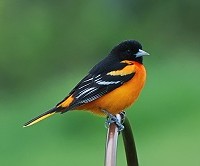

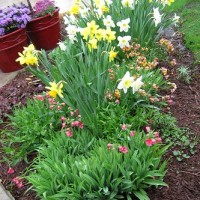
We’ve just begun the month of “Maybruary” as a friend put it.  It’s a very cold start to May.  Everything blooming is about two weeks behind a typical year.  For that reason, I ignore what the scenery looks like and pay close attention to the calendar and on April 20th, I put my feeders out for both hummingbirds and orioles.

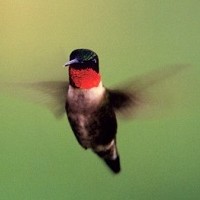
I’m glad I did since many of my flowers that hummingbirds rely upon are weeks behind schedule.  The ruby-throated hummingbirds arrived last week and found their feeder right away.

The orioles arrived yesterday with their brilliant orange and black markings!  I’m so excited at seeing these two beauties.

I’ve found three keys to keeping hummingbirds and orioles in my yard:


  1. Put the feeders out early before the birds arrive.  When hummingbirds and orioles find available food, they’ll make your yard their home for feeding and maybe breeding.
  2. Do not use soap of any kind to clean their feeders.  Bleach and water mixed will disinfect the feeder without leaving a soap taste that birds hate.  I always rinse it very well but am reassured by knowing that any bleach traces left behind are not harmful to birds because of the way bleach chemically disappears in the sugar solution.
  3. While commercial nectar solutions exist, I find that the color of the feeders catches the attention well enough that birds are happy with fresh “nectar” solution made with one part sugar to four parts boiling water.  I boil the water to make the sugar easier to dissolve.  Then I let it cool before putting it in the disinfected feeders.

While I’m sad that the juncos (snowbirds) have left for the season and the cedar waxwings have been passing through, I know that the arrival of the migratory indigo buntings, scarlet tanagers, and rose breasted grosbeaks will be shortly.  The calendar says Yes, even if it seems we’re in Maybruary.  So I have seed ready for the birds that are seed eaters.  And I trust God to provide insects for the insect eaters.  And guess what?  As I’m writing, the first rose breasted grosbeak of the season just arrived at my feeder.  How wonderful!   I am privileged to play a small part of God’s plan for feeding the birds.

Look at the birds of the air; they do not sow or reap or store away in barns, and yet your heavenly Father feeds them. Are you not much more valuable than they?  Matthew 6:26

Continue Reading

Created to BE

From before you were born—from the day you were made,

God knew who you were CREATED TO BE. 


You were not created to be static—like a rock which is acted upon by its environment of rain and ice and the winds of time.

You were not created merely to be alive—like the trees or the flowers of the field, growing but living at the mercy of the weather.

You were not created simply to be alive and thinking –like dogs or horses or dolphins or doves.

You were created to BE

To be is a linking verb, but can also be used existentially.  It also has dynamic and stative uses.  One grammar web site writes:

The verb “To be” is said to be the most protean of the English language, constantly changing form, sometimes without much of a discernible pattern. Considering that we use it so often, it is really too bad that the verb “To be” has to be the most irregular, slippery verb in the language.

I like to think of “To be” as organic and intrinsically part of the human condition–our state of existence and life itself.  Organic has a punctiliar sense to it—a point in time, an origin.  But organic also implies a living quality–movement, progression, dynamism—that shows we were not meant to be victims of the elements.  Rather, we are to engage life.  We are created to BE.

  • To be—as a point of origin.
  • To be—as an ongoing linking verb.

We are created in the image of God, our Creator. 

 Our Creator—without beginning or end—calls Himself “I AM.” 

Exodus 3:14 God said to Moses, “I AM WHO I AM. This is what you are to say to the Israelites: ‘I AM has sent me to you.'”

Given that we are made in I AM’s  image, what action verbs will you choose to link with your BE

Let’s ponder today what stewardship of this life entails and what it means that we are CREATED TO BE .

Continue Reading

Real World Gardening–Out of Eden

I sometimes watch ads for products and services and I’m not sure whether to laugh myself silly or be appalled.  It’s going to take more than Miracle products to have a perfect garden like those made for TV.  It’ll take a real miracle: the Second Coming of Christ. 

Yes, more than advertized rescue inhalers will be needed to rescue African violets planted in an outdoor flower bed next to kalanchoes and cyclamen.  Even garden center ads show this very same thing.  Obviously none of these people garden in the real world where houseplants want to stay in the house instead of flaunting audacity; laughing in the face of destruction, and throwing down the gauntlet for a gang of aphids. 

Real world gardening involves everything being beautiful its time (Ecclesiastes 3:11). 
  • Things bloom.  Things seed. 
  • We sow.  We harvest. 
  • We plant good seed and get weeds.
  • Gardening has its seasonal ups and downs.
  • 

News flash:  my garden isn’t perfect.  I have real world gardening. 

Gardening in a world marred by sin means that we have had the cloudiest April on record but the upshot is renewed compassion for friends in Seattle with their rainy days.  In Chicagoland, rain and cool means we’ll have real world rot, a world of leaf diseases, and really happy slugs.

Despite the battles against the thorns and thistles outside of Eden (Gen 3:18), I rather like the challenges that each year brings.  It keeps life interesting and spurs me to creative problem-solving.  Every year, I try something different and even if I didn’t, the weather conditions rarely present themselves as ideal for the same things.  I go back to the drawing board anyway.

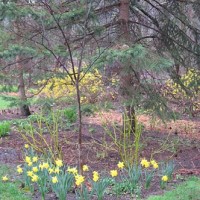
Even in the midst of dreary days, perennial features such as the cheerful yellow forsythia, “Cardinal” red-twig dogwood, and King Alfred daffodils lift one’s spirits.
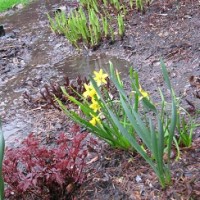
And look at the beautiful range of colors of emerging growth of turtlehead (Chelone obliqua), Astilbe ‘Fanal’, and hostas—all of which tolerate standing water for short periods.  Good thing, since in every real world garden a little rain must fall.  This particular garden is always among the last to be worked because it is a low spot in our yard.  I find that working our higher front yard to the lowest back is always helpful since that’s how things aren’t worked when it’s too wet.  Working the soil when it’s wet ruins the structure.  Mulching when it’s raining causes the ground to retain the soggy conditions longer.  It’s important with conditions like these to research carefully what plants will survive in such Out of Eden locations.
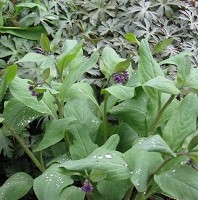
My bluebells (Mertensia virginica) are budding and my native cranesbill geranium (Geranium maculatum) won’t be outdone.  Also in my woodland garden are lily-of-the-valley (Convallaria majalis) and sweet woodruff (Galium odoratum) which are not native but escaped cultivation and are real showstoppers.  I like that phrase:  escaped cultivation.  Makes them seem like garden rebels…or too beautiful to be held captive.

Gardening in the real world: creative ups and downs.  Cultivation and escape.  Adversity and beauty.  It doesn’t get any better than this.  Until Jesus returns, that is.

Continue Reading

O’Reilly on Hell: Pinhead or Patriot?

Normally, I don’t mind Bill O’Reilly.  His No-Spin-Zone has less spin that a Tilt-a-Whirl, but often more ups and downs than a roller coaster.  But last night’s segment talking about a literal hell left me about as nauseous as if I’d been on both for a world record in the same hour program.  I’m thinking the Word of the Day for O’Reilly might have been Pinhead.

One friend wrote on Facebook, “O’Reilly has got to STOP doing theology!”  Amen, sister.  Not only because it confuses the viewers, but also because it’s dangerous.    In James 3:1, it is written:

Not many of you should presume to be teachers, my brothers, because you know that we who teach will be judged more strictly.”

O'Reilly on HellO’Reilly, this means you.  While in the camera’s eye, you have the ability to persuade many people and convince them that “the spin stops here.” When you enter the realm of theology, we no longer call it spin.  To the extent you are misinformed and try to play pastor-prophet-priest in your bully pulpit, you need to know the consequences of displaying such ignorance:  it’s called deception.  Lies.  Dangerous.  Infectious.

Yes, Mr. O’Reilly, it infects everything you do since your words of politics, your words of culture, and your words of theology are three streams arising from the same pool.  Pollute the source, you pollute them all.  Pollution found in any one leads us back to the source, sir.

Disparaging the biblical theology of grace by overlaying it with deeds that send the Hitlers of this world—by autopilot—into a literal hell while God is somehow weighing out the rest of us on a scale, completely misrepresents how evil we all are and how unable each of us is to discern our own hearts and actions.  There were two thieves next to Christ on the Cross—one dead today awaiting judgment and yes, a literal hell,  and one in Paradise with Jesus.  And Mr. O’Reilly, it wasn’t the thief’s recounting his good deeds that merited Jesus’ assurance.

Before you presume to take your theology to the camera, make sure you have your facts straight.  If you’re wrong (and you were in this case), Evangelical Christians in your audience don’t want to question whether “Fox Lies.”  Christians—Evangelical, Protestant, and Catholic—likely form the vast majority of your viewership.  The educated, reasonable, loving, and compassionate among evangelicals like me don’t welcome an extremist label.

Continue Reading