Late Bloomers–Saving the Best for Last

Some of my favorite plants are late bloomers.  Some of my favorite Scriptures talk about the last in equally wonderful terms.   Sometimes, I think God saves the best for last.

John 2:7 Jesus said to the servants, “Fill the jars with water”; so they filled them to the brim. 8 Then he told them, “Now draw some out and take it to the master of the banquet.” They did so, 9 and the master of the banquet tasted the water that had been turned into wine. He did not realize where it had come from, though the servants who had drawn the water knew. Then he called the bridegroom aside 10 and said, “Everyone brings out the choice wine first and then the cheaper wine after the guests have had too much to drink; but you have saved the best till now.” 11 This, the first of his miraculous signs, Jesus performed at Cana in Galilee. He thus revealed his glory, and his disciples put their faith in him.

The last of the wine made for the first of the miracles.  I don’t know whether it’s that most of my garden starts to look past its peak by October’s arrival and therefore, the late bloomers stand out.  Or maybe it’s that as fall is in full swing and I know winter’s coming will put an end to the outdoor gardening, the late bloomers have a charm about them that brings joy to the heart.  But maybe, the best is noticed more when it’s last.  Hope springs eternal, but late fall bloomers say that little gardening miracles can still happen.

Just like the spring ephemerals, the late bloomers have a special charm.  They dare to bloom in the face of the frost.  They might not last as long as some of the summer staples, but they are stunning in their season.

Here are a few of my favorites:

Aconitum (Monkshood)—Pictured on the right, Aconitum is a real showstopper displaying a brilliant cobalt blue color which is hard to come by in the perennial garden.  For those of you who are concerned about such things, particularly cat owners whose cats eat plants, this plant is poisonous.  I have this planted in a corner where its color pops in front of a serviceberry tree adorned with fall’s yellow-red leaves.  It tolerates wet soil and shady conditions, making it a real winner in my book.

Asters—Asters (left) vary significantly in height and also in flower color.  My garden features two different varieties which are among the latest to flower.  Honey bees appreciate aster flowers for this reason.

Chelone (Turtlehead)—Turtlehead (right) looks much like a tall snapdragon, but it is a perennial that tolerates wet soil and shade.  These traits make it highly desirable along with its neat habit and colorful show.  They are planted in a corner garden where their violet-red joins with blues and purples of other perennials to create a lovely harmonious look.

Chrysanthemum—Hardy chrysanthemums come in many colors and flower shapes.  Some are cushion type, some are daisy type, but they are a staple of many fall gardens.  They do tend toward being taller in the garden than they were at the garden center.  To keep a bushy habit, they are best pinched back (the tips clipped off) before the 4th of July in order not to delay their bloom.

Sedum—This versatile perennial comes in upright and creeping plant growth habits, both of which are truly lovely.  They are among the last to bloom and their flower color often deepens with the first frosts.  Bees love this plant every bit as much as asters so careful plant placement will allow you to enjoy their beauty and allow the honey bees to gather their end of season food without any unwelcome stinging.  Sedums give their best flower color and exhibit optimal plant vigor in full sun, but they will tolerate part sun and will survive (albeit as spindly growth) in nearly full shade.  I have a few divisions of “Neon” that I threw  into the edge of the woods behind my house with the intent that they decompose and they’re surviving and flowering to spite me.  It’s nice to know that while Sedum are fairly indestructible, they are versatile and beautiful too!


Sweet Autumn Clematis–Another bee-lover, this clematis (pictured left) is hardy and vigorous and produces a blizzard of blossoms in the fall.  The vines themselves are rapid growers and given plenty of room to climb, they’ll fill a trellis, arbor, or fence with rambling beauty.  I have planted them in two locations: one solo and also one interplanted along with some large flowered early summer blooming varieties so that my clematis bloom season is extended.

Japanese Anemone (right)—This is one of my most cherished of the late bloomers.  Stately and elegant, the simple beauty of Japanese Anemone makes it a delight to everyone who sees it.  Not a year goes by in which someone doesn’t ask me about this amazing white flower.  The blossoms seem to flutter like butterflies in the wind due to the wiry stalks held high above the foliage.  They are disease resistant and the pure white color goes with absolutely everything.  They laugh in the face of early frosts and their cheerful appearance brightens the bleakest of drizzly fall days.  They come in other colors, too, but in my opinion, nothing can beat the simplicity of this lovely late bloomer.

Yes, I believe that sometimes God saves the very best for last as a little glimpse of heaven–a reminder of hope to carry us through the winters of our lives. 

Continue Reading

Chapel Worship Guide 9.23.2012

Service Order for 9:00 AM
Sunday, September 23, 2012

Nemmers Family Chapel at Advocate Condell

Prelude—There is a Redeemer  

Carl Festin—guitar and keyboards    Caryl Harris – singer

Nate Fleming – guitarist                       Jean Gray – keyboards

Jordan Festin – bass

Welcome— Barbara Shafer, Christ Church Highland Park

Scripture Call to Worship:  NIV Psalm 110:1 Of David. A psalm. The LORD says to my Lord: “Sit at my right hand until I make your enemies a footstool for your feet.” 2 The LORD will extend your mighty scepter from Zion; you will rule in the midst of your enemies. 3 Your troops will be willing on your day of battle. Arrayed in holy majesty, from the womb of the dawn you will receive the dew of your youth. 4 The LORD has sworn and will not change his mind: “You are a priest forever, in the order of Melchizedek.”

Worship in Song:

O Worship the King (Hymn 21) 

Lamb of Glory

Reading of Scripture: Genesis 14:14 When Abram heard that his relative had been taken captive, he called out the 318 trained men born in his household and went in pursuit as far as Dan. 15 During the night Abram divided his men to attack them and he routed them, pursuing them as far as Hobah, north of Damascus. 16 He recovered all the goods and brought back his relative Lot and his possessions, together with the women and the other people. 17 After Abram returned from defeating Kedorlaomer and the kings allied with him, the king of Sodom came out to meet him in the Valley of Shaveh (that is, the King’s Valley). 18 Then Melchizedek king of Salem brought out bread and wine. He was priest of God Most High, 19 and he blessed Abram, saying, “Blessed be Abram by God Most High, Creator of heaven and earth. 20 And blessed be God Most High, who delivered your enemies into your hand.” Then Abram gave him a tenth of everything. 21 The king of Sodom said to Abram, “Give me the people and keep the goods for yourself.” 22 But Abram said to the king of Sodom, “I have raised my hand to the LORD, God Most High, Creator of heaven and earth, and have taken an oath 23 that I will accept nothing belonging to you, not even a thread or the thong of a sandal, so that you will never be able to say, ‘I made Abram rich.’ 24 I will accept nothing but what my men have eaten and the share that belongs to the men who went with me– to Aner, Eshcol and Mamre. Let them have their share.” (NIV)

Hebrews 5:1 Every high priest is selected from among men and is appointed to represent them in matters related to God, to offer gifts and sacrifices for sins. 2 He is able to deal gently with those who are ignorant and are going astray, since he himself is subject to weakness. 3 This is why he has to offer sacrifices for his own sins, as well as for the sins of the people. 4 No one takes this honor upon himself; he must be called by God, just as Aaron was. 5 So Christ also did not take upon himself the glory of becoming a high priest. But God said to him, “You are my Son; today I have become your Father.” 6 And he says in another place, “You are a priest forever, in the order of Melchizedek.” 7 During the days of Jesus’ life on earth, he offered up prayers and petitions with loud cries and tears to the one who could save him from death, and he was heard because of his reverent submission. 8 Although he was a son, he learned obedience from what he suffered 9 and, once made perfect, he became the source of eternal salvation for all who obey him 10 and was designated by God to be high priest in the order of Melchizedek.

Song of Reflection:  We Are Called written by Steve Fry

Prayer—Bill Slater, Christ Church Lake Forest, BillSlaterMinistries.org

Message— “The Never-ending Priesthood” by Bill Slater

Song of Response:    My Lord and My Messiah written and performed by Carl Festin

Benediction—Bill Slater

Continue Reading

The Innocent Prophet

I find it instructive and quite horrific that a handful of Muslim extremists around the world are zealously protesting (not with mere placards and raised voices, but with flag burning, violence, and killing) their prophet Mohammad being portrayed in a way they alone consider blasphemous.   All this they justify by some obscure video that would not receive any attention were it not for the Internet which—just about everyone knows—is filled to the brim with hate, lies and deception against every group known to man.   Going viral sounds like a sickness and indeed this situation bears all the hallmarks of something truly sick.

The low budget and now high profile clip has been glommed onto by the mobs looking for an excuse to denounce their enemies–particularly America and Israel–and engage in some holy war, all ostensibly to defend their prophet.  To these extremists, their prophet needs defending, I guess.  Mine doesn’t.

But they now have a pretext, a convenient excuse.

An excuse is nothing more than the skin of a reason, stuffed with a lie.

The skin of a reason is easy enough to discern.  What is the lie?  The lie is that innocence may be found among any Muslims, people of any other religious group, or humanity period.

In all earthly history, there has only been—and will only be—one innocent human being. 
Only one innocent Prophet. 
That Prophet was the person Jesus of Nazareth.

Ironically, as Christ, Jesus was exposed to ridicule, charges of blasphemy, and died a cruel death on a cross to purchase our souls.  He was ridiculed, blasphemed, persecuted, mocked, stripped, beaten, and crucified in His lifetime, not after His death.  Of course, after His death and resurrection, Jesus’ followers—the Christians—have certainly experienced their share of persecution.

Persecution happened to Muhammad too—at least that’s what some supporters of Islam assert.  It’s a religion of peace, they cry.  David Wood writes, http://www.answering-islam.org/Authors/Wood/two_faces.htm

“Islam has never been able to decide whether it wants to live in peace with unbelievers, or to pile their severed, unbelieving heads into a giant pyramid. I’m sure many would disagree here, but they would be disagreeing with one of the most empirically verifiable facts in the universe. Think about it. One Muslim beheads an innocent woman to protest the war in Iraq, while another Muslim curses him for slaying the innocent. One group of Muslims flies an aircraft into a building, while another group condemns the attack. One Muslim detonates a bomb on a bus filled with passengers, while another Muslim says on the evening news, “Islam is a religion of peace.” Each side quotes the Qur’an to support its actions. However, it may be even more important to note that each of them is following the example set by Muhammad.”

The italics are original to the piece and highlight something truly interesting.  Muhammad did set an example of both violence and peace in his lifetime.  Does Muhammad truly need defenders within Islam?

Well, the strong Messiah—true Prophet—needs no defenders.  That’s the lesson Jesus teaches.  He needed no defenders at all.

The proof is in the Resurrection.  The proof is in His present sitting at the right hand of the Almighty in heaven.  The proof will be case-closed when He returns to judge the quick and the dead.

Muhammad died either in what is claimed to be a natural death in the arms of his wife…or a death from poison, proving that he was a false prophet.  But frankly, how he died is immaterial.  Muhammad died.  He is still dead.

Jesus, on the other hand, rose from the dead. 
The strong Messiah, the true Messiah, the innocent Prophet needs no defenders. 
His life both in the past, but importantly—in the present—is all the proof one needs. 
How He lived set an example. 
How He died changed the world as we know it.

Why are these Muslims so upset about the ridicule of their prophet?  The Bible tells of Jewish prophets being persecuted throughout Scripture.  Is anyone defending them by killing those prejudged to be infidels?  Nope.  With the exception of Elijah, all of Israel’s prophets died.  Why defend the man Muhammad?  What makes the human prophet of Islam different? Whether Jewish or Muslim, a dead human prophet is still dead.

I can tell you what makes Jesus different:

  • He wasn’t just any prophet.  Jesus is the innocent Prophet because only He is the Son of God. 
  • He is the innocent Prophet because He never sinned, not even once.
  • Nor did He ever shed blood, except His own on the Cross at the hands of others. 
  • In His entire life, He never encouraged His followers to pursue violence in His name, to defend Him, or to save His reputation. 
  • Not even in his early days. 

On the contrary, He said this, Matthew 5:8 “Blessed are the pure in heart, for they will see God. 9 Blessed are the peacemakers, for they will be called sons of God. 10 Blessed are those who are persecuted because of righteousness, for theirs is the kingdom of heaven. 11 Blessed are you when people insult you, persecute you and falsely say all kinds of evil against you because of me. 12 Rejoice and be glad, because great is your reward in heaven, for in the same way they persecuted the prophets who were before you.”

Jesus is the innocent Prophet because He told us to love our enemies.  He is the innocent Prophet because even when people tried to take defense of Him into their own hands and solve things in a violent or political way, He reacted thusly: 

Matthew 26:49 Going at once to Jesus, Judas said, “Greetings, Rabbi!” and kissed him. 50 Jesus replied, “Friend, do what you came for.” Then the men stepped forward, seized Jesus and arrested him. 51 With that, one of Jesus’ companions reached for his sword, drew it out and struck the servant of the high priest, cutting off his ear. 52 “Put your sword back in its place,” Jesus said to him,

for all who draw the sword will die by the sword. 53 Do you think I cannot call on my Father, and he will at once put at my disposal more than twelve legions of angels? 54 But how then would the Scriptures be fulfilled that say it must happen in this way?”

55 At that time Jesus said to the crowd,  Am I leading a rebellion, that you have come out with swords and clubs to capture me? Every day I sat in the temple courts teaching, and you did not arrest me. 56 But this has all taken place that the writings of the prophets might be fulfilled.” Then all the disciples deserted him and fled.

Jesus is the innocent Prophet because He is God and knew every detail of the past and foresaw that true prophets of God will get persecuted and He would be sending prophets, wise men, and teachers whose role would involve persecution:  their own persecution, not persecution of others.

John 15:18 “If the world hates you, keep in mind that it hated me first. 19 If you belonged to the world, it would love you as its own. As it is, you do not belong to the world, but I have chosen you out of the world. That is why the world hates you. 20 Remember the words I spoke to you: ‘No servant is greater than his master.’ If they persecuted me, they will persecute you also. If they obeyed my teaching, they will obey yours also. 21 They will treat you this way because of my name, for they do not know the One who sent me. 22 If I had not come and spoken to them, they would not be guilty of sin. Now, however, they have no excuse for their sin. 23 He who hates me hates my Father as well. 24 If I had not done among them what no one else did, they would not be guilty of sin. But now they have seen these miracles, and yet they have hated both me and my Father. 25 But this is to fulfill what is written in their Law: ‘They hated me without reason.’

Violence—as a holy war—is the path of those who do not know God.

The strong Messiah needs no defenders. 

Matthew 23: 30 And you say, ‘If we had lived in the days of our forefathers, we would not have taken part with them in shedding the blood of the prophets.’ 31 So you testify against yourselves that you are the descendants of those who murdered the prophets. 32 Fill up, then, the measure of the sin of your forefathers! 33 “You snakes! You brood of vipers! How will you escape being condemned to hell? 34 Therefore I am sending you prophets and wise men and teachers. Some of them you will kill and crucify; others you will flog in your synagogues and pursue from town to town. 35 And so upon you will come all the righteous blood that has been shed on earth, from the blood of righteous Abel to the blood of Zechariah son of Berekiah, whom you murdered between the temple and the altar. 36 I tell you the truth, all this will come upon this generation.

The violence we see today piles up as accumulated signs of the end of the age.  Whether today or tomorrow or the next, the Gospel of Peace—the Gospel taught by Jesus Christ—will be preached until He returns.

This Messiah–Jesus Christ–is not dead.  He is alive!
Dead men cannot get out of their graves!  But Jesus, the Son of God and Son of Man, rose from the dead.  This is how He—and He alone—can return as the King of Kings and the Lord of Lords.
 The strong Messiah, the innocent Prophet, Jesus Christ needs no defenders. 
He is God and one can’t get any more powerful than that.
Continue Reading

Chapel Worship Guide 9.16.2012

Service Order for 9:00 AM
Sunday, September 16, 2012
Nemmers Family Chapel at Advocate Condell

Welcome—Barbara Shafer, Christ Church Highland Park

Reading of Scripture:  (NIV)

Genesis 21:12 “But God said to him, ‘Do not be so distressed about the boy and your maidservant. Listen to whatever Sarah tells you, because it is through Isaac that your offspring will be reckoned.'”

Genesis 25:21 Isaac prayed to the LORD on behalf of his wife, because she was barren. The LORD answered his prayer, and his wife Rebekah became pregnant. 22 The babies jostled each other within her, and she said, “Why is this happening to me?” So she went to inquire of the LORD. 23 The LORD said to her, “Two nations are in your womb, and two peoples from within you will be separated; one people will be stronger than the other, and the older will serve the younger.”

Romans 9:7 “Nor because they are his descendants are they all Abraham’s children. On the contrary, ‘It is through Isaac that your offspring will be reckoned.'”

Exodus 3:6 “Then he said, ‘I am the God of your father, the God of Abraham, the God of Isaac and the God of Jacob.'”

Prayer—Barbara Shafer

Message— “The Curved Line of Promise”  by Barbara Shafer

We tend to think of curved lines as being less productive, filled with digressions, failures, wasted time, and mistakes.   Straight lines and logical paths are what we typically choose to get us to our destination quicker.

But God doesn’t value the same priorities we do.  He isn’t looking for the quickest arrival at a destination.  Rather, He cares about our best arrival at the perfect destination–Christ Himself.   The spiritual journey’s twists and turns, the sufferings, the setbacks, the wilderness of waiting, the failures, and the digressions form our character so that we may be presented as faithful, holy, and perfect when we arrive.

Our Messiah, Jesus Christ, did not come to us by the quickest, most straightforward, or predictable of man-made ways.  He came to us by the Curved Line of Promise as the fullest expression of God’s love.

Benediction—Barbara Shafer

Continue Reading

The Death of Shame

Whatever happened to shame?  I was listening to oldies radio the other day and Love Child by Diana Ross and the Supremes was playing.  As I reflected again on the lyrics, I became aware that it was written in a different age: 

Don’t think that I don’t need you
Don’t think I don’t wanna please you
No child of mine’ll be bearing
The name of shame I’ve been wearing

Love child, love child, never quite as good
Afraid, ashamed, misunderstood

There was a time in America in which shame still existed, wasn’t there?  When there were things people were ashamed about?  People hid events and histories, behaviors, beliefs, and life circumstances from public view because they brought a name of shame upon the person or their family—a sense of guilt—as though the public understood a generally-agreed-upon-wrong to have occurred.

Shame.  It’s not usually viewed as a good thing. 

But I miss it, perhaps because shame served a purpose. 

It reflected a collective conscience that said we still cared about right and wrong.  Truth and lies existed and weren’t muddled into some collage of my-truth-your-truth in every shade of dark but never black and white.   Right and wrong, good and evil have been lost among the 50 shades of gray and are no longer prominent in the American spotlight, although some of us still cling to the idea.  I remember a day when good and evil still mattered.  Or was it a dream gone by?

Shame has disappeared down the same path as truth and conscience.  What used to be a source of shame is now the substance of celebrity, heading off to rehab with 15 minutes of fame, fodder for the nightly news, the ticket to getting on the front page of tabloids, or getting someone a book deal.  Baby bumps are everywhere, far more prevalent than wedding rings or golden anniversaries.

This is what Diana Ross sang about as part of raising the social consciousness regarding unmarried teenage mothers. One blogger writes about Love Child:

 In 1960, approximately 15 percent of teenage women who gave birth did so out of wedlock. In 1970 that number had doubled, to 30 percent. Teenagers began marrying less, too…A 1985 version of the NCHS study noted the following: “Teen parents . . . tend to have larger numbers of children, to face a higher probability of being a single parent, to experience poverty more frequently, and to be disproportionately represented on welfare.”

These are the facts that underscore the song’s urgency. The song isn’t about the rejection of childbirth–it’s about the avoidance of having kids out of wedlock. It’s about not wanting to raise your children single, to avoid poverty and welfare, about not getting locked into a cycle of having even more kids you can’t take care of as well as possible.

But then came Madonna’s Papa Don’t Preach and People Magazine (which is singularly kept in business by parading an endless stream of those who are pregnant out of wedlock, who are going to rehab this week for drug or alcohol abuse, who cheated on whom, who killed whom, and who are getting divorced and battling over custody of their child).

Wasn’t there a time not too long ago when these things above—though they were a sad reality—were not considered socially promising and therefore remained quiet, private matters?  Fearing they’d make for embarrassing gossip not a cause de célèbre, they were hung in the closet, never on a flagpole.

Wasn’t there a time when a person would have experienced–at the very least–the tapping of their conscience upon their heart if they contemplated telling a lie to a good friend or the public at large?  I want to believe there was a time when a speaker taking the public’s podium treated the microphone with a modicum of respect, understanding the heavy responsibility for telling the truth. To tell the truth that a public once expected from its leaders instead of half-truths, self-serving spun statistics, or bald-faced lies.   Now, we don’t know if they will even feel guilty for lying or if it’s just another day at the office.

Shame.  There was a perfect time in which shame did not exist:  before sin entered the world.  Genesis 2:25 tells us, “The man and his wife were both naked, and they felt no shame.”  There was nothing to be ashamed of, for there was nothing but good in all of creation.  There was a time when we were not ashamed of good, to be called good, or to pursue social good.

Then sin came along.

But the LORD God called to the man, “Where are you?” He answered, “I heard you in the garden, and I was afraid because I was naked; so I hid.” (Genesis 3:9-10)

Shame and hiding used to go hand in hand. 

But now, the list of generally-agreed-upon-wrongs has been stripped down. 

Don’t get me wrong: 
I don’t like the idea of people being ashamed or experiencing public humiliation. 

I like the idea of shame (as a possible outcome) deterring people beforehand from doing shameful things.  I like shame’s giving people incentive to be responsible today for doing good since it will benefit them tomorrow.  Fear of shame (and sucking up my pride, frankly) kept me from doing many things.  When I was in college and others around me were signing up for charity and public assistance, I said, “I can’t.”  You see, shame limited my seeking charity that I didn’t truly need, though there were times that a little charity would have helped.  But I feel better today knowing it likely helped others–ones who needed it far more than I did–by my sacrificing then.  Shame played a positive role.

Without shame we have lost the positive deterring effect, but we have also become nothing short of shameless in other areas.

It’s like a storehouse of truth that’s being looted and we’ve been watching the whole thing unfold on the footage from the security camera.  We see the truth disappearing right in front of our eyes, but it doesn’t seem to matter.

We’re just gawkers of reality TV…and reality isn’t what it used to be, unless the reality is happening to us personally.  Only then do truth and lies, right and wrong seem to matter.  When you’ve been bilked out of your fortune, had a spouse cheat on you, been served divorce papers, found a + on a pregnancy test and an inconclusive minus for whose paternity, purchased a product on empty promises, or had the theft, home invasion, or murder affect you personally.

It’s a crying shame that only when reality hits us squarely in the head, do we see how we’ve been led along the garden path, waving good-bye all the while to both conscience and truth.

As far as I can tell, for a huge swath of the American public, there is no scarlet letter for anything anymore.  And I wonder if that special time I remember…was it just a dream?

Continue Reading

Overwintering 101

It’s September, official My Summer Garden is Past its Prime Month.  With the decreasing amounts of sunlight and the wear and tear of the summer’s heat and typical drought/deluge watering of Illinois summers, the plants in my garden start to look a little…oh…shabby.  With the first crisp nights dropping into the 50s, I start to think about overwintering plants.

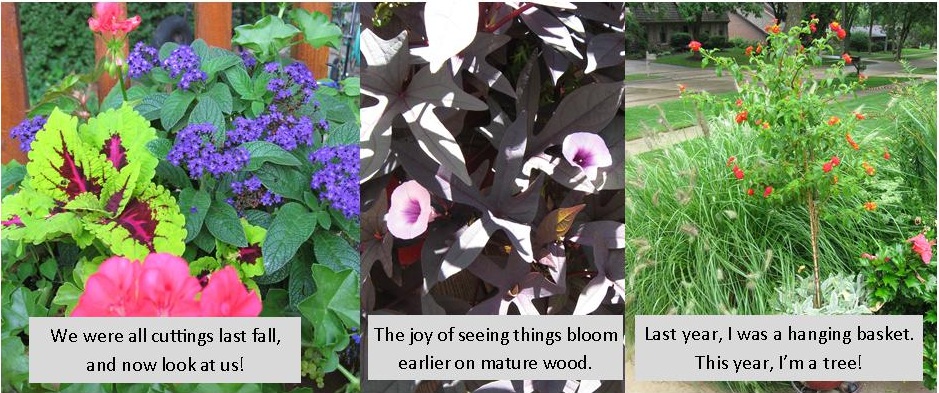
Why overwinter?  Well, these plants have a few things to say about it:

There are several different things I do to overwinter plants.

Some (like coleus, marine heliotrope, begonias, lantana, geraniums, and polka dot plants) respond well to cuttings for bringing inside.  I spray the plants with a systemic insecticide at 7 day intervals for 3 weeks while they are still outdoors so that by the time I take cuttings, I won’t be bringing any insects in with me.  I also do not spray insecticides in the house, so if it’s going to get done, it will be done outside.  Many of the cuttings root in water very easily.  I have a heating mat that I use for the cuttings of polka dot plants and geraniums (rooted in vermiculite) since it seems to help in both instances.  If I’m rooting something in either sand or vermiculite, I use rooting hormone which helps to give the cuttings a good jump start.  I haven’t bought a coleus (except to increase my collection) in years.  Easy to root.  Cheerful in my kitchen window all winter.

Some plants go into a warmer place.  I have a garage named Arkansas and a basement named Florida The Crape Myrtle goes into the garage because it’s WAY too heavy to haul down the basement stairs.  It snuggles next to the interior wall of the garage and I water it with a tiny bit of cold water periodically.  Keeping it dry and using cold water when I do water ensures it will not break dormancy.  The amazing Mandevilla vine that was a 6″ pot last year (because I’m cheap and don’t want to buy the biggest plant I can find) overwintered last year in the basement and this year it’s taller than I am and growing on an obelisk.  I will do this year what I did last year by letting it go dormant.  I kept it quite dry, in the basement near a window, with supplemental lighting.  As the day lengths begin to increase, I increased the hours of fluorescent lighting and began to water it a bit more.  When the weather got warm enough to put it outside, then fertilizing it began in earnest.  I think I’m going to try the same thing with the gloriosa lily that hasn’t been the happiest camper on the block.  It’s much better than it was last year at this time, so we’re going to give it a shot and see if it just needed to mature.

Some plants will be snuggled next to the foundation of the house.  Last year, I overwintered a river birch in a pot by covering the whole pot with frost cloth and putting it in a warm little corner outside near the chimney.  Of course, I needed to shovel snow on it periodically so that the pot could stay watered.  Again the key is to keep it from breaking dormancy before the weather improves.  I’ll try that technique again this winter since previously I’ve only been able to keep Dwarf Alberta Spruces through the winter in pots.  Last winter was unseasonably mild, but hey!  I got two years out of a tree I bought for portable shade for a hydrangea that outgrew its partly shady zone.  Definitely worth trying again!

Other plants that are semi-hardy will be treated the same way.  Crocosmia wintered well that way last winter and were an amazing show of brilliant scarlet flowers for months!  The gladiolus have been dug and will die back down to their corms.  I will tuck them in a window box buried next to the foundation and cover them with frost cloth.

The roses and the hydrangea will not be overwintered until they’ve gone completely dormant since they fight to grow until the killing frost has come a time or two.  Trying to overwinter these too soon will mean their death.  They will refuse to go dormant and chew through their stored up food or send out new growth to get zapped by the nearest cold snap.  I overwinter my potted roses in my compost pile.  I have pictures from last year and will do a separate post on overwintering these two rather particular flowering plants.  Roses, Hydrangeas are described separately (click links).

Ecclesiastes 3:1 To everything there is a season, A time for every purpose under heaven.

I just try to bend it a little.


Continue Reading

Chapel Worship Guide 9.9.2012

Service Order for 9:00 AM
Sunday, September 9, 2012
Nemmers Family Chapel at Advocate Condell

Prelude—Allan Koetz

Welcome—Barbara Shafer, Christ Church Highland Park 

Songs of Praise­—Allan Koetz

Reading of Scripture:  Hebrews 11:1 Now faith is being sure of what we hope for and certain of what we do not see. 2 This is what the ancients were commended for. 3 By faith we understand that the universe was formed at God’s command, so that what is seen was not made out of what was visible. … 8 By faith Abraham, when called to go to a place he would later receive as his inheritance, obeyed and went, even though he did not know where he was going. 9 By faith he made his home in the promised land like a stranger in a foreign country; he lived in tents, as did Isaac and Jacob, who were heirs with him of the same promise. 10 For he was looking forward to the city with foundations, whose architect and builder is God. 11 By faith Abraham, even though he was past age– and Sarah herself was barren– was enabled to become a father because he considered him faithful who had made the promise. 12 And so from this one man, and he as good as dead, came descendants as numerous as the stars in the sky and as countless as the sand on the seashore. 13 All these people were still living by faith when they died. They did not receive the things promised; they only saw them and welcomed them from a distance. And they admitted that they were aliens and strangers on earth. 14 People who say such things show that they are looking for a country of their own. 15 If they had been thinking of the country they had left, they would have had opportunity to return. 16 Instead, they were longing for a better country– a heavenly one. Therefore God is not ashamed to be called their God, for he has prepared a city for them.

Prayer—Barbara Shafer

Message—“Promise as an Everlasting Covenant” by Barbara Shafer

Genesis 17:1 When Abram was ninety-nine years old, the LORD appeared to him and said, “I am God Almighty; walk before me and be blameless. 2 I will confirm my covenant between me and you and will greatly increase your numbers.” 3 Abram fell facedown, and God said to him, 4 “As for me, this is my covenant with you: You will be the father of many nations. 5 No longer will you be called Abram; your name will be Abraham, for I have made you a father of many nations. 6 I will make you very fruitful; I will make nations of you, and kings will come from you. 7 I will establish my covenant as an everlasting covenant between me and you and your descendants after you for the generations to come, to be your God and the God of your descendants after you. 8 The whole land of Canaan, where you are now an alien, I will give as an everlasting possession to you and your descendants after you; and I will be their God.” … 15 God also said to Abraham, “As for Sarai your wife, you are no longer to call her Sarai; her name will be Sarah. 16 I will bless her and will surely give you a son by her. I will bless her so that she will be the mother of nations; kings of peoples will come from her.” 17 Abraham fell facedown; he laughed and said to himself, “Will a son be born to a man a hundred years old? Will Sarah bear a child at the age of ninety?” 18 And Abraham said to God, “If only Ishmael might live under your blessing!” 19 Then God said, “Yes, but your wife Sarah will bear you a son, and you will call him Isaac. I will establish my covenant with him as an everlasting covenant for his descendants after him. 20 And as for Ishmael, I have heard you: I will surely bless him; I will make him fruitful and will greatly increase his numbers. He will be the father of twelve rulers, and I will make him into a great nation. 21 But my covenant I will establish with Isaac, whom Sarah will bear to you by this time next year.” 22 When he had finished speaking with Abraham, God went up from him.

Songs of Response—Allan Koetz

Benediction—Barbara Shafer

Postlude—Allan Koetz

Continue Reading

Asking All the Wrong Questions about Abortion

I’m coming off a long stretch of women confessing abortions to me.  They are confessing because they are scared…and looking for hope.

I know some of you may be thinking that I’m hitting on a bunch of political topics these days.  Yes, I am.  But in this article you will not find photos of unborn children or the usual pro-life message. My thoughts go soul deep.  You will not find guilt-tripping or politics-as-usual because it’s not just usual politics in the lives of women I meet.  It’s personal to them.  They’re frightened because it’s their story and they’re looking for answers to questions.   They’re looking for hope.

I’m writing about this today because good politics arise out of good theology.  If one’s worldview is to be consistent, that is.   Whether your worldview is one that includes God or not, it’s not a cafeteria where you choose some from each group, a knife and a fork, and head to the cashier.   

Presently, the Democratic National Convention is underway in the United States.  Numerous women are scheduled to speak, ostensibly on behalf of American women. 

* * *

They do not speak for me.

They do not speak for me because I hold a well-developed theology on the Image of God.  These women, because of their views, simply cannot speak life to any woman who thinks theologically as I do.

In the previous article, Asking All the Wrong Questions about Discrimination, I outlined the necessity of holding a high view of the Image of God and asserted that this is our way to solving the racial divide.  Likewise, a well-developed understanding of the Image of God ought to inform our views on abortion.

There is a wrong question out there:  Should there be limits on a woman’s right to choose?

There are many reasons this is a wrong question.

  1. The first one is grammatical.  “To choose” –a verb—typically needs an object for the sentence or question to make sense.  One needs “to choose” something whether it is a choice to do or not to do, or a choice among alternatives.  The implied object in the question above is abortion.  If the object were different (substitute anything you choose and see for yourself), the whole question changes.  As does the answer.  The meaning and the value given to the object are what determine the rightness of the choice.
  2.  Sometimes the word choice just reflects a manner of choice as in “Choose wisely.”  But even Indiana Jones knows the choice is among alternatives (e.g. to drink from the Holy Grail or select a different cup).  The alternatives have consequences, if the choice truly makes any difference.  What are the implied options in the question above?  Choose what?  You know the two answers.  There is no half-life or anything in between.
  3. Then, there’s the issue of whether it’s any person’s right to choose.  At present, Roe v Wade has been a turning point, giving a woman a right to choose an abortion because it’s her body in which the baby is formed.  This is the legal premise on which a woman has a choice.  What our wrong question presumes is that we can discriminate in favor of one party.  No wonder it’s a coveted “right” for so many women.  I know some of you will find this offensive, but it’s the same selfishness behind slave owners having liked the choice–the right–to have Negro slaves, even though it would have not been the choice of the person enslaved nor those who sought emancipation for them.  If the object of the question were “to choose gradual eradication of black Americans,” a woman’s right to choose seems significantly less noble and far more horrific, does it not?  Consider this: “Abortion kills more black Americans than the seven leading causes of death combined, says Centers for Disease Control data,” according to published news reports.  BlackDignity.org writes:

In America today, almost as many African-American children are aborted as are born. A black baby is three times more likely to be aborted as a white baby.

“Since 1973, abortion has reduced the black population by over 25 percent. Twice as many African-Americans have died from abortion than have died from AIDS, accidents, violent crimes, cancer, and heart disease combined.”

“80 percent of abortion facilities are located in minority neighborhoods. About 13 percent of American women are black, but they receive over 35 percent of the abortions.”

4.  A fourth reason (and there are many others) that this is a wrong question is that a society without limits, by definition, exhibits anarchy.  There must certainly be limits and laws to keep our society from becoming a lawless place where one person’s right to choose results in the extermination of other people.

Let me say this differently: When a choice involves one class of people’s “right to choose” and results in selective and intentional elimination of another class of people because the powerful choosers have determined that the vulnerable have little or no utility, this is not a social good.

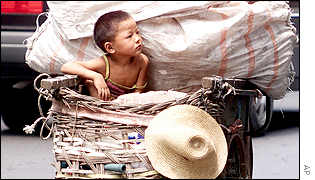
In China, the death toll among girl babies has been astronomical.  According to researchers, this year alone perhaps a million have been aborted and tens of thousands abandoned.  As the BBC captions this photo of a boy, “Boys are considered much more useful than girls” and quoting a Chinese mother, “Boys are best, because they can work.

Boys have utility.  Girls don’t. 

In America we might do fewer gender-selective abortions, but perceived utility for the chooser is the driving factor nonetheless.

So the debate becomes focused on when life begins. 

If the embryo has fullness of life and a woman were to choose to abort it; if she doesn’t want it to live or be a burden to her, this is no mere choice.  It’s like what’s happening in China.  But if it’s not life, then it’s like removing a wart.  A choice between a woman and her doctor.  It explains why the Supreme Court doesn’t want to weigh in on when life begins because then another person’s choice might come into play.  These people are judges not biologists and sadly, everyone has their own political interests.

I want to tell you my personal journey.  Please consider joining me on the next page to read how it applies to the Right Question about Abortion: 

How well do we see the Image of God in the unborn?”


Continue Reading

Asking All the Wrong Questions about Discrimination

I can’t tell: am I angry or grieved?  Maybe both.  Both, I suppose, are suitable responses to Discrimination.  In my recent series of Asking All the Wrong Questions, I’ve stated that Good Theology Must Answer Hard Issues…and it does so with the redemption of the Gospel.  It does so with Truth and Love.

In the last few weeks I’ve seen television coverage of the shootings at the Sikh temple in Wisconsin, the carnage at a movie theater in Colorado, Trayvon Martin’s death, Chicago gang shootings, and even an act of violence against the American Family Institute.

I’ve been comparing and contrasting what drives the American curiosity and concern.   It’s not good.  And I’m appalled.

On top of that, out of the blue I’ve encountered people who are unabashed segregationists and separatists who believe that desegregation has only contributed to problems.  Furthermore on TV, we have witnessed an increasing number of self-proclaimed supremacists—and that makes me angry.

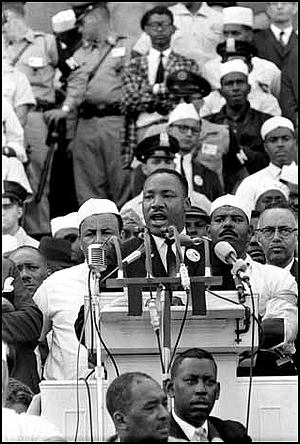
What happened to the dream of Dr. Martin Luther King, Jr.? 

(Click here to listen to the full audio of this powerful speech, excerpted below)

“And so even though we face the difficulties of today and tomorrow, I still have a dream. It is a dream deeply rooted in the American dream.

I have a dream that one day this nation will rise up and live out the true meaning of its creed: “We hold these truths to be self-evident, that all men are created equal.”

I have a dream that one day on the red hills of Georgia, the sons of former slaves and the sons of former slave owners will be able to sit down together at the table of brotherhood.

I have a dream that one day even the state of Mississippi, a state sweltering with the heat of injustice, sweltering with the heat of oppression, will be transformed into an oasis of freedom and justice.

I have a dream that my four little children will one day live in a nation where they will not be judged by the color of their skin but by the content of their character.”

Regarding that dream, there are those who say, “We’re already there.  We are completely desegregated.  Racial discrimination is a thing of the past.” 

I would disagree.  Rather, I’d say that over and over again, we’ve traded one form of discrimination for another and yet in America, we haven’t really dispensed with any.

It’s why—in a shameless act of indifference—the news media gave a giant yawn over the Sikhs and don’t even blink an eye at the ongoing violence in the City of Chicago, but can’t get enough of Trayvon Martin, the issue of amnesty for illegal immigrants, or throwing down “the race card” whenever it might possibly deflect responsibility from those who don’t want to accept legitimate criticism or when racial guilt or fears of being called the epithet racist might fill in the gap for insufficient qualifications.  No person of color I know wants lower or higher standards set for someone basis skin color alone.  This is at the heart of racial discrimination and it is not good.

Diversity, however, is good!  We see the beauty of human diversity throughout Scripture. 

Plenty of people purportedly want a “color-blind society.”  I want a “color-full society” in which each person’s beauty shines in a biblical kind of diversity.  Yes, with every skin tone, a “color-full” display of moral excellence and accomplishment in advancing truth, love, knowledge, and faith.

But for far too many Americans, this diversity has become diminished in quality, filtered through the lens of racism.  It’s a thin diversity.  And it only goes skin deep. 

If so many people want discrimination to end, why is it still an issue?

Because racism and discrimination sell–that’s my guess.  Perpetuating division sells newspapers, gains fundraisers, secures votes, increases viewership, and employs special interests.  Do we see it in the unwillingness of certain television networks to show political convention speeches—even little soundbytes from these quite eloquent speakers—because they are people of color who believe differently than the stereotype?

That’s discrimination, is it not?

What would Martin Luther King Jr. say about the ongoing trumpeting of our President’s being the “first black President?”  I can only imagine both he and our President would want his legacy to reflect better things than just being born of a darker skin color, as if melanin might constitute his highest and greatest achievement on behalf of the American people.  Celebrate a milestone, yes!  But as one who had a milestone event of my own, rather than rest on that rock forever, I pray for God to use me to change our culture in the best possible ways: stopping evil’s insidious creep, and seeking God’s favor to advance truth and love. A turning point, not a journey’s end.

Discrimination—whether in favor of one or against another—is wrong.  It matters little whether it’s racial or gender discrimination.  If it grieves the heart of God who created this glorious diversity, shouldn’t I be angry or grieved, or both? 

If civil rights marches and media coverage can’t change this problem, how can it be changed?  Good Theology Answers Hard Issues when we see each other through the Gospel’s truth and love.

The wrong question for our culture is, “Has Racial Discrimination Disappeared from America?” 
It clearly has not.  Skin color, race, or ethnicity trumps character in so many ways.  Polls, crime statistics, educational standards, affirmative action, the Census, and an administration that “looks like America”:  these determinations are almost always basis characteristics that are skin deep.
That’s why the Right Question—for changing a culture—is, “How well do we see the Image of God in our fellow man?”

Or as Dr. Martin Luther King Jr. dreams, have we ceased judging others—favorably or negatively—by skin color and are we free at last to judge by “the content of their character?”

A deep understanding of the Image of God ought to inform our judgments.  Seeing the Image of God in our fellow man ought to make issues of race disappear.  Let’s go beyond skin deep on the next page.

Continue Reading

Chapel Worship Guide 9.2.2012

Service Order for 9:00 AM Sunday, September 2, 2012

Nemmers Family Chapel at Advocate Condell


Prelude—Allan Koetz

Welcome—Barbara Shafer, Christ Church Highland Park

Songs of Praise­—Allan Koetz

Reading of Scripture 

Revelation 5: 1 I saw in the right hand of Him who sat on the throne a book written inside and on the back, sealed up with seven seals. 2 And I saw a strong angel proclaiming with a loud voice, “Who is worthy to open the book and to break its seals?” 3 And no one in heaven or on the earth or under the earth was able to open the book or to look into it. 4 Then I began to weep greatly because no one was found worthy to open the book or to look into it; 5 and one of the elders said to me, “Stop weeping; behold, the Lion that is from the tribe of Judah, the Root of David, has overcome so as to open the book and its seven seals.”

6 And I saw between the throne (with the four living creatures) and the elders a Lamb standing, as if slain, having seven horns and seven eyes, which are the seven Spirits of God, sent out into all the earth. 7 And He came and took the book out of the right hand of Him who sat on the throne. 8 When He had taken the book, the four living creatures and the twenty-four elders fell down before the Lamb, each one holding a harp and golden bowls full of incense, which are the prayers of the saints. 9 And they sang a new song, saying, “Worthy are You to take the book and to break its seals; for You were slain, and purchased for God with Your blood men from every tribe and tongue and people and nation. 10 “You have made them to be a kingdom and priests to our God; and they will reign upon the earth.”

11 Then I looked, and I heard the voice of many angels around the throne and the living creatures and the elders; and the number of them was myriads of myriads, and thousands of thousands, 12 saying with a loud voice, “Worthy is the Lamb that was slain to receive power and riches and wisdom and might and honor and glory and blessing.” 13 And every created thing which is in heaven and on the earth and under the earth and on the sea, and all things in them, I heard saying, “To Him who sits on the throne, and to the Lamb, be blessing and honor and glory and dominion forever and ever.” 14 And the four living creatures kept saying, “Amen.” And the elders fell down and worshiped.  (NASB)    

Prayer—Shane Burns,  Crossroads Church, Grayslake

Message— Shane Burns

Promises of a Messiah–the Protoevangelion  Genesis 3:15

Genesis 3:15 “And I will put enmity between you and the woman, and between your seed and her seed; He shall bruise you on the head, And you shall bruise him on the heel.” (NASB)

Song of Response— Allan Koetz

Benediction—Shane Burns

Postlude—Allan Koetz

Continue Reading